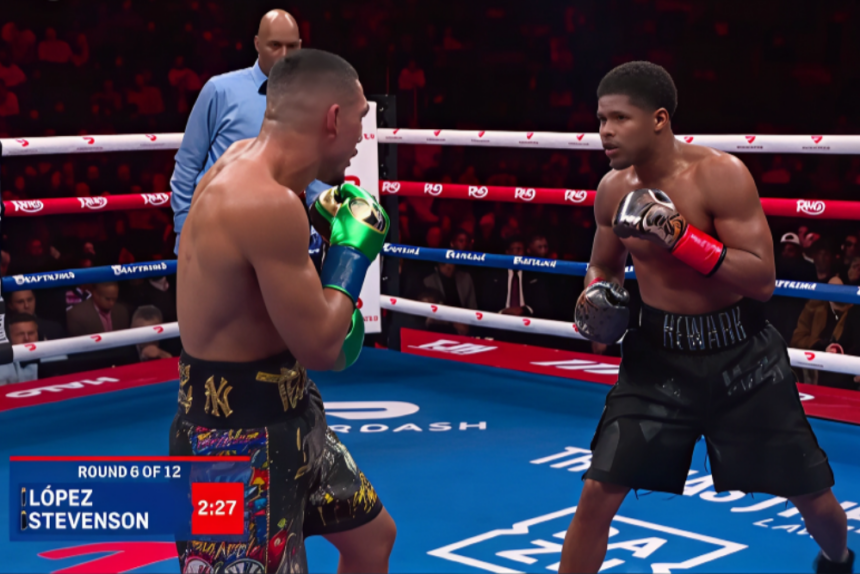
Two weeks removed from his lopsided victory over Teofimo Lopez, the boxing world continues dissecting what made Shakur Stevenson’s performance so remarkably different from everything he had shown before. The Newark native didn’t just win at Madison Square Garden on January 31—he completely transformed his approach in ways that shocked even his harshest critics.
For years, Stevenson faced relentless criticism about his defensive style. Fans booed during previous fights against Edwin De Los Santos and Artem Harutyunyan, frustrated by low output and constant movement. The CompuBox numbers told that story brutally. Against De Los Santos, neither fighter landed double-digit strikes in any single round, setting records for futility. Stevenson threw just 205 total punches across twelve rounds, landing only 65.
Those fights showcased textbook defensive brilliance—shoulder rolls, hand fighting, forearm deflections—but left audiences cold. The perception hardened. Stevenson became known as someone who made fights unwatchable, even while winning every round on the scorecards.
The Lopez Fight Changed Everything
What Stevenson displayed against Lopez represented a complete philosophical shift. Rather than employing his typical movement-heavy approach and three-foot pullback strategy, he stood directly in front of one of boxing’s most dangerous punchers and systematically picked him apart. This wasn’t the defensive specialist everyone expected. This was something entirely new.
The statistics reveal the transformation. Stevenson landed 165 of 372 punches at a 44 percent clip while maintaining defensive excellence. Lopez connected on just 72 of 468 attempts, a dismal 15 percent rate. But the numbers alone don’t capture what truly shifted. Stevenson fought with aggression and confidence, sitting in the pocket and inviting exchanges rather than avoiding them.
His jab became a devastating weapon rather than merely a range-finder. Every time Lopez attempted to close distance, Stevenson punished him with check hooks and counter rights while standing his ground. This tactical adjustment made all the difference between boring technical dominance and a masterclass that forced respect.
Why This Performance Stood Apart
Previous fights followed a predictable pattern—exceptional defense, minimal offense, frustrated opponents swinging at air. The Zepeda fight in July hinted at change when he traded more willingly against relentless pressure, but most analysts expected regression against Lopez’s counterpunching style.
Instead, Stevenson controlled every aspect of the fight from the opening bell. He didn’t wait for Lopez to attack before countering. He established his jab immediately, disrupted Lopez’s rhythm, and forced the Brooklyn fighter to compete at his pace. By round six, Lopez’s face was bloodied, his corner desperate for answers that never came.
He sat in the pocket for twelve full rounds, something rarely attempted in previous fights. He made Lopez uncomfortable by staying close rather than circling away. The psychological impact proved devastating—Lopez landed fewer than 100 total punches while his opponent stacked rounds with surgical precision.
Silencing Years Of Criticism
The boxing community had developed a narrative around Stevenson that proved difficult to shake. Comparisons to Floyd Mayweather focused only on defensive similarities while ignoring how Mayweather dominated through calculated aggression. Stevenson seemed content to win rounds without taking risks, prioritizing safety over entertainment value.
Social media amplified the criticism. Fans posted clips of past fights with commentary about low action and excessive movement. Even prominent voices like Shannon Sharpe questioned whether anyone would pay premium prices to watch his style. The boring label stuck, threatening to derail his career trajectory despite an undefeated record.
Against Lopez, Stevenson addressed every criticism simultaneously. He demonstrated offensive firepower, showed willingness to engage in exchanges, and proved his defensive mastery remained intact even while taking calculated risks. The performance forced everyone watching to acknowledge something shifted fundamentally in his approach.
What Made The Difference
Stevenson adapted his game plan specifically for this opponent rather than forcing Lopez into his usual defensive shell. He recognized that Lopez struggled cutting the ring against mobile fighters like Sandor Martin and Jamaine Ortiz, but excelled when opponents fought backwards.
So he did the unexpected. He fought on his front foot, controlled the center of the ring, and made Lopez chase him into counters. This strategic reversal neutralized everything that made Lopez dangerous while highlighting every weakness in his offensive arsenal.
The jab became the primary weapon, landing with metronomic consistency. Every round followed the same pattern—he established his jab early, Lopez rushed forward in frustration, and precise counters made him pay. By the championship rounds, Lopez appeared completely demoralized, swinging wildly at shadows while his opponent calmly picked his shots.
The performance demonstrated something crucial that previous fights obscured—he possesses the boxing IQ to adjust his approach based on opposition rather than relying on a single defensive formula. That versatility separates truly elite fighters from merely skilled technicians.
The Legacy Impact
This victory elevated Stevenson to four-division champion status, joining just 25 fighters in boxing history to achieve that milestone. More importantly, it fundamentally altered how the boxing world perceives his capabilities and potential.
Previous fights raised questions about whether his style could succeed against elite competition willing to pressure him. The Lopez performance answered definitively. Stevenson can fight multiple ways depending on what the situation demands, adjusting tactics mid-fight to exploit opponent vulnerabilities.
The transformation from criticized defensive specialist to respected tactical genius happened in one night. Stevenson proved he can deliver entertainment without sacrificing effectiveness, silence doubters without changing his core identity, and dominate opponents while keeping fans engaged.
Moving forward, opponents must prepare for a fighter who can attack or defend, pressure or counterpunch, depending on what strategy yields the best results. That unpredictability makes Stevenson infinitely more dangerous than the one-dimensional fighter critics claimed he was.