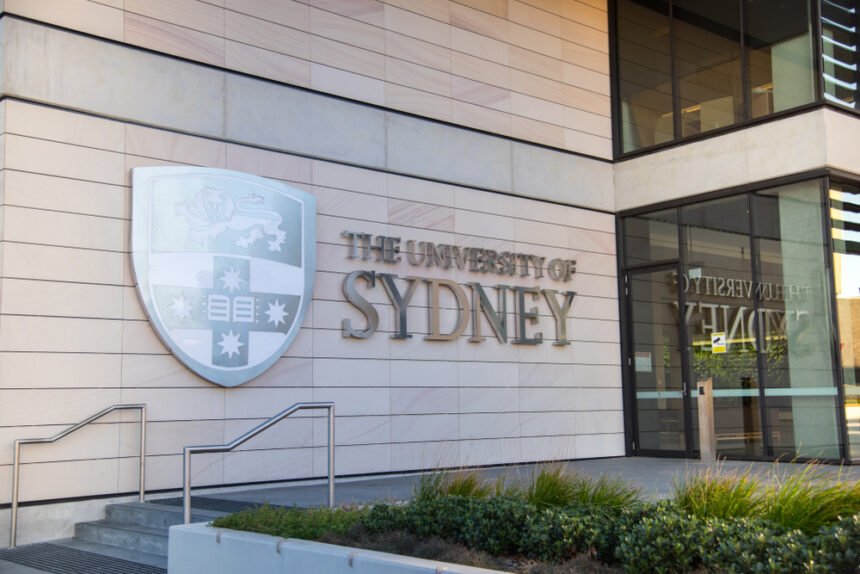
Linda Losurdo has done something remarkable: she recreated a piece of the universe in a bottle. The doctoral student in materials and plasma physics at the University of Sydney used simple gases and electricity to recreate conditions typically found in the vicinity of stars and supernovas, producing a tiny but scientifically invaluable amount of cosmic dust. Her work, published last week in The Astrophysical Journal, represents a breakthrough in how scientists can study the building blocks of life without waiting for meteorites to fall from the sky.
Cosmic dust is fundamental to understanding how life began on Earth. The dust plays a crucial role in star formation and acts as a catalyst for organic molecules the building blocks of life itself. It’s abundant throughout interstellar space, embedded in comets and asteroids, yet studying it on Earth presents a practical nightmare. Although particles and rocks from space constantly bombard our planet, most material burns up in the atmosphere. The meteorites that survive are notoriously difficult to locate and collect, making them unreliable research subjects.
By creating cosmic dust in her lab, Losurdo bypassed these limitations. Her approach gives scientists a powerful new tool to investigate fundamental questions about life’s origin without depending exclusively on space samples that may never arrive.
“When we’re looking at big questions like the origins of life, we have to look at where the building blocks started from,” Losurdo explained. “Where did all the carbon on Earth begin its life, and what type of journey did it have to go through in order to then be able to build into things like amino acids?”
The Experimental Process
Creating cosmic dust required elegance in simplicity. Losurdo started with three basic components: nitrogen, carbon dioxide, and acetylene a colorless, odorless gas composed of carbon and hydrogen. Working with coauthor David McKenzie, a professor of materials physics at the University of Sydney, she evacuated the air from a glass tube and introduced the gases. The pair then applied 10,000 volts of electricity to the gases for one hour, creating a type of plasma called a “glow discharge” an electrically charged gas environment that mimics conditions found near stars.
The physics behind the process is elegant: completing an electrical circuit through the gas excites it, causing electrons to fly off and creating an environment where molecules naturally want to bind, coalesce, and aggregate. This mirrors processes known with certainty to occur around actual stars.
The result was a few milligrams of “dusty nanoparticles” incredibly small particles that presented their own challenge. Losurdo solved this by depositing the dust on a silicon wafer, which allowed researchers to observe only the cosmic dust particles without interference from the substrate itself. In total, she produced about a gram of cosmic dust suitable for detailed analysis.
Bridging Lab and Space
The artificial dust created through this process is chemically similar to cosmic dust in its pristine, newly-formed state before it undergoes the multiple chemical transformations that occur as it interacts with comets, meteorites, and Earth’s atmosphere. Having a lab-made analogue of the dust’s original state allows scientists to understand how it evolves during its journey through space and into our solar system.
The implications for origin-of-life research are significant. A central mystery remains: were amino acids among Earth’s earliest molecules and essential to most life processes formed on Earth, or did they originate in space and arrive via cosmic dust? Losurdo’s lab-made cosmic dust provides a way to investigate this question without relying exclusively on the unpredictable arrival of meteorite samples.
“Meteorites take so long to fall, and it’s quite hard to collect dust, let alone collect dust near a giant, dying old star,” Losurdo noted. “So we must have something to study.”
Looking Forward
The next phase involves systematically changing the experimental conditions under which the cosmic dust is made, building up a database of different dust types that could eventually be matched to specific meteorites and space objects. This approach represents a new frontier in studying life’s deepest questions not by waiting for the universe to deliver answers, but by recreating the universe’s conditions in a laboratory.