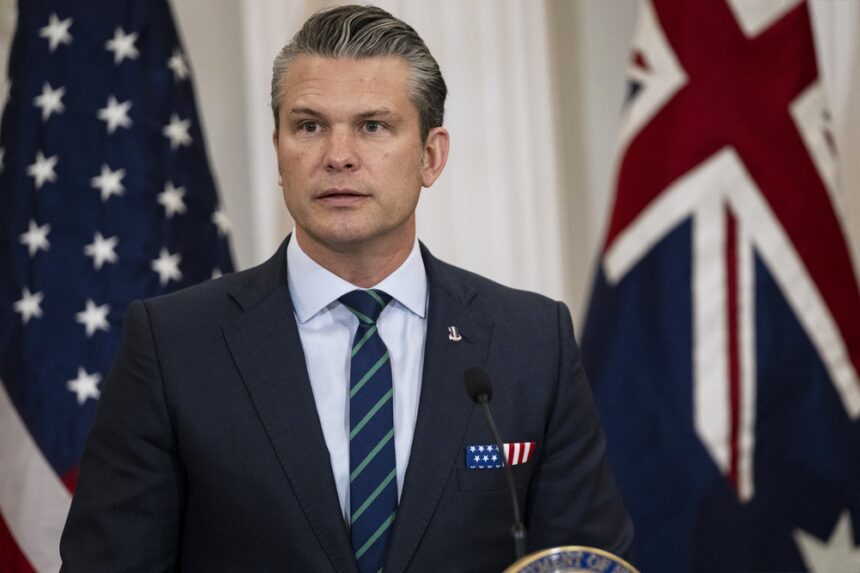
United States Secretary of War Pete Hegseth made visits to American forces in Cuba and at the headquarters of the US Central Command in Florida on June 10, a dual stop that came as tensions with Havana reached one of their most heightened points in recent memory.
Hegseth’s appearance at Naval Station Guantanamo Bay marked a notable moment given the base’s singular status as the only American military outpost operating on soil controlled by a communist government. Speaking directly to troops stationed there, Hegseth framed the situation in stark terms, telling service members that the Department of War was prepared and properly positioned for any possible outcome, whatever direction the situation with Cuba’s leadership might take.
Escalating pressure on Havana
The visit did not occur in a vacuum. In the weeks leading up to Hegseth’s trip, the United States government secured a criminal indictment against former Cuban leader Raul Castro and imposed new economic sanctions on current leader Miguel Diaz-Canel. The moves represent a sharp acceleration of the Trump administration’s campaign to increase pressure on the Cuban government.
Cuban officials have publicly characterized these actions as manufactured justifications for more aggressive intervention, including what Havana has described as an effort to force regime change on the island. That framing reflects deep concern within the Cuban government about where American intentions may be heading.
Adding to that concern is the presence of the aircraft carrier USS Nimitz and elements of a Marine Expeditionary Unit currently operating in the Caribbean Sea. The positioning of those assets in the region, combined with a cabinet-level visit to the US military base on Cuban soil, sends a message that Washington appears comfortable projecting.
CENTCOM in the picture
Hegseth’s second stop, at CENTCOM headquarters in Florida, added another dimension to the day’s significance. The command oversees American military operations across the Middle East, a region also experiencing elevated tensions involving Iran and the ongoing standoff over the Strait of Hormuz. Visiting both locations on the same day underscores the breadth of active pressure points currently demanding attention from American military leadership.
What comes next
The Trump administration’s approach to Cuba has grown markedly more aggressive in a short period of time. Criminal charges against a former head of state, fresh sanctions against a sitting leader, military assets in the surrounding waters, and now a direct visit from the secretary of war to the American base on the island all point in the same direction.
Cuban officials have framed their response in terms of sovereignty and resistance, but the imbalance of military and economic power between the two countries leaves Havana with limited options. How the situation develops will depend in large part on whether the administration views the current pressure campaign as an end in itself or as preparation for something more consequential.
Hegseth’s message to the troops at Guantanamo captured the administration’s posture concisely. The future of Cuba, he indicated, rests in the hands of two parties. One of them is the United States.