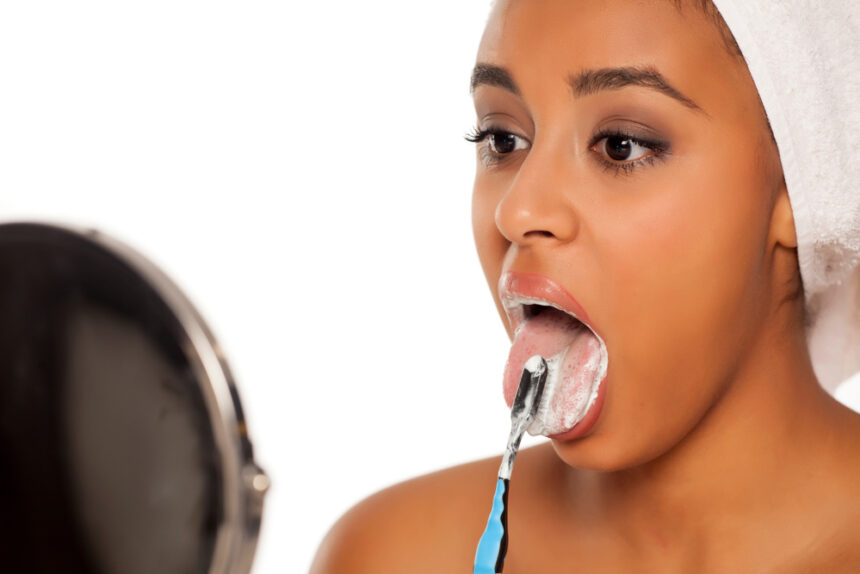
From the time most people are old enough to hold a toothbrush, the message is clear — brush twice a day, floss regularly and protect your teeth. But dental professionals say that routine is missing a critical component, and it has been sitting right there in plain sight the entire time.
The tongue. Specifically, cleaning it.
Despite being one of the most bacteria-dense surfaces in the entire mouth, the tongue is almost universally ignored in daily hygiene routines. Oral health experts say that neglecting it creates a reservoir of harmful bacteria that can spread to other parts of the mouth, contribute to gum disease, trigger persistent bad breath and may even be linked to broader systemic health concerns.
Why the tongue matters more than most people think
The mouth is home to a complex ecosystem of bacteria, and the tongue plays a much larger role in that ecosystem than its reputation suggests. The surface of the tongue is covered in tiny projections called papillae, which help with speaking, chewing and taste perception. Between and around those projections, a layer of biological material known as biofilm accumulates throughout the day.
Biofilm is a collection of bacteria, food debris and other microscopic particles. The bacterial makeup of tongue biofilm is distinct from what builds up on the teeth, because different microbial species adapt to thrive in different oral environments. Left undisturbed, this biofilm acts as a breeding ground. Bacteria from the tongue can migrate to other parts of the mouth, contributing to the conditions that lead to gum disease and tooth decay — even in people who brush and floss diligently.
A white coating on the tongue and a persistent metallic taste in the mouth are common signs that bacterial overgrowth may be occurring. Sulfur-producing bacteria on the tongue release compounds during breakdown that are a leading cause of chronic bad breath. Gentle, regular cleaning disrupts that process before it escalates.
Emerging research also suggests that the bacterial environment of the tongue may have connections beyond oral health, with some evidence pointing to associations with conditions like diabetes and cardiovascular disease. Researchers are quick to note that more study is needed, but the early signals are enough to take seriously.
What actually works for cleaning the tongue
Not all tongue-cleaning tools are created equal, and using the wrong one can create new problems. Using the same toothbrush for teeth and tongue is a common mistake that risks spreading bacteria between surfaces. Beyond the cross-contamination issue, toothbrush bristles can be too abrasive for the tongue’s soft tissue. Aggressive scrubbing over time can cause real damage, including scar tissue formation on the tongue’s surface.
A dedicated tongue scraper is the preferred tool among dental professionals. Metal scrapers made from stainless steel or copper are generally favored over plastic options. Plastic tools degrade over time and can leave microscopic scratches on the tongue’s surface. Rubber-backed toothbrush heads that include a built-in scraping surface on the reverse side are a practical alternative for those who want a single convenient tool.
Plastic and rubber tools should be replaced every three months. Metal scrapers can be sanitized and reused longer, though a dental hygienist is the best resource for guidance on proper cleaning technique and tool maintenance.
How to build the habit
Cleaning the tongue twice daily is the general recommendation — once in the morning and once before bed — folded into the same routine as brushing and flossing. The technique is simple. Extend the tongue and use a gentle sweeping motion across the front portion, rinsing the scraper between each pass. Focusing on the front rather than the back helps avoid triggering the gag reflex, which is activated primarily at the rear of the tongue.
Overcleaning is worth avoiding. The oral microbiome contains beneficial bacteria alongside harmful ones, and the long-term effects of aggressive or overly frequent tongue cleaning on that balance are still being studied. Moderation is the prevailing guidance.
Adding an alcohol-free mouthwash at the end of the routine can help freshen breath, though it does not kill bacteria. Alcohol-based mouthwashes are best avoided because they can disrupt the oral microbiome and potentially damage oral tissue.
One final step worth incorporating — while the tongue is extended, take a moment to examine its sides and underside. These are the areas where early signs of oral cancer, such as lumps or unexplained sores, are most likely to appear. Any irregularities that persist should be evaluated by a dental professional without delay.