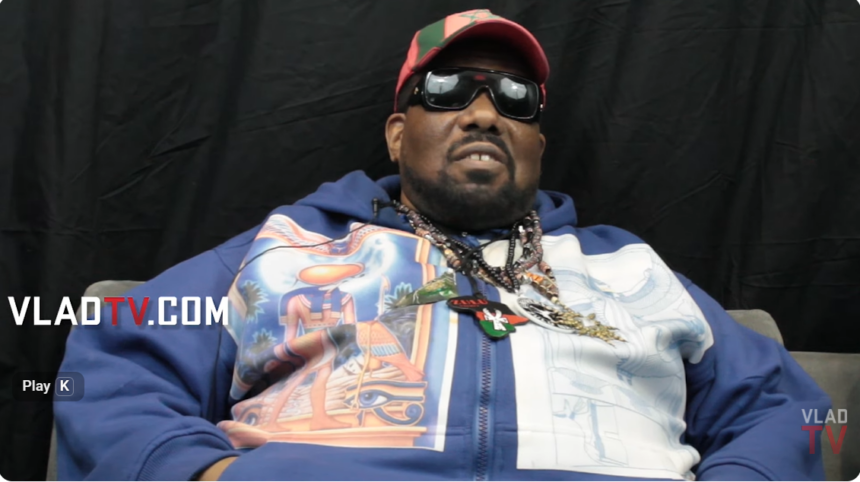
Afrika Bambaataa, the Bronx-born DJ and rapper widely credited as one of hip-hop’s founding architects, died early Thursday morning at a hospital in Pennsylvania from complications related to cancer. He was 68. Sources with direct knowledge of his passing confirmed the news to TMZ. His death was later acknowledged by Kurtis Blow Walker, executive director of the Hip Hop Alliance, who recognized Bambaataa’s foundational role in shaping the culture.
The announcement arrived with the particular weight that accompanies the passing of someone whose contributions and controversies have long existed in uneasy proximity.
From the Black Spades to the South Bronx block parties
Born Lance Taylor in 1957 to Jamaican and Barbadian parents, Bambaataa grew up in the Bronx at a time when gang culture dominated the borough’s social landscape. He rose to the rank of warlord within the Black Spades, one of the area’s most prominent gangs, before redirecting his energy toward something that would outlast any street organization.
Beginning in the early 1970s, he began throwing parties where hip-hop’s earliest elements converged, drawing crowds that swelled into massive block gatherings across the South Bronx. Those events became laboratories for what the culture would eventually become.
In 1973, Bambaataa founded the Universal Zulu Nation, an organization built around hip-hop as a constructive alternative to gang violence. The collective brought together rappers, DJs, graffiti artists, and breakdancers under a framework centered on peace, unity, and creative expression. It became one of the most significant institutions in hip-hop history, spreading the culture internationally at a time when the rest of the world had barely heard of it.
The records that defined a genre
Bambaataa released his first single, Zulu Nation Throwdown, in 1980. Two years later, performing as part of Soulsonic Force, he released Planet Rock, a track that merged electronic instrumentation with hip-hop’s emerging vocabulary in a way that had not been done before. The song reached number four on the U.S. R&B chart and is now considered one of the most influential recordings in the genre’s history, a bridge between Kraftwerk’s machine-made minimalism and the energy of the South Bronx.
In 1985, he appeared on Sun City, the anti-apartheid benefit album organized by Little Steven Van Zandt, alongside Joey Ramone, Run-D.M.C., U2, and dozens of other artists. The project placed Bambaataa within a global conversation about music’s capacity to respond to injustice.
His record collection, which was legendary in DJ circles for its depth and eclecticism, informed a breakbeat philosophy that influenced producers and selectors for decades. His instinct for finding the moment in a record and extending it became a defining technique of the form.
Allegations that reshaped his final decade
Bambaataa’s later years were defined by legal battles and public reckoning. Beginning in 2016, multiple men came forward with accusations that he had sexually abused them during the 1980s and 1990s. The allegations prompted Universal Zulu Nation to publicly distance itself from its founder, and Bambaataa stepped down from leadership of the organization he had built.
In 2025, a judge issued a default judgment against him in a civil case involving accusations of sex trafficking from the 1990s after he failed to appear in court. He was required to pay a settlement to the plaintiff.
The accusations forced a difficult conversation within hip-hop about accountability, the protection of young people within music communities, and how a culture chooses to remember those who shaped it when their conduct contradicts the values they claimed to represent. That conversation did not resolve cleanly and is unlikely to do so now.
A legacy that resists simple summary
Afrika Bambaataa did not fit neatly into a single narrative even before the allegations surfaced. He was a former gang leader who built a peace movement. A DJ from public housing who influenced electronic music producers across Europe. A community organizer whose organization became global before many people outside New York knew his name.
His death does not simplify any of that. Hip-hop now navigates the loss of a figure whose presence in the culture’s origin story is undeniable and whose conduct in private spaces caused genuine harm. Holding both of those things is not comfortable. It was not designed to be.