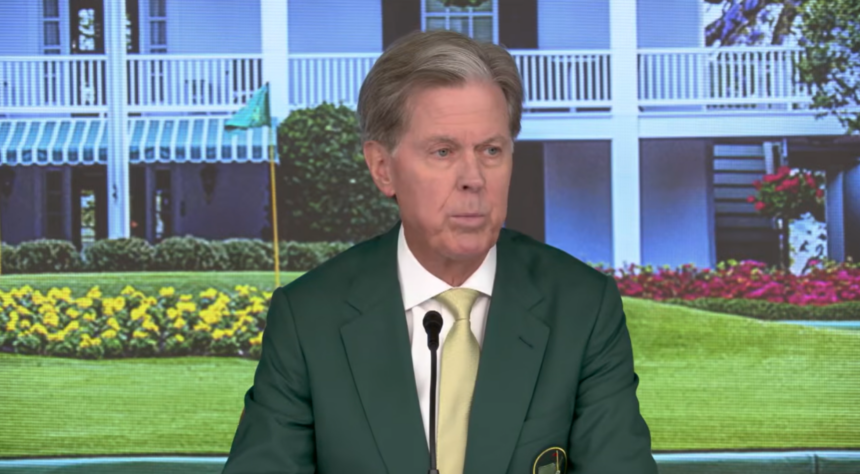
Golf is heading into one of its most consequential arguments in decades, and the timing could not be more pointed. With the Masters approaching, Augusta National chairman Fred Ridley has made his position unmistakably clear: the proposed rollback of golf ball distance for elite players is not something that can quietly fade away. He has described the effort as one where failure simply is not acceptable, and his words have reignited a conversation that has been simmering across the sport for years.
At its core, the rollback proposal asks a straightforward question has the golf ball traveled too far for too long, and does that change what the game actually tests? The answer, depending on who is asked, varies enormously.
What the rollback actually proposes
The United States Golf Association and the R&A, the two primary governing bodies of golf worldwide, have been working on a plan that would limit how far elite-level players can hit the ball under competition conditions. The proposal does not target recreational golfers in the same way. Average players, whose swing speeds fall well below those of tour professionals, would largely be unaffected, at least in the short term.
The original timeline called for the rollback to take effect for elite players in 2028, with recreational golfers grandfathered in under current specifications until 2030. However, that schedule now appears to be shifting, with indications that the governing bodies may align the rollback for all players at the 2030 mark instead.
Where the disagreement stands
The split is significant. The USGA and the R&A are aligned on pushing forward. Augusta National and the Masters have indicated support for that position. But the PGA Tour and the PGA of America have expressed serious reservations, suggesting the timeline be pushed to 2030 rather than moving ahead in 2028 as originally proposed.
That disagreement carries real consequences. If the rollback is adopted by Augusta National and two other major championships but not the PGA Tour’s regular events, professional golf could end up operating under different ball specifications depending on the tournament. The inconsistency that would create both for players preparing and for fans watching is one of the most cited concerns from those skeptical of how this is unfolding.
PGA Tour CEO Brian Rolapp has acknowledged that opinions on the issue are genuinely divided, not just among executives but among players, equipment manufacturers, and fans. Those conversations are ongoing, and no resolution has been publicly confirmed.
Why Ridley and Augusta are pushing hard
Ridley’s argument centers on what golf is actually supposed to measure. In his view, the game’s richness has historically come from the variety of shots required, the creativity demanded across different courses and conditions, and the ability to shape the ball under pressure. As driving distances have grown dramatically among elite players, the premium placed on those subtler skills has diminished. Longer hitters can overpower design features that were intended to challenge them, narrowing the range of decisions a round requires.
He is not arguing against athletic progress. The case being made is that when one element of the game raw distance becomes so dominant that it renders others secondary, something essential is lost. Equipment manufacturers and some players disagree, arguing that restricting the ball could dampen enthusiasm for the game at a time when participation numbers and media interest have been growing.
What happens next
No final decision has been locked in publicly, and the debate remains active across all parties. What has changed is the tone from Augusta National. Ridley’s language this year has been notably sharper than in past statements, suggesting that the window for extended negotiation may be narrowing.
For players, manufacturers, and fans, the coming months will likely bring more clarity on whether golf’s most powerful institutions can find common ground or whether the sport enters a period of genuinely divided rules. Either outcome would mark a defining moment for a game that has long prided itself on universal standards.