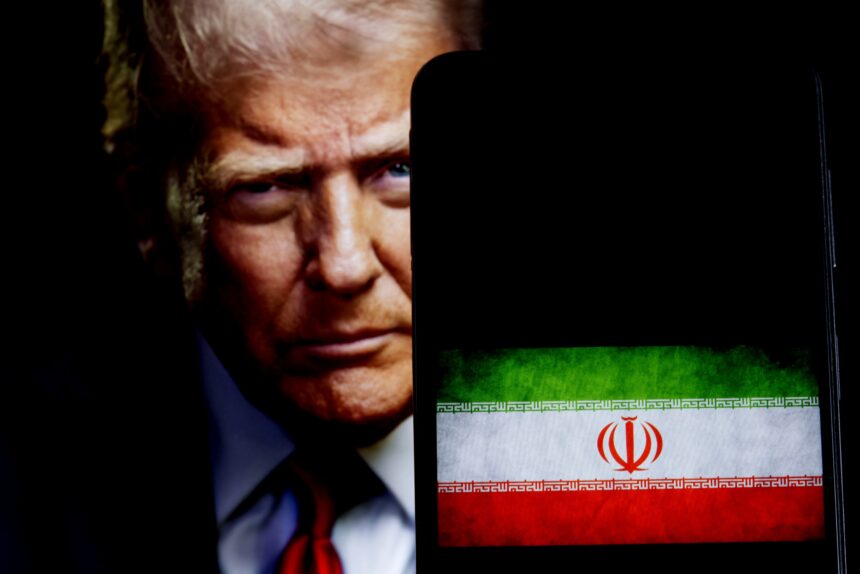
Democratic lawmakers issued sharp and sweeping condemnations on Easter Sunday after President Trump publicly threatened to destroy power plants and bridges inside Iran, framing the warnings as a potential criminal act under international law and demanding that Republican congressional leaders intervene before the threats become military action.
The backlash came hours after Trump posted inflammatory language on his Truth Social platform describing a planned escalation against Iranian infrastructure, using profane and incendiary language to pressure Iran into reopening the Strait of Hormuz. The president reiterated those warnings in multiple interviews throughout the day as energy markets continued to feel the strain of restricted shipping through the strait, with the national average price of regular gasoline reaching $4.11 per gallon.
Murphy leads the criticism
Sen. Chris Murphy of Connecticut was among the most vocal Democratic voices responding to the threats, writing on the social platform X that Trump was openly describing plans to commit mass war crimes and that Republican leadership had a responsibility to stop him before those plans could be carried out.
Murphy argued that targeting civilian infrastructure such as bridges and electrical facilities would inevitably result in the deaths of thousands of ordinary Iranians who work in those facilities and travel on those roads, and that such strikes would constitute a violation of international law regardless of the military rationale offered. He noted that the Strait of Hormuz had been open to international shipping before the United States launched airstrikes against Iran in late February, questioning what the strategic logic of further escalation could possibly be.
Murphy called on Republican leaders to convene Congress and formally move to end the conflict, framing continued inaction as a failure of constitutional responsibility.
Civilian toll already mounting
Since the United States and Israel launched coordinated airstrikes against Iran beginning in late February, the human cost inside the country has grown significantly. More than 1,600 civilians have been killed as of Sunday, including at least 244 children, according to tracking by a United States-based human rights organization. The figures have added urgency to Democratic arguments that the conflict has already moved beyond any defensible legal or moral framework and that further escalation against civilian infrastructure would deepen that breach.
Schumer, Jeffries and Sanders add their voices
Senate Minority Leader Chuck Schumer of New York drew a contrast between the Easter holiday celebrations underway across the country and what he described as erratic and threatening behavior from the president, saying the rhetoric alienated American allies and did not reflect the values of the country. Schumer said Trump’s conduct represented a failure of leadership at a moment that demanded restraint and diplomatic engagement.
House Minority Leader Hakeem Jeffries of New York also responded on Easter Sunday, describing the president’s public statements as deeply alarming and suggesting that the behavior itself pointed to a broader problem with the administration’s handling of the conflict.
Independent Sen. Bernie Sanders of Vermont posted the full text of Trump’s Truth Social statement without additional editorial framing, letting the language stand on its own before adding his own assessment that the comments reflected a dangerous and unstable approach to an active military confrontation. Sanders, like Murphy, called for immediate congressional action to end the war.
A conflict with no resolution in sight
The Easter Sunday response from Democratic lawmakers reflects a growing concern within the party that the conflict with Iran is escalating without a coherent endgame, that its economic consequences are already landing on American consumers at the gas pump and that the administration has not articulated a strategy for bringing the fighting to a close.
Whether Republican leaders will respond to Democratic calls for congressional intervention remains to be seen. As of Sunday evening no senior Republican figures had issued public statements addressing Trump’s infrastructure threats or the calls to reconvene Congress.