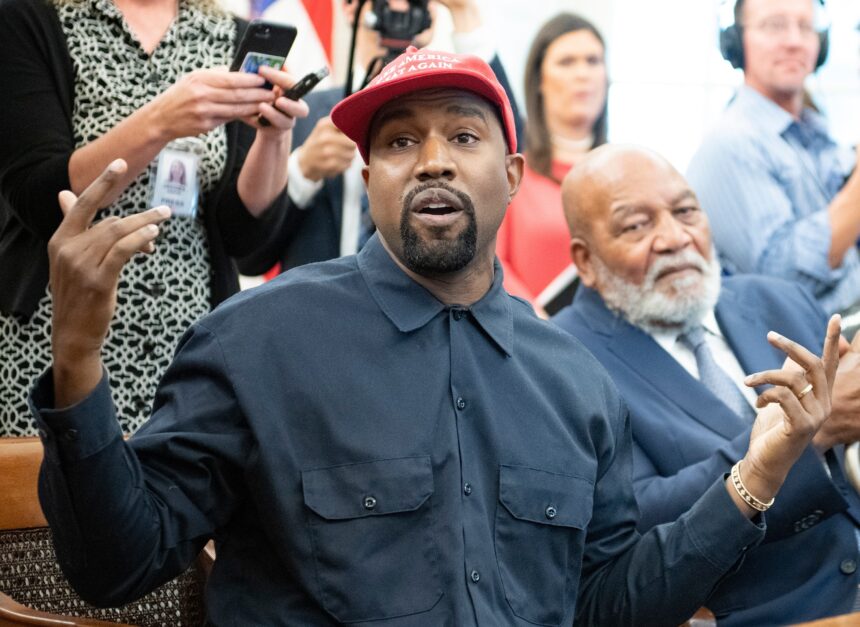
Wireless Festival organizers may have been expecting a splash when they announced Kanye West as a headliner for this summer’s London event, scheduled for July 10 through July 12. What followed, however, was not the kind of attention any festival wants in the months leading up to its gates opening.
The announcement quickly drew criticism from some of the most prominent voices in British public life, with politicians, community advocates, and corporate partners all weighing in on whether the rapper who issued an apology for antisemitic remarks earlier this year should be given one of the country’s most visible festival stages.
Leaders speak out
U.K. Prime Minister Keir Starmer did not hold back in expressing his position on the booking. He called the decision deeply concerning, pointing specifically to West’s history of antisemitic remarks and what he described as a celebration of Nazism. Starmer framed the issue not as a matter of music or entertainment, but as one of values arguing that everyone carries a responsibility to ensure Jewish communities feel safe in Britain.
London Mayor Sadiq Khan echoed that sentiment, adding his voice to a growing chorus of public figures who believe the booking sends the wrong message at a time when antisemitism remains a serious and ongoing concern.
The political pushback is notable in its directness. Festival lineups rarely draw comment from heads of government, which underscores just how charged the conversation around West has become in the years since his public remarks first drew widespread condemnation.
Pepsi exits
Perhaps the most tangible consequence of the backlash came from the corporate side. Pepsi, which had been the main sponsor of the Wireless Festival, announced it would be withdrawing its support for the event. The company’s spokesperson did not explicitly name West or his history as the reason, but the timing of the announcement arriving in the immediate aftermath of Starmer’s public comments left little room for ambiguity about what prompted the decision.
For festival organizers, losing a headline sponsor of that scale is a significant blow. It raises practical questions about the event’s finances and broader questions about whether additional partners may follow Pepsi’s lead as the July dates draw closer.
West’s recent momentum
The controversy arrives at a moment when West has been drawing some of his largest crowds in years. He recently completed two sold-out nights at SoFi Stadium in Los Angeles, with performances that generated considerable buzz. The shows featured a wide ranging lineup of guests, including frequent collaborator Andre Troutman, CeeLo Green, and his daughter North West.
Travis Scott joined him onstage for their collaboration FATHER, and Lauryn Hill made an appearance alongside her sons Zion and YG Marley, performing several of her own hits as part of the evening. By most accounts, the Los Angeles shows were a reminder of West’s continued ability to command a room and move tickets.
That commercial pull is likely part of why Wireless Festival pursued the booking in the first place. Whether that calculation still holds given the current climate is a question organizers are now being forced to answer publicly.
What happens next
With the festival still months away, the situation remains fluid. The combination of political condemnation and a high profile sponsor departure creates real pressure on organizers to respond either by standing behind their decision or reconsidering the lineup entirely.
What the episode makes clear is that West’s apology earlier this year has not been enough to quiet the conversation around his past statements. For many, the remarks he made and the extended period during which he stood behind them represent a line that a festival platform is not an appropriate way to move past.
The Wireless Festival has historically been one of the U.K.’s premier summer music events. How it navigates the weeks ahead will say as much about the state of accountability in the entertainment industry as it does about any single artist’s career.