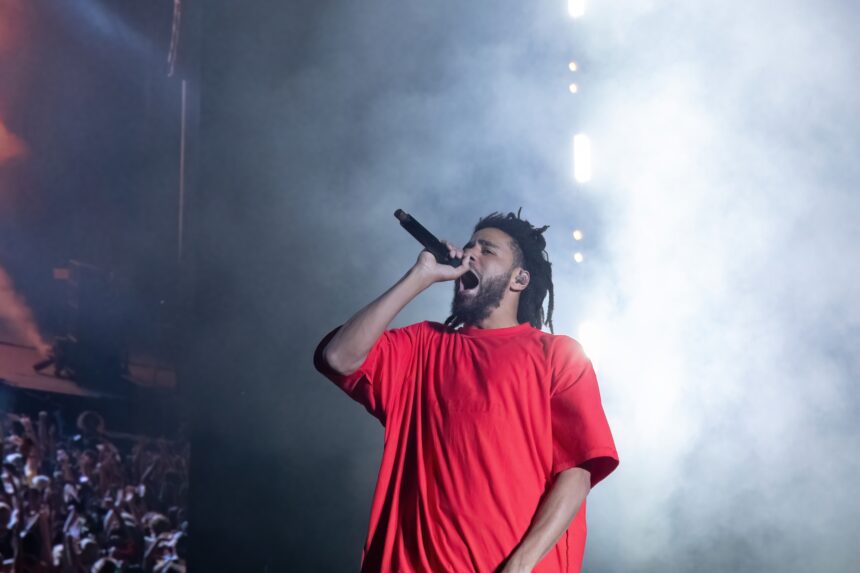
J. Cole has long been one of rap’s most self-assured voices, filling his records with declarations of greatness that have cemented his status as one of the genre’s most polarizing and celebrated figures. But in a candid recent conversation, the rapper offered a more nuanced picture of where that confidence actually comes from and how far it really extends.
Speaking during an appearance on the podcast 7 PM in Brooklyn, Cole addressed the bold claims that have defined much of his lyrical identity, explaining that the swagger heard on his records is less a reflection of his daily mindset and more of a creative character he steps into when the recording light turns on.
The persona behind the bars
Cole described the bravado in his music as a rap persona, a competitive headspace he deliberately adopts in the studio to push his writing to its highest level. He made clear that the version of himself who raps about being untouchable is not the same person who moves through the world on an ordinary day.
He explained that when he puts on what he called the cape, his approach to recording shifts entirely. That mental switch, he suggested, is what allows him to go line for line with anyone in the game. But outside the studio, he said, he holds no illusion that he stands above every rapper who has ever picked up a microphone.
He acknowledged there are moments mid-session when a verse comes together so cleanly that he feels genuinely unbeatable. Those flashes of certainty, he noted, are real. But they are moments, not a worldview.
The names he respects most
What made the conversation particularly striking was Cole’s willingness to name peers he believes are fully capable of outperforming him. He pointed to Black Thought and Lupe Fiasco as rappers whose skill he holds in the highest regard, suggesting that on any given day either could deliver a performance that leaves him scrambling.
He extended the same respect to members of his own generation, acknowledging that Drake and Kendrick Lamar operate at a level where the margins between them are razor thin and momentum dependent. His framing was not self-deprecating so much as honest. He positioned rap greatness as something fluid and situational rather than fixed and permanent.
The admission carries extra weight given the competitive chapter rap has just come through. Cole found himself briefly entangled in the highly publicized tension between Drake and Kendrick Lamar before stepping back, a decision he has spoken about with similar openness in previous interviews.
Humility as a competitive tool
There is something almost strategic about the way Cole frames his confidence. By separating the persona from the person, he protects himself from the kind of unchecked ego that has derailed careers while still giving himself the psychological runway to compete at the highest level. The cape, as he described it, is something he chooses to wear and chooses to take off.
For fans who have spent years debating whether Cole belongs in the conversation with rap’s all-time greats, his willingness to ask the same question himself may be the most compelling answer he has ever given. Greatness, in his telling, is not a title you hold. It is something you chase, session by session, verse by verse.