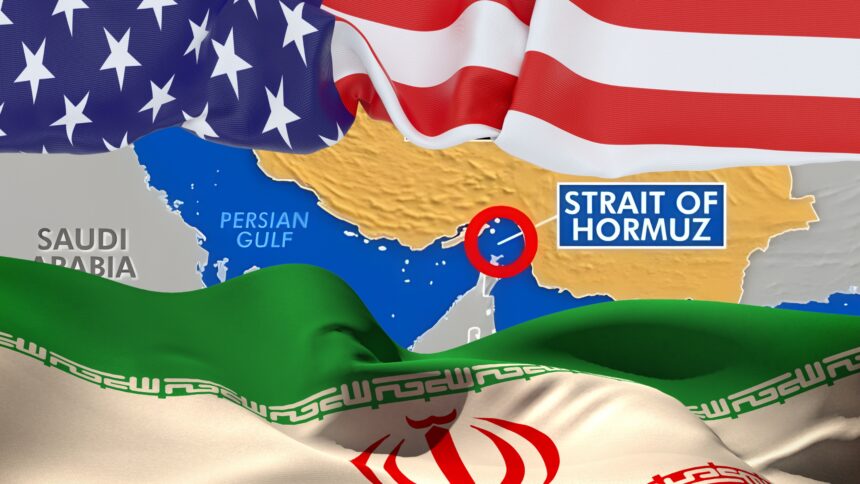
Treasury Secretary Scott Bessent signaled this week that the United States intends to reassert control over the Strait of Hormuz, one of the world’s most strategically important shipping corridors, and restore freedom of navigation for cargo vessels passing through the region. Speaking in a television interview Monday, Bessent described the administration’s approach as a steady progression toward that goal, with options on the table that range from direct US naval escorts to a broader multinational convoy arrangement.
The comments represent one of the clearest public statements yet from a senior administration official about the United States’ intentions in the strait, which has been a source of significant disruption to global oil flows since the outbreak of the current conflict.
Bessent and the scale of the oil deficit
On the broader question of global energy supply, Bessent painted a picture of a market under serious strain. He described the world as currently running a deficit of roughly 10 to 12 million barrels of oil per day, a figure that reflects the scale of the disruption caused by the closure of one of the most heavily trafficked waterways in the world.
The administration has been working to close that gap through multiple channels. The International Energy Agency has coordinated a release of strategic petroleum reserves contributing approximately 4 million barrels per day toward the shortfall. Bessent also pointed to the administration’s decision to lift sanctions on Russian and Iranian oil that was already in transit on the water at the time of the policy change. He was careful to note that the move was not intended to generate new revenue for either country, framing it instead as a pragmatic step to ease supply pressure without providing a financial windfall to either government.
The Red Sea and the Houthi question
With global attention focused heavily on the Strait of Hormuz, concerns have also emerged about a potential resurgence of disruptions in the Red Sea, where the Iranian-backed Houthi militant group had previously targeted commercial shipping. Bessent addressed those concerns directly, indicating that Houthi activity in the Red Sea has been relatively restrained in recent weeks and that he expects that restraint to continue.
The assessment comes despite a Houthi ballistic missile launch directed at Israel over the weekend. Bessent characterized that strike as targeted specifically at Israel rather than a signal of renewed interest in disrupting commercial maritime traffic. The distinction matters for global shipping operators, who have been navigating elevated uncertainty across multiple corridors simultaneously.
What comes next for global shipping
Whether through unilateral US naval action or a coordinated multinational framework, Bessent’s comments suggest the administration views a return to open navigation through the Strait of Hormuz as both achievable and necessary in the near term. The economic consequences of a prolonged closure have been visible across energy markets, and the knock-on effects for industries dependent on Middle Eastern aluminum, oil and liquefied natural gas continue to mount.
For the international shipping community, the Treasury secretary’s remarks offer a measure of reassurance that Washington is actively focused on the problem. Whether the timeline matches the urgency felt by markets is a question that the coming weeks will begin to answer.