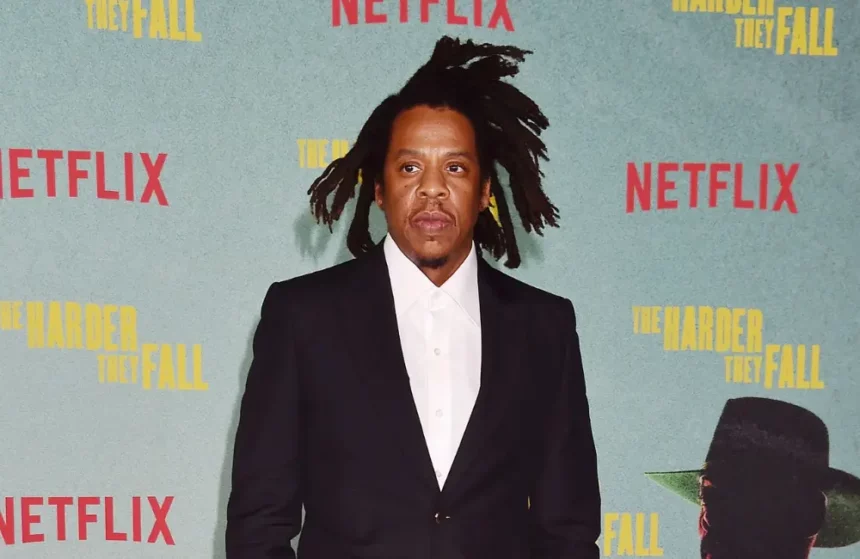
Before the private jets, the art collections and the $200 million Malibu mansion purchased reportedly in cash, Shawn Carter was just a kid navigating survival in the Marcy Houses, a public housing project in Brooklyn’s Bedford-Stuyvesant neighborhood. That origin story did not just shape the man who would become Jay-Z. It informs the way he thinks about wealth, morality and the growing chorus of voices that believe billionaires should not exist at all.
In a recent GQ interview, Jay-Z pushed back firmly against the wave of cultural and political energy directed at the ultrawealthy. His argument was pointed. Targeting billionaires as a class, he suggested, is a convenient distraction from addressing the deeper structural forces that allow extreme wealth to accumulate in the first place. Blaming the people at the top, in his view, lets broken systems off the hook entirely.
He went further on the question of whether money corrupts character, arguing that wealth does not fundamentally change who someone is. It may amplify certain traits, he acknowledged, but the essential person was always there. Morality, he insisted, is not a function of net worth and cannot be reduced to a dollar threshold.
A cultural moment with real stakes
The remarks land at a charged moment. A Pew Research survey released recently found that roughly one in five Americans, about 18 percent, believe it is morally wrong to be a billionaire. Among younger Americans, that number climbs to nearly one in three. The sentiment has moved beyond opinion polls and into policy. California is weighing a one-time billionaire tax, and federal lawmakers have introduced legislation targeting the wealthiest Americans directly.
Jay-Z became the first hip-hop billionaire in 2019. Forbes currently places his net worth at $2.8 billion, built across music, spirits, venture capital and real estate. His wife, Beyoncé, crossed the billionaire threshold herself in December 2025, making them one of the wealthiest couples in the world.
They are not alone in those ranks. Taylor Swift, Dr. Dre and Bruce Springsteen have all reached billionaire status, reflecting a broader shift in how generational wealth is now being built in entertainment. Across the country, Forbes counts 989 Americans with ten-digit net worths, the highest number ever recorded. Globally, billionaire wealth hit a record $18.3 trillion in 2025.
Elon Musk, currently valued at $827 billion following a Tesla shareholder-approved pay package worth $1 trillion, is widely projected to become the world’s first trillionaire.
Talent against the headwinds
What makes Jay-Z’s perspective distinct is that he does not speak about wealth from a place of inherited privilege. He has been candid for years about what growing up in Marcy actually looked like. The neighborhood cycled through extremes, moments of joy alongside sudden, violent loss. It was an environment that offered very little margin for error and even less in the way of institutional support.
He has described navigating those years as a strange emotional terrain, where celebration and grief could arrive on the same block within 24 hours of each other. What he carried out of that world was not bitterness but a relentless drive that he credits for his eventual success.
His position is not that the system is fair. He has stated plainly that he made it despite how the system is set up, not because of it. What he resists is the idea that tearing down those who escaped that system, rather than reforming the system itself, constitutes meaningful progress.
For Jay-Z, the conversation about billionaires only matters if it leads somewhere real. Outrage without structural change, in his telling, is just noise.