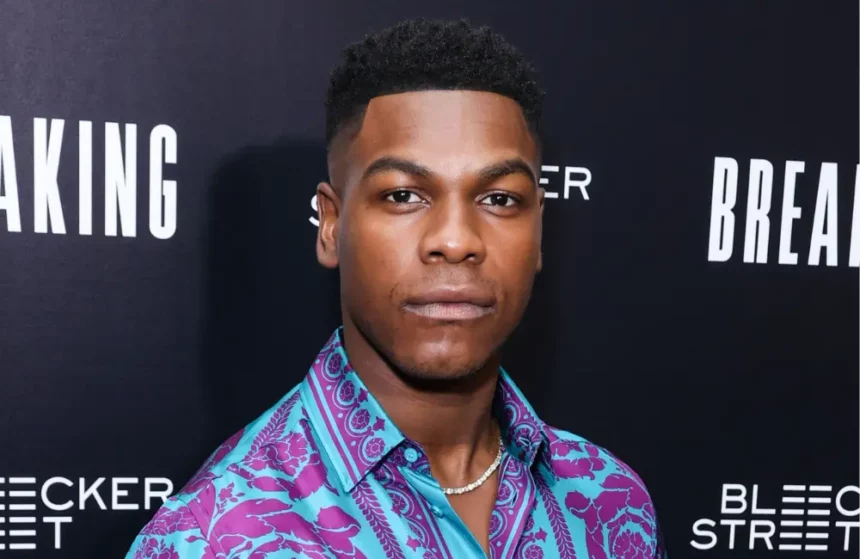
John Boyega has spoken about many things over the course of his career. His rise through the ranks of one of the biggest film franchises in history, his activism, his experiences navigating Hollywood as a Black British actor. But there is one story he has never told publicly, until now.
Boyega grew up in Peckham, South East London. So did Damilola Taylor. In October 2000, Damilola, just 10 years old, was fatally stabbed in a stairwell meters from his home. His death sent shockwaves through Britain and became one of the most painful and consequential moments in the national conversation about knife crime. Boyega was among the last people to see him alive that day. For 25 years, he has carried that.
A documentary that fills a gap
A new BBC documentary is finally telling the story of that final day through the eyes of the young people who lived it. Titled Damilola Taylor: The Last 24 Hours, the film retraces the events leading up to Damilola’s death, examining the world he moved through and the pressures that shaped the lives of children growing up in that environment at that time.
Boyega’s participation marks the first time he has spoken on record about what he witnessed and what followed. He is joined by close friends and family members, many of whom are also speaking publicly for the first time, sharing the fear and grief that descended on their community in the aftermath of the murder and reflecting on how that event shaped the people they became.
The documentary is directed by Alex Thomas, a double Grierson Award-winning filmmaker whose previous work includes another powerful true crime portrait set in South London. It is produced by Optomen, the production company behind At Home with the Furys. Global distribution will be handled by All3Media International.
Why this telling matters
Damilola Taylor’s death has been examined before. A BBC drama about the case, Damilola: Our Loved Boy, won two BAFTA Awards, including one for actress Wunmi Mosaku. But what has been largely absent from the public record is the perspective of the children who were there, who grew up alongside Damilola and who had to process his death while still navigating the same dangerous environment that claimed his life.
That is the space this documentary intends to occupy. The film does not approach the story as a cold case or a crime retrospective. It approaches it as a human document, centered on memory, survival and the long shadow that a single act of violence can cast over an entire generation.
The director has spoken about the importance of showing what it meant to grow up surrounded by fear and the pressure to protect yourself, and how those conditions influenced the choices young people made. A quarter of a century later, those pressures have not disappeared. The film makes that connection explicit.
Boyega’s voice as a witness
What makes Boyega’s involvement particularly significant is what he represents. He is not a criminologist, a journalist or a politician. He is a man who was a child in Peckham when this happened, who knew Damilola, who saw him that day and who then watched his community convulse with grief and fear. His voice carries the weight of lived experience in a way that no outside perspective can replicate.
Damilola Taylor: The Last 24 Hours does not yet have a confirmed broadcast date, but its arrival 25 years after the murder feels both timely and necessary. For Boyega, it appears to be a story he has been waiting for the right moment to tell.