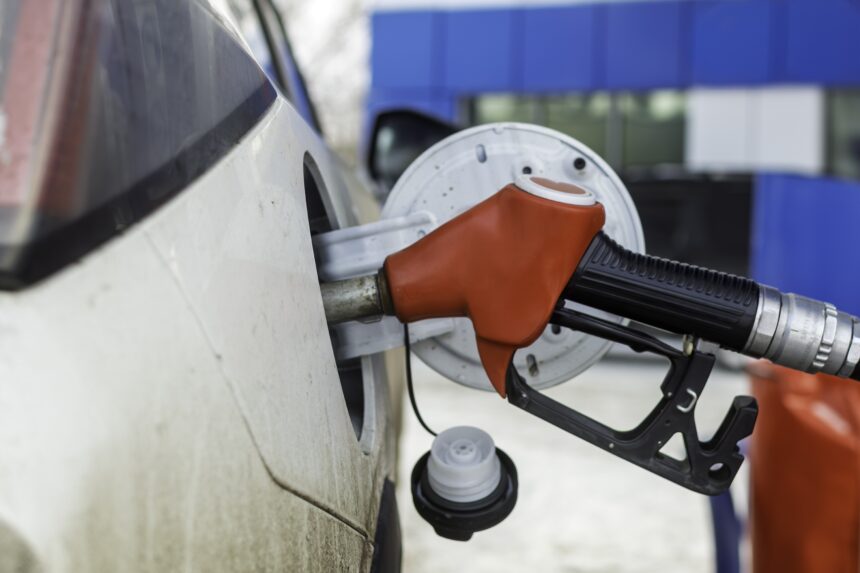
Gas prices in the United States have surged by nearly $1 per gallon in just one month, topping $3.92 per gallon according to the latest data from AAA. At the current pace, analysts say $4 gasoline could arrive within days, and the financial ripple effects are already being felt well beyond the pump.
Americans are spending roughly $370 million more on gasoline today than they were a month ago, according to GasBuddy data. For households already navigating elevated prices on groceries, housing and everyday goods, that kind of sudden jump in a non-negotiable expense leaves very little room to adjust.
Why economists are calling this an energy tax
Economists watching the situation closely have drawn a pointed comparison between rising fuel costs and a tax increase one that consumers have no way to avoid and no vote on. The analogy captures something important: unlike discretionary spending, most Americans cannot simply choose to stop buying gasoline when prices climb.
Luke Tilley, chief economist at Wilmington Trust and a former economic adviser to the Philadelphia Federal Reserve, described the dynamic in stark terms, noting that with normal wage growth and essentially no job growth, the energy price surge is likely to weaken consumer behavior broadly. The pullback, he said, will not be limited to fuel it will extend to services and other spending categories as household budgets absorb the shock.
Deutsche Bank senior U.S. economist Brett Ryan has put specific numbers to the pressure. For every $10 rise in oil prices, gas jumps roughly 25 cents at the pump. With prices up close to a dollar per gallon, Ryan estimates that consumers are now directing an additional $115 billion toward energy spending money that would otherwise flow into other parts of the economy.
Where oil prices stand and what that means
On Friday, West Texas Intermediate crude, the U.S. benchmark, was trading near $97 per barrel, while Brent crude hovered near $106 per barrel. Those levels are putting fresh pressure on transportation costs in particular, with diesel prices sitting at a four-year high. That matters enormously for inflation because roughly 70% of goods in the U.S. are moved by truck meaning higher diesel costs have a way of working into the price of nearly everything on store shelves.
Federal Reserve Chair Jerome Powell acknowledged the complexity of the situation on Wednesday, noting that oil and its derivatives feed into the production and transportation of a wide range of goods. The Fed opted to hold interest rates flat at its March meeting, but Powell said it is too soon to gauge the full scope and duration of higher energy prices on the broader economy. Fed officials have already raised their inflation outlook for 2026, though they do not currently anticipate significant deterioration in the labor market.
What this means for rate cuts and the stock market
The energy shock is complicating what had been a relatively straightforward conversation about interest rate cuts later this year. Betting markets now assign a 27% chance of just one rate cut in 2026 and a 34% chance of no cuts at all a notable shift in expectations that reflects growing concern about inflation rather than recession risk.
Ryan framed the market’s message clearly: this is being read as an inflation problem, not a growth problem. Tilley, however, sees the possibility of a different outcome, arguing that if consumer demand weakens significantly enough, energy price increases may not feed through into core inflation the way they typically would similar to the dynamic that played out when tariffs came into focus in 2025.
There is some potential offset on the horizon. Tax relief included in the Trump administration’s One Big Beautiful Bill is expected to provide some cushion for households. Ryan estimated that oil prices would need to reach somewhere between $140 and $150 per barrel before that benefit is fully erased by energy costs a level that remains well above current prices but no longer feels entirely hypothetical to some analysts.
Corporate earnings could be next in line
The S&P 500 has already dropped roughly 5% since conflict in the Middle East helped push oil prices higher. With companies set to report first-quarter earnings next month, strategists say it may only be a matter of time before rising input costs start showing up in forward guidance. Higher fuel and transportation expenses are the kind of creeping cost that companies often absorb quietly for a quarter or two before acknowledging the impact publicly. The delayed nature of that reaction, analysts caution, does not mean the impact is not coming it just means markets have not fully priced it in yet.