Venezuela won the World Baseball Classic on Tuesday night, defeating the United States 3-2 in Miami in a game that delivered the kind of late-inning drama the tournament was built for. The result was remarkable on its own. The context surrounding it made the moment even more difficult to categorize.
The final played out inside a city with deep ties to the Venezuelan diaspora, just over two months after the United States carried out the detention of Venezuelan President Nicolas Maduro and First Lady Celia Flores. Maduro and Flores face federal drug trafficking charges in Manhattan, where both have entered not guilty pleas. Following their removal, Vice President Delcy Rodriguez assumed the presidency.
How the game unfolded
Venezuela carried a 2-0 lead into the bottom of the eighth inning before Bryce Harper erased it with a two-run home run to tie the game. The momentum did not hold for long. In the top of the ninth, Eugenio Suarez drove in the go-ahead run with a double, putting Venezuela back on top 3-2. Daniel Palencia then retired the side in order in the bottom half to secure the save and deliver Venezuela its first World Baseball Classic championship.
Trump’s response
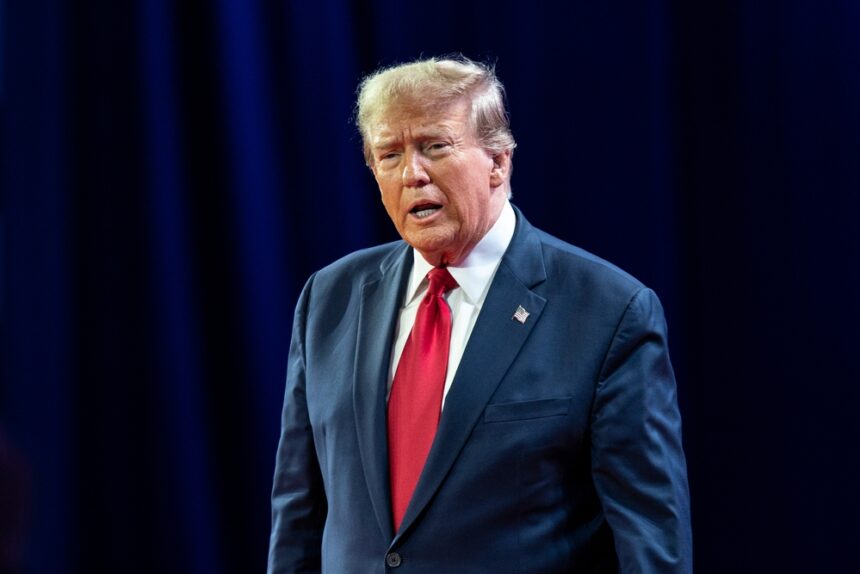
Shortly after the final out, Trump posted a single word in all capitals on his Truth Social platform. The word was “STATEHOOD.” It was not the first time he had floated the idea in connection with Venezuela during the tournament. A day earlier, after Venezuela eliminated Italy in the semifinal, Trump had posted a longer message on social media suggesting Venezuela could become the 51st state, citing what he described as good things happening in the country and wondering aloud about the source of its recent momentum.
The posts landed in the context of a geopolitical situation that has grown increasingly complicated since the U.S. operation that removed Maduro from power. Shortly after that action, Trump made public statements suggesting the United States intended to benefit from Venezuela’s oil resources. A report published earlier this year indicated that revenue from the sale of Venezuelan oil, valued at approximately $500 million, was being directed to a financial account in Qatar.
A championship with layers
For the Venezuelan players on the field Tuesday night, the victory represented something straightforward and earned. They outplayed the United States across nine innings in front of a crowd that had every reason to be paying attention to more than just the baseball. Suarez’s go-ahead double and Palencia’s shutdown ninth gave Venezuela a result that will be celebrated regardless of the political noise surrounding it.
For observers trying to make sense of the broader picture, the evening offered an unusual collision of sport and geopolitics that is becoming harder to separate in the current moment. A country whose leadership the United States removed from power two months ago just defeated the United States on a baseball diamond in an American city, and the president’s response was to suggest that country should become part of the United States.
Whether Trump’s statehood comments carry any policy weight or represent the kind of off-the-cuff social media instinct that characterizes much of his online presence remains unclear. What is clear is that Venezuela’s first World Baseball Classic title arrived at one of the most complicated moments in the two countries’ modern relationship.