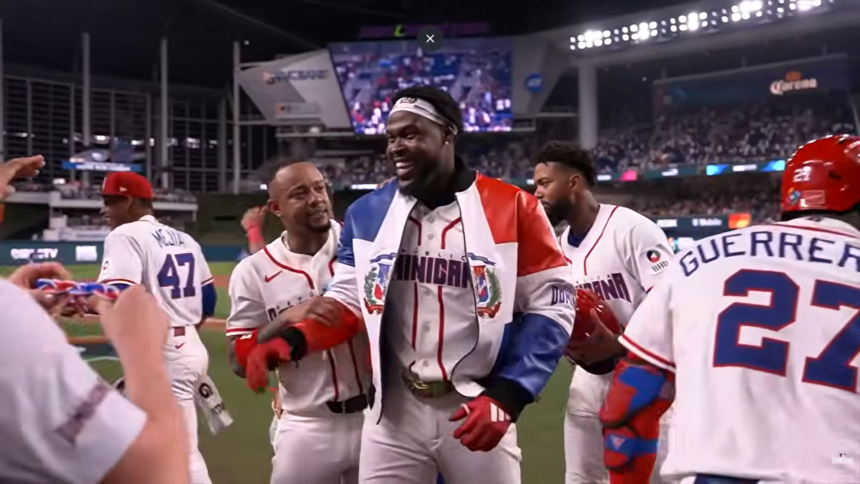
The Pittsburgh Pirates entered the World Baseball Classic with two of the most electric young players in baseball. Paul Skenes represented the United States on the mound. Oneil Cruz suited up for the Dominican Republic at shortstop. Both delivered performances that reminded anyone watching why the Pirates are viewed as a franchise with a genuine future.
But for Cruz, that showcase may have done something complicated. By the time the tournament ended, his name was already being mentioned in trade conversations, and the Pirates may be facing a decision they had not planned to make this soon.
A tournament that changed the conversation
Cruz’s 2025 regular season had been a study in frustrating potential. He hit just .200 with a .676 OPS across 135 games, frequently looking overmatched at the plate despite flashing the kind of tools that make scouts reach for superlatives. The power was there, with 20 home runs. So was the speed, with a National League-leading 38 stolen bases. But the contact issues and strikeout concerns were real, and they kept him from becoming the consistent force Pittsburgh needed him to be.
The World Baseball Classic looked like a different Cruz entirely. He slashed .600 with two home runs, four RBIs and three walks across eight plate appearances. More striking than any of those numbers was the fact that he did not strike out once in the entire tournament. For a player whose free-swinging tendencies had long been the main knock against him, going through a full international tournament without a single strikeout was the kind of performance that forces a reassessment.
What the trade picture looks like
Cruz is under team control for three more seasons, which makes him a genuinely attractive asset for both small-market teams building toward contention and bigger-market clubs looking to add controlled talent without breaking the bank. That combination of tools, youth and affordability is exactly what drives trade markets.
The timing of a potential deal matters. If Pittsburgh gets off to a slow start in 2026, the pressure to make a move could build quickly. The Pirates do not have to trade Cruz, and opening day will likely come and go without a deal. But by mid-May, if the team is struggling and the offers are compelling, the calculus changes.
The case for moving on and the case for staying put
Pittsburgh is not without options on either side of this. The Pirates have a farm system deep enough to absorb Cruz’s departure and potentially replace his production through what they might receive in return. A player with his profile, coming off a WBC that silenced some of the loudest doubts about his hitting, could command a return that accelerates the rebuild in ways that keeping Cruz simply cannot.
At the same time, the Pirates are not a team in crisis. Skenes has already established himself as one of the best young arms in the game, and Cruz, when clicking, gives them a shortstop with a skill set that few teams at any level can match. Trading him means betting that what comes back will be more valuable than what walks out the door, and that is never a simple calculation.
What the World Baseball Classic did was remind everyone, including the Pirates’ front office, that Cruz at his best is a special player. Whether Pittsburgh decides to build around that or cash in on it while his value is peaking is the question that will define the early part of their 2026 season.