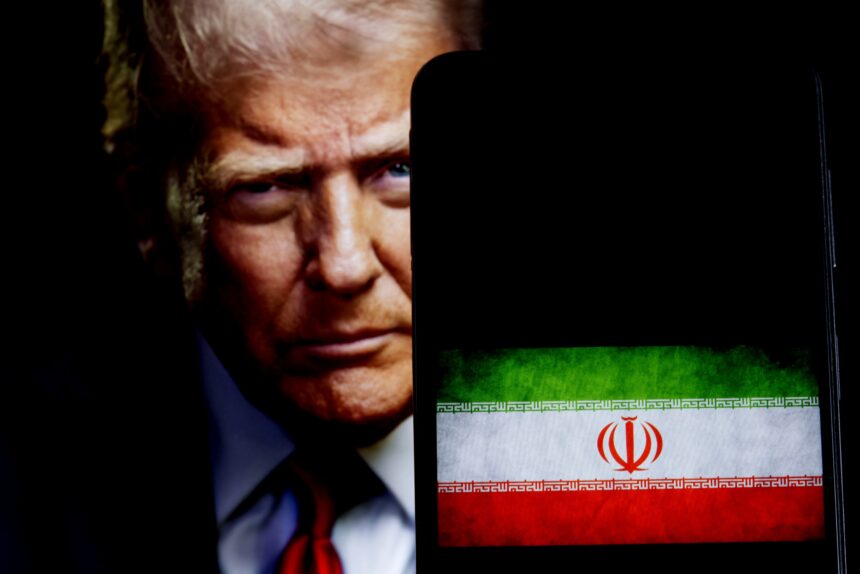
President Donald Trump has abandoned his push to bring allied nations into the war with Iran, pivoting instead to public criticism of the countries that rejected his appeals. The shift marks a significant moment in a conflict that has already reshaped energy markets, strained diplomatic relationships and left the United States operating largely without the coalition support that has historically defined its major military engagements.
Germany, France, Canada, Greece and Norway are among the nations that have explicitly ruled out participation in the joint U.S.-Israeli operations, including efforts to reopen the Strait of Hormuz. The near-closure of that vital waterway has sent oil prices hovering around $100 a barrel and disrupted global shipping in ways that analysts say could take months to unwind.
Allies called out, coalition stays empty
Trump directed sharp criticism at NATO partners this week, calling their refusal to get involved a serious strategic error. Japan, Australia and South Korea were also singled out in a social media post in which Trump indicated the United States had no need for outside help. At the White House, he revisited long-standing doubts about the reliability of the alliance, framing the conflict as a test that revealed exactly what he had always suspected.
The administration has also continued to appeal to China for naval support in reopening the Strait of Hormuz, though no government has publicly committed to sending warships to escort commercial vessels through the waterway. Military analysts have cautioned that doing so without a ceasefire in place would carry serious risks regardless of any armed escort.
A planned summit between Trump and Chinese President Xi Jinping has been pushed back five to six weeks, with Trump citing the need to remain in Washington to manage the war effort.
The war and its costs
On the ground and in the markets, the conflict is intensifying. Israel announced the killing of Iranian security chief Ali Larijani in an overnight operation, one of the most significant eliminations of an Iranian official since Supreme Leader Ali Khamenei was killed on the war’s first day. Khamenei has been succeeded by his son, Mojtaba Khamenei, and Tehran has continued retaliatory strikes across the region.
Iran set a major natural gas field in the United Arab Emirates ablaze overnight, marking the first time the country has damaged an upstream oil or gas facility in a neighboring Gulf state during this conflict. The attack, combined with the continued shutdown at Hormuz, briefly pushed Brent crude futures to nearly $105 a barrel before prices pulled back.
Iran has attacked roughly 20 vessels in the Persian Gulf and near Hormuz since the fighting began. The UAE, Saudi Arabia, Iraq and Kuwait have all reduced oil output as a result. Qatar, one of the world’s top suppliers of liquefied natural gas, has halted production. Prices for LNG, fertilizers, aluminum and other commodities have climbed sharply.
Pressure building at home
The economic fallout is beginning to register politically. The average retail gasoline price has risen every day since the conflict began, reaching around $3.79 a gallon. With midterm elections approaching in November, the administration faces a narrowing window to show progress before voter frustration hardens.
Opposition is also surfacing within Trump’s own circle. A senior counterterrorism official resigned this week in protest of the war, arguing that the United States had been drawn into the conflict by Israel. Trump pushed back on the resignation publicly, questioning the official’s judgment on national security.
The administration has maintained that it expects military operations to conclude within four to six weeks, though officials have acknowledged that a prolonged conflict could force a change in approach. Trump himself has offered mixed signals, saying the United States is not ready to leave yet but that a departure is coming in the near future. More than 4,000 people have been killed across the region since the war began. The United States has lost 13 military personnel.