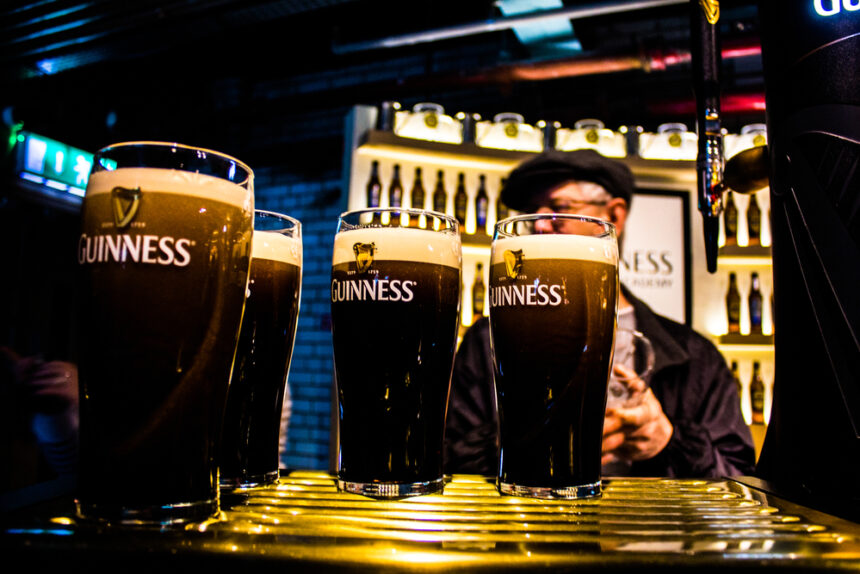
Every March 17, something deeply predictable and deeply beloved unfolds across the United States. Green shirts come out, corned beef hits the stove, and a pint of Guinness finds its way into just about every hand. The dark, creamy Irish stout has become as central to St. Patrick’s Day as shamrocks and street parades — showing up in bars, backyards, and kitchens from coast to coast. Nearly 4 million pints of Guinness are poured across the country on the holiday alone, with close to 150,000 kegs shipped just to meet that single day of demand.
But the intimacy between one beer and one holiday did not happen by chance. It is the product of history, identity, clever engineering, and the kind of cultural staying power that most brands only dream about. Here is how Guinness became the undisputed drink of St. Patrick’s Day.
4 Reasons Guinness Dominates St. Patrick’s Day
- A legendary founder and an unforgettable lease. The Guinness story begins in Dublin in 1759, when Arthur Guinness signed the lease on St. James’s Gate Brewery — a deal stretching an audacious 9,000 years. He started with ale before pivoting to porter as the style surged in popularity across Dublin, eventually committing fully to the dark, malty stout that would carry his name around the world. That founding story, built on confidence and ambition, became part of the brand’s mythology long before modern marketing ever existed.
- The beer became a symbol of Irish identity. Over centuries, Guinness grew from a popular Dublin drink into something that represented Ireland itself. Its dark color, distinctive flavor, and unmistakable silhouette set it apart from every other beer on the shelf. Since St. Patrick’s Day is fundamentally a celebration of Irish heritage, Guinness offered the world an immediate, accessible way to participate in that culture — no passport required. Raising a pint became a gesture of solidarity with Irish identity, whether a person’s roots traced back to Cork or they simply appreciated the tradition.
- Irish pubs put Guinness front and center. The Irish pub is one of the most replicated concepts in global hospitality, and wherever one exists, Guinness is almost certainly on draft. These establishments became the primary gathering points for St. Patrick’s Day celebrations in cities across America, and the beer poured most consistently at those gatherings was Guinness. That reliable presence reinforced the association year after year until the two became genuinely inseparable in the public imagination.
- The science behind the perfect pint is part of the appeal. Guinness on draft is widely considered the gold standard — the way the beer was always meant to be experienced. For those drinking from a can, the brand engineered a remarkable solution— a small hollow plastic widget inside each can, filled with nitrogen, that releases pressurized gas the moment it is opened. The result is the beer’s signature cascading pour and the dense, creamy head that has become one of the most recognizable sights in drinking culture. That tiny widget turned a can of beer into a small act of engineering, and people noticed.
Guinness Beyond the Glass
The relationship between Guinness and St. Patrick’s Day does not stop at the bar. As Irish immigrants built communities across the United States over generations, they brought their culinary traditions with them — and Guinness traveled from the pub straight into the kitchen. Its dark, malty profile with a subtly bitter edge makes it a natural partner for slow-cooked savory dishes, where it tenderizes meat and adds remarkable depth to sauces. Beef stew, pot roast, and chili are among the most beloved dishes to benefit from a generous pour of stout.
The result is a beer that shows up twice on the holiday — once in the glass and once on the plate. That level of cultural penetration is something very few food and beverage brands ever manage to achieve, and it is a big reason why Guinness does not just belong to St. Patrick’s Day. In many ways, it has become St. Patrick’s Day.
Source: Austin American-Statesman