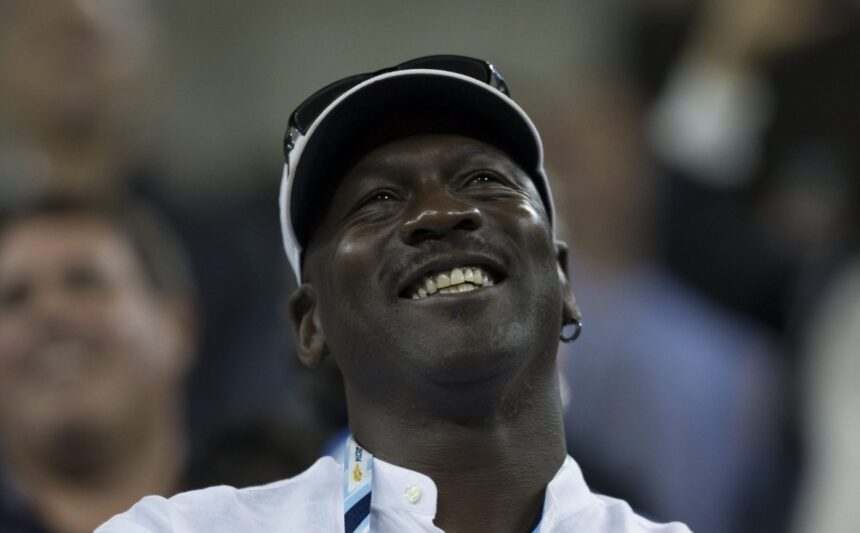
Michael Jordan grew up in Wilmington, North Carolina, during one of the most turbulent stretches of the civil rights era. Court-ordered desegregation was forcing Black and white students into the same public high schools for the first time, and the community was not welcoming the change quietly. Racial tensions were visible, raw, and inescapable for young people navigating school hallways that had become contested ground.
For Jordan, the tension was not abstract. It arrived in the form of a direct racial slur from a fellow student, a moment he would describe decades later as one of the most formative and painful of his early life. He was fifteen years old.
A teenage rebellion fueled by more than youth
Jordan’s high school years were complicated even before the racial incident. He was not yet the player the world would come to know. At five feet nine inches as a sophomore, he was showing none of the signs that would eventually make him the most celebrated athlete of his generation. The normal pressures of adolescence, layered over a racially charged environment, created something harder to shake.
The incident that stayed with him involved a classmate who directed a racial slur at him in the middle of the already heated atmosphere surrounding desegregation. Jordan’s response was immediate and physical. He threw a soda at the girl. The moment crystallized something in him that was already building from the climate around him.
The timing coincided with the airing of the landmark television miniseries Roots, which drew massive national viewership and ignited a cultural reckoning about slavery and its legacy. For a fifteen-year-old already navigating daily racism, the series deepened the weight of everything he was feeling. By his own account, he entered a period where his anger toward white people became consuming and indiscriminate. He described himself at that time as a racist.
What brought him back
The anger did not last. Jordan later credited his mother, Deloris, as a key presence in helping him move through that period and see beyond it. Her guidance and the broader values his parents instilled in him eventually pulled him away from the closed worldview that had taken hold during those difficult months.
A friendship also played a significant role. Jordan developed a close bond with a white classmate named David Bridgers, who had recently moved to Wilmington from South Dakota following his parents’ divorce. Bridgers became a regular presence in the Jordan household. He faced bullying from within the community for that friendship, and Jordan became a stabilizing force in his life at a time when Bridgers needed one. The relationship gave Jordan a lived counterpoint to the generalizations he had been carrying.
A lesson that took time to fully absorb
Looking back on that stretch of his life, Jordan described it as one of the hardest he had known. The basketball struggles, the emotional intensity of adolescence, and the constant presence of racial hostility created an environment where it would have been easy to close off permanently.
He acknowledged that some people who go through similar experiences do exactly that and carry the hatred forward for the rest of their lives. He chose a different direction. His parents taught him to acknowledge what had happened, process it honestly, and then focus on what he could do going forward rather than staying anchored in the pain.
A foundation beneath the greatness
The story of Jordan at fifteen sits far outside the highlight reels and championship narratives that define how most people know him. But it speaks to something real about where his drive came from and what he had to work through to get there.
The anger was real. So was the growth. And the community that shaped both, complicated, divided, and ultimately humanizing, left a mark on him that no trophy could fully account for.