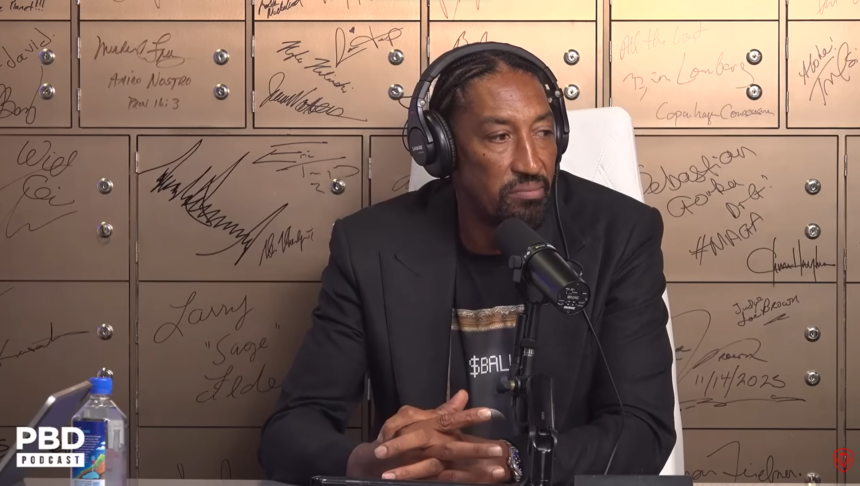
For more than two decades, Scottie Pippen held onto the physical evidence of one of the greatest careers in NBA history. Jerseys from six championship runs with the Chicago Bulls. Gear from Team USA, including pieces from what many still consider the greatest basketball team ever assembled. He kept all of it, carefully, with the idea that one day it would mean something to the people closest to him.
Then his kids told him they didn’t want it.
Rather than let the collection sit in storage indefinitely, Pippen made a decision that is now drawing considerable attention from the sports memorabilia world. He is putting it all up for auction.
A collector letting go of his own collection
Pippen has described the process of revisiting the collection as unexpectedly emotional. Going back through items he hadn’t seen in years, seeing everything laid out, brought a weight he hadn’t fully anticipated. But the practicality of the situation eventually won out. He could not display the entire collection, his children had made their disinterest clear, and the alternative was leaving it boxed away for the rest of his life.
What shifted his thinking was the recognition that the memorabilia carried meaning beyond his own household. There are collectors across the country and around the world who grew up watching those Bulls teams, who remember exactly where they were the first time they saw Pippen defend the opposing team’s best player into submission or push the break with a precision that made the game look effortless. For those people, owning a piece of that history is not a transaction. It is something closer to a connection.
The teams that changed basketball
Pippen’s career was built around two of the most globally significant basketball enterprises of the twentieth century. The Chicago Bulls of the 1990s, who won six titles across two separate three-peat runs, did more to export the NBA’s appeal internationally than any marketing campaign could have manufactured. And the 1992 United States Olympic team, which competed in Barcelona and has never seriously been challenged for the title of the greatest basketball roster ever assembled, turned the sport into a worldwide obsession overnight.
Pippen was central to both. He won six championships alongside Michael Jordan and collected two Olympic gold medals, including the one earned in Barcelona. While Jordan was the gravitational center of both teams, Pippen was the force that made the system function, the connector whose versatility and unselfishness gave those rosters a dimension no single star could provide alone.
A generation inspired by those moments
The reach of those teams is still being felt today. The NBA features more international players now than at any point in its history, and many of them have cited the Bulls and the Dream Team as the reason they fell in love with basketball in the first place. Pau Gasol, one of the greatest international players the league has ever seen, has spoken about watching the Dream Team play in his hometown of Barcelona at age 12 and understanding in that moment what the sport could be at its highest level.
That kind of inspiration rippled outward into dozens of countries and touched millions of children who grew up wanting to play the game the way those Americans played it.
What the market will bear
NBA memorabilia has become a serious collector’s market, with game-worn jerseys, signed equipment and championship-era artifacts routinely commanding significant sums at auction. Pippen’s collection, spanning both the Bulls dynasty and the Dream Team era, sits at the intersection of everything the market values most.
For anyone who grew up on 1990s basketball, the auction represents something rare. A chance to own not just an object, but a fragment of the moment the game became what it is.