The Olympic wrestler and Jon Jones training partner dominated the Mexico Fight League bout but showed glimpses of inexperience that suggest a slower path to the big stage
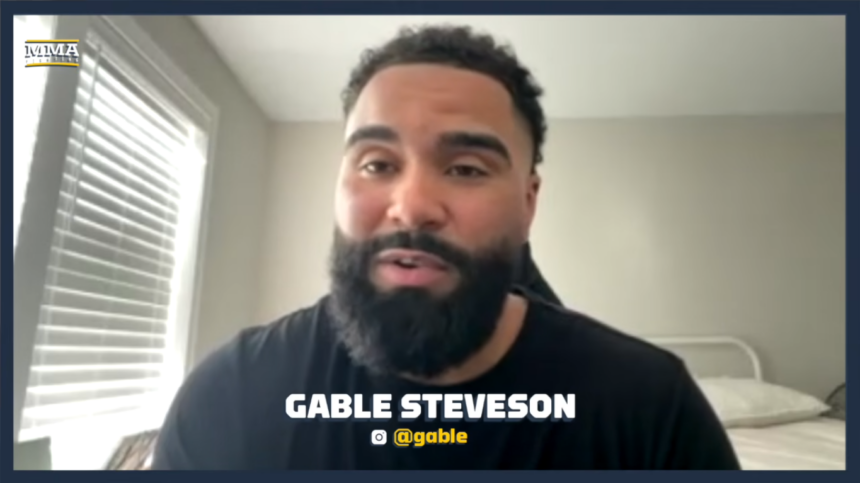
Gable Steveson remained undefeated in professional MMA on Thursday, cruising to a first-round TKO over veteran Hugo Lezama (11-4) at Mexico Fight League 3 in Monterrey, Mexico. The Olympic gold medalist improved to 3-0 with a finish at the 3:50 mark after landing a series of unanswered strikes on the ground. Before the fight, Steveson had hinted at potentially calling for a UFC bout, even mentioning the promotion’s White House event this summer as a possible platform. But after dominating Lezama, he completely avoided calling out the UFC. Instead, he gave the most understated post-fight interview possible: “I feel great. I’m getting better each day. I’m going to take a shower, go back to my hotel and fall asleep.” That’s not the statement of someone expecting an immediate UFC offer. That’s the perspective of someone taking the long view of his MMA development.
What’s genuinely interesting about Steveson’s approach is the restraint
He trains alongside Jon Jones in Albuquerque, arguably the greatest heavyweight of all time. Jones has publicly predicted Steveson will win the UFC heavyweight championship by early 2027. The two have discussed potentially fighting at the White House event simultaneously. That’s setup for Steveson to call out the UFC immediately. Instead, he’s deliberately staying quiet about it. That suggests either Steveson or his team believes he needs more development time before jumping into the UFC’s heavyweight division.
The fight itself revealed why that might be wise
Steveson dominated Lezama throughout, but he showed clear inexperience in MMA’s nuances. Lezama landed a wild spinning wheel kick on the feet that Steveson should never have allowed to develop. More tellingly, Steveson looked slightly fatigued even though the fight ended in the opening round. That’s not championship-level conditioning for MMA. That suggests the wrestling-based training isn’t perfectly translating to the demands of mixed martial arts yet. At 25 with an Olympic pedigree and two-time NCAA wrestling credentials, Steveson has enormous upside. But one-sided victories against less experienced opponents don’t equal readiness for the UFC heavyweight elite.
The UFC is clearly interested in Steveson matchmaker Mick Maynard attended his boxing debut in October, which Steveson won via 24-second knockout. That level of attention from the UFC suggests the promotion sees what Jones sees: a generational athlete with wrestling credentials that could translate into heavyweight dominance. But there’s a gap between “interesting prospect” and “ready for elite competition.” Lezama, despite his 11-4 record, is not elite MMA talent. He’s a regional fighter. Real UFC competition would be exponentially harder.
What’s remarkable is Steveson’s willingness to develop patiently rather than rush into the UFC. He could have called out the UFC, potentially gotten a fight on the White House card, and leveraged his celebrity and Jon Jones connection into a huge opportunity. Instead, he’s focused on getting better: “I’m getting better each day.” That’s the mentality of someone taking MMA seriously rather than treating it as a celebrity boxing exhibition.
Jones’s early championship prediction (early 2027) gives Steveson a reasonable timeline to continue developing. A couple more regional wins, a move up in competition level, and demonstrations of improved conditioning could make him genuinely ready for the UFC by mid-2026. That would position him for a full 2026-27 season of UFC fights before Jones’s predicted title shot timeline.
For Steveson, staying quiet about the UFC after beating Lezama sends a message: I’m focused on development, not Instagram callouts. That’s mature athlete thinking.
The White House event can wait until he’s actually ready.