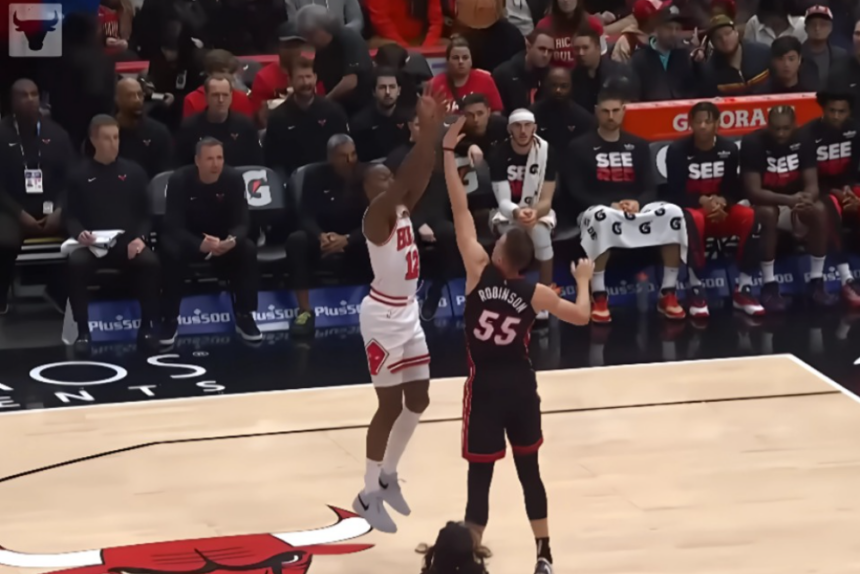
The Minnesota Timberwolves pulled the trigger on a significant roster upgrade Thursday morning, bringing in Ayo Dosunmu from the Chicago Bulls in a transaction that signals their urgency to compete now. The deal sends a clear message about Minnesota’s championship ambitions while Chicago continues dismantling their backcourt in favor of youth and draft capital.
Minnesota currently trails the third seed in the Western Conference by just one game, but the specter of the play-in tournament looms large. Rather than risk sliding into basketball’s most unpredictable postseason format, the front office decided to bolster their guard rotation immediately. The move addresses a glaring weakness that emerged after Mike Conley’s departure left the team without reliable depth behind Anthony Edwards and Donte DiVincenzo.
What Minnesota Gave Up and What They Gained
The Timberwolves sent Rob Dillingham and Leonard Miller to Chicago along with four second-round draft selections. In return, they received Dosunmu and forward Julian Phillips. The exchange reflects two franchises operating on completely different timelines, with Minnesota sacrificing future possibilities for present-day production.
Dosunmu arrives in Minneapolis riding the best statistical stretch of his career. The 25-year-old guard has elevated his game this season, averaging 15.0 points per game while providing solid rebounding and playmaking numbers for his position. His performance represents a career peak, making him an attractive addition for any team eyeing a deep playoff run.
The Illinois product brings versatility that should integrate smoothly into Minnesota’s system. He can operate as either a primary or secondary ball-handler, defend multiple positions, and knock down open shots when defenses collapse on star players. These qualities make him particularly valuable in postseason basketball, where rotations tighten and every possession carries magnified importance.
Minnesota’s Calculated Risk
The Timberwolves secured an immediate upgrade without surrendering any first-round picks, which represents shrewd asset management. Dosunmu provides the kind of two-way capability that coaches trust in crucial playoff moments. His basketball IQ and defensive intensity should mesh well with Minnesota’s identity as a gritty, competitive squad.
Yet this transaction carries inherent risk. Dillingham entered the league as the eighth overall selection in last year’s draft, bringing tantalizing offensive potential despite minimal playing time in Minnesota. The young guard possesses the kind of scoring instincts and shot creation ability that could blossom into something special with proper development and opportunities.
Miller also flashed intriguing tools before this deal went down. Both players represent the type of high-ceiling prospects that often transform into impact players down the road. Minnesota essentially wagered that Dosunmu’s proven production over the next few seasons outweighs the uncertain but potentially explosive upside of those younger pieces.
The front office clearly believes their championship window exists right now. With Edwards entering his prime and the roster constructed to compete immediately, gambling on established talent makes logical sense. However, if Dosunmu fails to elevate his game in Minnesota or if Dillingham blossoms in Chicago, this trade could age poorly.
Chicago’s Asset Accumulation Strategy
The Bulls found themselves drowning in backcourt talent following recent moves that brought Anfernee Simons and Jaden Ivey to the roster. Combined with Josh Giddey and Collin Sexton already on the team, Chicago faced an impossible rotation puzzle. Someone had to go, and Dosunmu became the logical choice given his trade value and the logjam at guard.
By moving Dosunmu, Chicago added four more second-round picks to their collection. Reports indicate the Bulls have accumulated nine second-round selections over the past week through various transactions. This stockpile provides management with tremendous flexibility moving forward, whether they draft prospects in the second half of each draft or bundle those picks into larger packages for more significant assets.
Dillingham represents the most intriguing piece coming to Chicago. The 21-year-old barely scratched the surface of his capabilities in limited Minnesota minutes. A fresh start could unlock the scoring prowess that made him a lottery pick. With more opportunities to handle the ball and create offense in Chicago’s rotation, he might develop into a cornerstone piece for the Bulls’ rebuilding efforts.
Miller adds another young prospect to Chicago’s growing collection of developmental players. While neither incoming player matches Dosunmu’s current productivity, both embody the high-ceiling, high-risk talent that rebuilding organizations covet. The Bulls are clearly prioritizing potential over polish, betting on their player development system to maximize these young players.
Diverging Paths Forward
This transaction perfectly encapsulates two franchises heading in opposite directions within the NBA landscape. Minnesota mortgaged some future flexibility to enhance their present-day roster, while Chicago sacrificed immediate production for long-term possibilities. The Timberwolves believe they can compete for a championship right now, while the Bulls acknowledge they remain years away from contention.
For Minnesota, success hinges on whether Dosunmu can maintain his elevated play and contribute meaningfully during a playoff run. If he helps them advance deep into the postseason, surrendering Dillingham and Miller becomes justifiable. If he regresses or the team falters anyway, questions about asset management will surface.
For Chicago, the evaluation process extends much further into the future. Did they extract maximum value for Dosunmu? Will Dillingham develop into the dynamic scorer his draft position suggested? Can they convert their mountain of second-round picks into meaningful roster improvements? These questions won’t be answered for several seasons.
Both teams made moves consistent with their organizational philosophies and current circumstances. Whether either side ultimately wins this trade depends entirely on factors that remain uncertain today.
Source: Bryan Kalbrosky for For The Wi