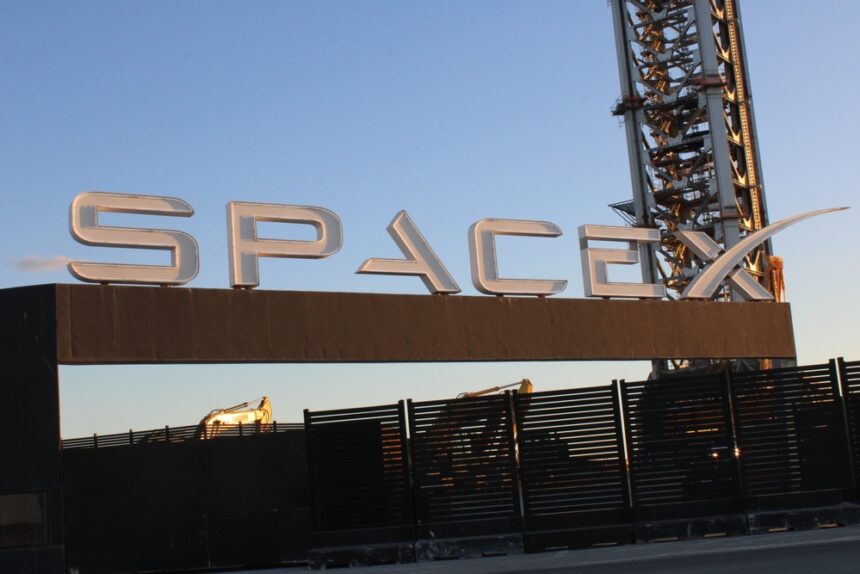
Elon Musk consolidates his most ambitious companies to create vertically integrated innovation engine combining rockets, satellites, and artificial intelligence
Elon Musk has made a major strategic move. SpaceX acquired xAI on Monday, merging two of Musk’s most pioneering technology companies to accelerate what he describes as humanity’s future. The acquisition creates a vertically integrated innovation engine spanning AI, rockets, space-based internet, direct-to-mobile communications, and Musk’s social media platform X. Together, they’re pursuing an audacious goal: launching a constellation of one million satellites to operate as orbital data centers powering artificial intelligence innovations back on Earth.
This isn’t a typical tech acquisition. It represents a fundamental restructuring of how Musk’s companies approach innovation, consolidating resources across SpaceX’s launch capabilities and xAI’s artificial intelligence expertise to tackle what both companies view as a critical bottleneck: the massive power and cooling requirements of modern AI infrastructure.
“This marks not just the next chapter but the next book in SpaceX and xAI’s mission: scaling to make a sentient sun to understand the Universe and extend the light of consciousness to the stars,” Musk said in a SpaceX news release. The language captures his characteristic blend of ambitious vision and poetic framing a reminder that for Musk, these aren’t just business ventures but vehicles for what he sees as humanity’s future expansion.
The Problem: Earthly Constraints
The acquisition makes strategic sense when you understand the core problem both companies are trying to solve. Current advances in artificial intelligence depend almost entirely on building massive terrestrial data centers facilities that demand enormous amounts of electricity and sophisticated cooling systems. The computational power required to train and run modern AI systems is staggering, and the infrastructure required to support it is equally demanding.
Musk argues that global electricity demand for AI innovations cannot be met with earthly solutions, at least not without placing significant hardships on communities and straining environmental resources. Terrestrial data centers require massive amounts of land, power, and cooling each component presenting logistical and environmental challenges. The more advanced AI becomes, the more acute these challenges grow.
This is where the space-based solution emerges not as science fiction but as practical necessity. “The only logical solution therefore is to transport these resource-intensive efforts to a location with vast power and space. I mean, space is called ‘space’ for a reason,” Musk said, accompanying the statement with a laughing emoji. The humor masks a serious point: space offers virtually unlimited surface area and, critically, constant access to solar power.
The Vision: Orbital Data Centers
The million-satellite constellation represents the infrastructure backbone for this vision. These satellites would operate as distributed data centers, powered by solar energy with minimal operating or maintenance costs. “It’s always sunny in space,” Musk noted a simple observation that captures the strategic advantage of orbital positioning.
The plan would transform humanity’s computational capabilities while simultaneously supporting AI-driven applications for billions of people on Earth. The satellites would also enable direct-to-mobile cellular coverage globally and contribute to what Musk frames as humanity’s multi-planetary future through sustained lunar bases and eventual Martian civilization.
Starship’s Critical Role
The acquisition’s timing aligns with SpaceX’s Starship development. This year, Starship will begin transporting more powerful V3 Starlink satellites into orbit, offering 20 times the capacity of current Falcon launches. The rocket will also deploy newest direct-to-mobile satellites providing full planetary cellular coverage. More importantly, Starship will launch the sheer volume of satellites required for space-based data centers.
Musk projects that with launches every hour carrying 200 tons per flight, Starship will deliver millions of tons to orbit annually. He estimates that launching one million tons per year of satellites generating 100 kilowatts of compute power per ton would add 100 gigawatts of AI compute capacity annually. A path exists to eventually launching one terawatt from Earth per year.
The Timeline
Musk estimates that within two to three years, space-based AI compute will represent the lowest-cost way to generate computational power. “The capabilities we unlock by making space-based data centers a reality will fund and enable self-growing bases on the Moon, an entire civilization on Mars and ultimately expansion to the Universe,” he said.
The acquisition represents more than a business consolidation. It’s a declaration that Musk believes the future of artificial intelligence and humanity’s technological trajectory lies not on Earth but in orbit. Whether this ambition proves achievable will define the next decade of space exploration and AI development.