

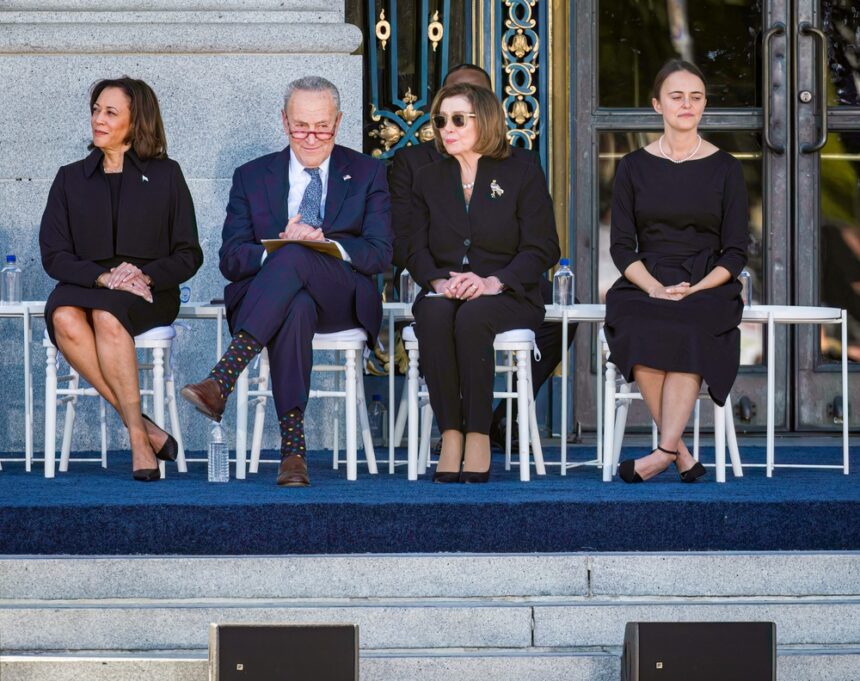
Democratic majorities in both chambers of Congress are positioned to put a major check on President Donald Trump’s military and foreign policy agenda over the next two years, according to reports.
Democrats won 56 Senate seats and at least 257 House seats in the midterms after campaigning heavily on affordability, as the war with Iran disrupted Middle East trade routes and drove up fuel prices worldwide.
They take control on January 3 but have already moved to limit Trump’s use of the military and promised broad investigations once they gain subpoena power.
What will Democratic majorities investigate?
Secretary of War Pete Hegseth has become a top impeachment target. On November 10, the Republican led House voted 211-204 to send an impeachment resolution brought by Rep. Thomas Massie, a Kentucky Republican, to the Judiciary Committee, where it is unlikely to advance this year.
House Minority Leader Hakeem Jeffries said afterward that the vote was only the beginning.
Rep. Adam Smith of Washington, the top Democrat on the House Armed Services Committee, said vigorous oversight of the Pentagon will be the panel’s top priority. Rep. Jim Himes of Connecticut said Democrats plan to examine intelligence staff cuts and covert operations.
Hans von Spakovsky, a senior legal fellow at Advancing American Freedom, argued that Democrats are seeking revenge against anyone who has served in the administration.
How might Democratic majorities end the Iran war?
Members of the incoming Democratic majorities agree the conflict should end but have not settled on how. Some want to use the December 11 government funding deadline to force the issue.
Sen. Chris Van Hollen of Maryland, who is challenging Sen. Chuck Schumer to become majority leader, said he will not back a funding bill unless it defunds the war.
Sens. Tammy Duckworth of Illinois and Kirsten Gillibrand of New York have proposed an amendment to block money for offensive operations against Iran while keeping funds for defensive missions, mine clearing in the Strait of Hormuz and escorts for commercial ships.
Smith warned that a hard funding cutoff could hurt the roughly 50,000 U.S. service members in the region. Rep. Ro Khanna of California argued that winding down the war could lower gas, diesel and food prices.
What do Democratic majorities mean for Ukraine?
Ukrainian President Volodymyr Zelenskyy said on November 5 that his country’s chances of getting more U.S. aid may now increase. Democratic aides have said stronger support for Ukraine will be a top priority.
Congress has not passed major Ukraine aid since Trump’s second term began. The administration held trilateral peace talks with Ukraine and Russia in Abu Dhabi this month.
Will Trump’s nominees face tougher odds?
Acting Navy Secretary Hung Cao, Trump’s pick to lead the Navy, needs a congressional waiver because he retired from the Navy in 2021, short of the seven years the law requires. In the Senate, that waiver would need all 53 Republicans and at least seven Democrats.
At his November 17 hearing, Duckworth said she could not support him, calling him a likely yes man, and Sen. Jeanne Shaheen of New Hampshire raised questions about his independence.
The Army also lacks a Senate confirmed leader, and nearly half of the 196 U.S. ambassador posts are vacant.
How could Democratic majorities reshape defense spending?
Democratic majorities could also cut into Trump‘s $1.5 trillion defense request for 2027, which includes about $1.1 trillion in regular spending and $350 billion through a reconciliation bill.
House Armed Services Committee Chairman Mike Rogers, an Alabama Republican, said the $350 billion plan will not happen but that a smaller package of about $100 billion may be possible.
Sen. Tim Kaine of Virginia said Golden Dome, the proposed missile defense system, will likely keep bipartisan support but change in scope. He and Rep. Chris Deluzio of Pennsylvania were skeptical of the proposed Trump class battleship.
With Democratic majorities in place, the next two years could bring more clashes between Congress and the White House over war, spending and nominees.