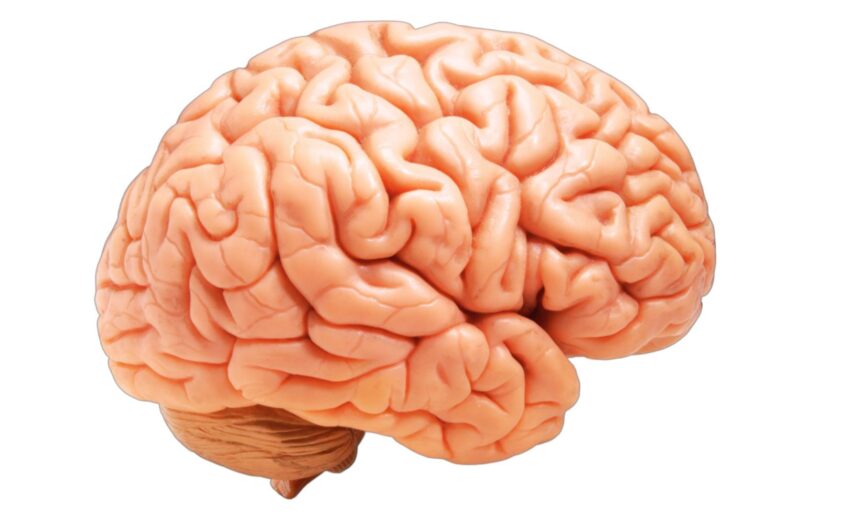
For decades, brain researchers operated with a straightforward assumption. The louder the neural signal, the more important it was. Brain scans that lit up brightly in certain regions captured attention and drove conclusions. The quieter activity humming in the background was largely treated as interference, the kind of static you filter out before getting to the real data.
A new study published in Nature Human Behaviour is challenging that assumption in a meaningful way. After analyzing neuroimaging data from more than 12,000 people across four large datasets, researchers found that weaker connections between brain regions are not noise. They carry genuine, measurable information about how people think and behave, and they predict behavior with roughly the same reliability as the strongest signals in the brain.
What the research actually found
The study used neuroimaging techniques that track brain activity by measuring blood flow and the communication patterns between different regions. Most previous research in this area relied on a method called feature selection, which filters out weaker signals before analysis in order to focus processing power on the connections that appear most active. The logic was intuitive. If a signal is faint, it probably does not matter much.
This study found that logic was incomplete. Weaker connections between brain regions still carried meaningful predictive information about cognitive function and behavior, and by discarding them, earlier research had been working with an incomplete picture of how the brain actually operates.
The idea that quiet signals matter is not entirely new. Research published over a decade ago found that differences in intelligence were largely explained by the efficiency of weak, long-distance connections rather than strong local ones. Those pathways tend to link regions including the prefrontal cortex, the hippocampus and the temporal lobes, which together suggest that higher cognitive function depends on broad communication across the brain rather than intense activity in any single area.
What distinguishes the new study is the scale and the clarity of the evidence. Twelve thousand participants across multiple datasets is not a small signal. It is a large one pointing in a consistent direction.
A more complex picture of the brain
What emerges from this research is a view of the brain as something considerably more distributed and individualized than the dominant models have suggested. Rather than relying on a handful of dominant neural highways, the brain appears to operate through an overlapping web of networks, many of them faint, that collectively shape thought, behavior and identity.
This has real implications for how researchers study the brain and for how the field interprets its own data. Studies that relied on feature selection to focus only on the strongest signals may have been systematically underestimating the contribution of quieter networks, potentially missing patterns that matter.
Why this changes the mental health conversation
The most immediate practical implication of this research concerns mental health treatment, specifically the long-standing puzzle of why the same treatment works for some people and not others.
If brains are more individually wired than previously understood, with different people using different neural pathways to reach similar outcomes, then the variation in treatment response starts to make more sense. Two people diagnosed with the same condition may have fundamentally different underlying network patterns, making a one-size approach structurally limited regardless of its quality.
Research published in recent years has begun mapping this terrain. Studies in both major depressive disorder and autism spectrum disorder have identified distinct neurological subtypes within those diagnoses, each with different connectivity patterns and different responses to intervention. The people in those groups share a diagnosis but not necessarily the same brain architecture.
Where this research points
The longer-term possibility suggested by this line of research is a shift toward more personalized approaches to brain health. Rather than targeting the loudest signals or the most commonly studied pathways, future treatments might be designed to account for the full range of a person’s neural activity, including the quieter connections that have historically been filtered away.
That shift would require changes in how researchers collect data, how they analyze it, and how they translate findings into clinical practice. None of that happens quickly. But the foundational argument this study makes, that the brain’s weaker signals are worth taking seriously, is a meaningful step toward a more complete picture of how the mind actually works.