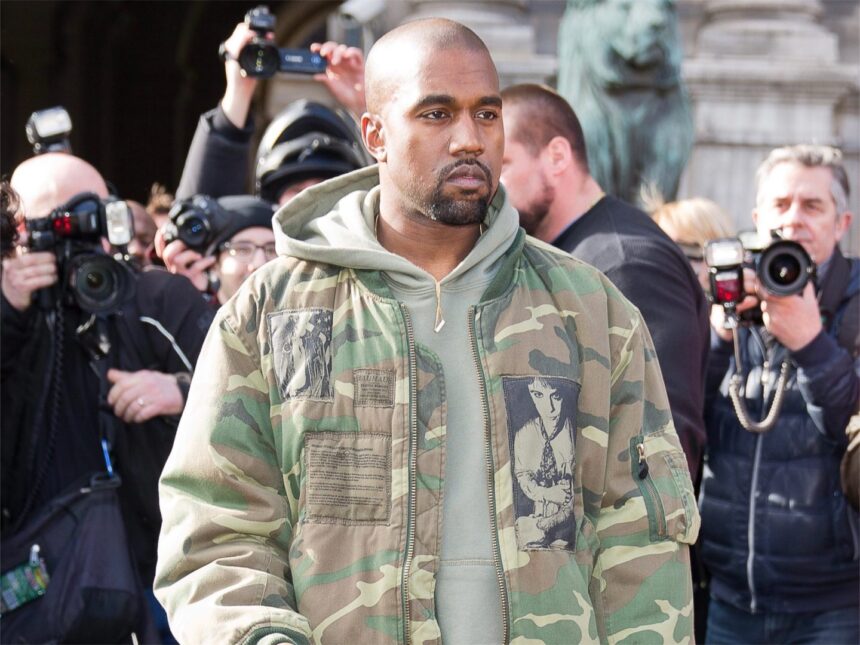
A federal courtroom in downtown Los Angeles became the latest battleground for Kanye West, the artist now known as Ye, as a copyright infringement trial over his Grammy-winning song Hurricane got underway Monday with opening statements before a panel of eight jurors.
At the center of the case is a one-minute instrumental track called MSD PT2, created by four musicians who claim Ye used their recorded sample without permission or payment. The track allegedly served as the musical foundation for an early version of Hurricane, which was performed before tens of thousands of fans at a high-profile listening event for Ye’s tenth studio album, Donda, held at Mercedes-Benz Stadium in Atlanta in July 2021.
The four plaintiffs, Khalil Abdul Rahman, Sam Barsh, Dan Seeff, and Josh Mease, are pursuing the case through a company they formed in 2024 called Artist Revenue Advocates. They are seeking $564,046 in damages. Their lawsuit originally alleged infringement of both the composition and the sound recording, but was later narrowed to a single claim involving the recorded sample after it was determined the musicians did not control their writer-side royalties under earlier agreements.
Two very different stories told in Kanye’s court battle
Lawyers for both sides offered competing versions of events during opening statements. The plaintiffs’ legal team argued that the four musicians voluntarily shared their sample with Ye’s team in good faith, expecting to be compensated fairly if it was used commercially. Instead, they say, they were left without payment, without communication, and without credit after the demo gained traction. Feeling sidelined after the Atlanta event, they ultimately moved forward with legal action.
An expert analysis presented by the plaintiffs’ side estimated that the listening party generated approximately $5.5 million for Ye, drawing from ticket sales, merchandise, a $1.25 million streaming deal with Apple, and revenue from a jacket Ye wore onstage that was later released through his apparel partnership with Gap. The plaintiffs’ team pointed to sworn testimony from Ye himself as a central piece of evidence, arguing it amounted to a clear admission that copyright-protected music was used.
Ye’s defense team pushed back firmly. His lead lawyer argued that Ye was conducting a creative test run of the sample with what he described as implied consent from the musicians, and that any conversation about payment would only have been appropriate had the sample made it onto the final album, which it did not. The defense also challenged the logic of tying apparel revenue to a one-minute instrumental, arguing that Ye’s global fame and more than 60 Grammy nominations were what drove attendance and sales, not the sample in question.
The trial gets underway with a key witness
Daniel Seeff, the bass player on the track, was the first witness called Monday afternoon. He told the jury he was present to share the story of how MSD PT2 came to exist and how its music became, in his view, the foundation of what audiences heard at the Donda event.
It remains unclear exactly when Ye will take the stand, but he is expected to testify before the trial concludes. The proceedings are scheduled to last approximately one week. The case adds to a string of recent legal challenges for Ye, who was separately found liable in another Los Angeles trial for injuries sustained by a worker at his Malibu property.
The Hurricane trial marks a rare moment in music copyright law, one where a Grammy-winning song, a stadium-sized listening party, and a one-minute instrumental have all converged inside a federal courtroom, with a jury now tasked with sorting out who owes what and why.