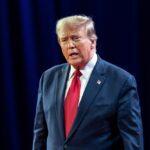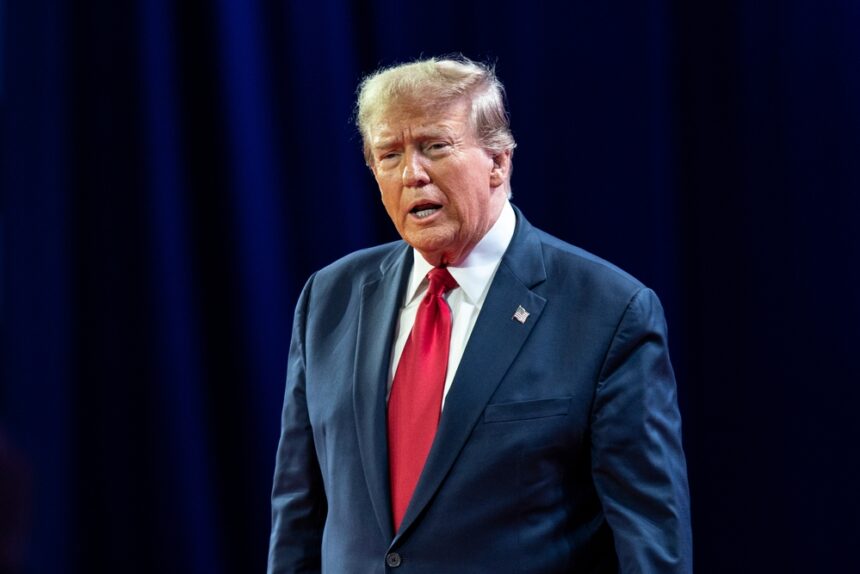
Donald Trump has never been shy about taking credit, and at a recent speaking engagement at The Villages retirement community in Florida, he added a new item to the list. The president publicly claimed that his now-famous rally dance to the Village People’s Y.M.C.A. was personally responsible for sending the 1978 disco classic surging back up the Billboard charts in late 2024.
The song reached the top of Billboard’s Top Dance/Electronic Digital Song Sales chart that November, spending two weeks at number one more than four decades after it was first released. Trump framed that resurgence as a direct result of his enthusiastic onstage reaction to the track during his presidential campaign, suggesting his fist pumps and hip shakes did what decades of disco nostalgia alone could not.
His claim about the song’s original chart history was not entirely accurate. Y.M.C.A. peaked at number two on the Billboard Hot 100 following its release in late 1978, not number five as he suggested, and the timeline he described was also off. But the broader point, that his embrace of the song gave it a second commercial life, is difficult to argue with entirely.
From rally staple to chart reality
Y.M.C.A. became one of the most recognizable fixtures of Trump’s 2024 campaign. He used it repeatedly at rallies and public events, and his signature reaction to it became a moment audiences came to expect and anticipate. The song’s return to the upper reaches of the Billboard charts that fall was widely attributed to that sustained visibility.
Victor Willis, the founder of the Village People and the man behind the song, had actually asked Trump to stop using Y.M.C.A. back in 2020. He later reversed that position after concluding that the politician had a genuine affection for the track and was clearly enjoying himself whenever it played. Willis publicly acknowledged in late 2024 that the song had benefited significantly in terms of chart performance and sales since Trump made it a campaign centerpiece, and he expressed gratitude for the unexpected second wave of attention it received.
The relationship between the song and the candidate became one of the more unusual cultural footnotes of the 2024 election cycle, blending a decades-old dance floor anthem with the spectacle of modern political rallying in a way that neither party likely anticipated.
Melania is not a fan of the dance
Not everyone in Trump’s inner circle shares his enthusiasm for the moment. The president revealed during his Florida speech that his wife Melania is decidedly unenthusiastic about his onstage dancing. He described her as urging him not to do it, citing the optics and suggesting that she views the performance as less than fitting for a sitting president.
Trump, characteristically, brushed off the concern, pointing to his polling numbers as justification for keeping the routine going. He then closed out his address at The Villages by delivering the dance in question, complete with the fist pumps and hip movements that have become his trademark, as Y.M.C.A. played out over the crowd.
A strange kind of cultural legacy
Whatever one thinks of Trump’s claims about his role in the song’s chart comeback, the broader story is genuinely unusual. A disco track from 1978 reaching number one on a Billboard chart in 2024 because of a presidential candidate’s rally dancing is not something the music industry sees very often.
Willis himself acknowledged that the attention has been good for the song. Trump clearly has no intention of letting the moment go. And somewhere in the middle of all of it, a 46-year-old song got a second act that its creators almost certainly never imagined.