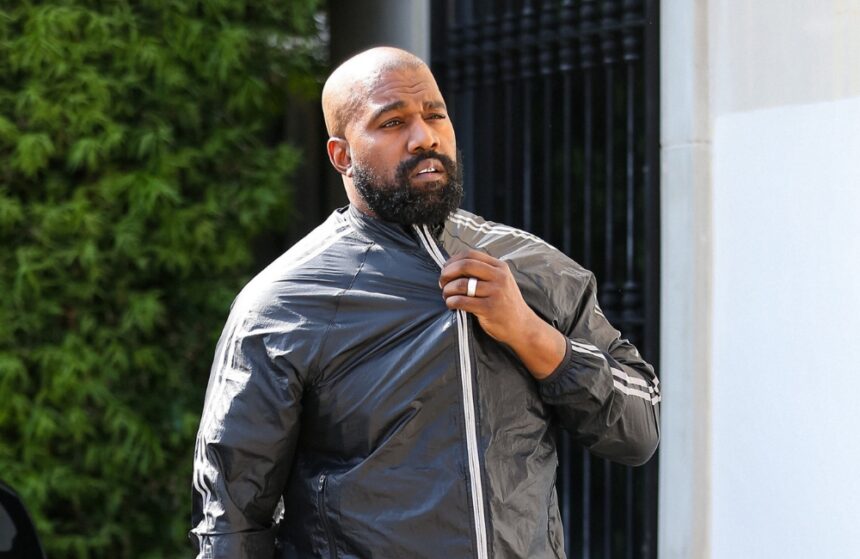
Kanye West, the rapper and producer now performing under the name Ye, issued a public statement this week saying he would welcome a meeting with members of the Jewish community in the United Kingdom. The overture came as controversy over his scheduled headline appearance at this summer’s Wireless Festival continued to intensify, drawing in corporate sponsors, politicians, and now the British government itself.
West said he had been following the public debate around his booking and wanted to address it directly. He described his intention as presenting a show built around themes of unity and change and said he was open to meeting community members in person to listen. He acknowledged that words alone would not be sufficient and said his actions would need to demonstrate what his words claimed.
The statement landed in a climate already shaped by years of documented antisemitic conduct. West has spent the better part of five years making inflammatory statements targeting Jewish people, releasing a track titled Heil Hitler, and selling merchandise bearing swastika imagery. A lengthy apology published in the Wall Street Journal earlier this year attributed the behavior in part to manic episodes connected to his bipolar disorder diagnosis.
A festival caught without a plan
The festival’s managing director acknowledged this week that his organization had failed to consult with Jewish communities in the United Kingdom before confirming West as a headliner. The admission came during a radio interview in which the director also said that Pepsi, the festival’s headline sponsor, had initially approved West’s booking before later withdrawing its support once the public backlash took hold.
The director described West’s past conduct as abhorrent and disgusting while simultaneously asking audiences to consider the role mental health may have played in his behavior. He called for forgiveness and defended the decision to proceed with the booking, but the framing drew an immediate and critical response from Jewish organizations.
The Board of Deputies of British Jews said the director’s comments would not reassure members of the Jewish community or other affected groups. The position of Jewish leaders has remained consistent throughout the controversy: an apology letter and a request for dialogue do not constitute the kind of substantive accountability the situation demands.
Sponsors departing and politicians speaking out
The financial and political fallout has been substantial. Multiple corporate sponsors have exited the festival since the booking was announced. Pepsi’s withdrawal was among the most visible departures, given its status as headline sponsor, but it has been joined by several other brands unwilling to maintain association with the event while West remains on the bill.
Political figures have also weighed in. The controversy has reached a level of visibility that prompted the British government to confirm it is reviewing whether West should be permitted to enter the country at all. That review adds a layer of formal uncertainty to an already volatile situation and raises the possibility that the headline appearance could be blocked before it ever reaches the stage.
A pattern that complicates the gesture
West’s recent Los Angeles concerts, which sold out and featured prominent guest appearances, were his first major performances since the height of the backlash against him. He addressed the controversy only obliquely during those shows, suggesting to the audience that the time had come to move past everything without directly naming the conduct that had caused the damage.
That pattern, of gesturing toward reconciliation without explicitly confronting the specifics, has reinforced the skepticism of community groups who argue that genuine accountability requires more than general statements about unity and change. The offer to meet Jewish leaders in Britain has been received in that context, as a continuation of an approach that emphasizes optics over the kind of direct, documented reckoning that critics say is still missing.