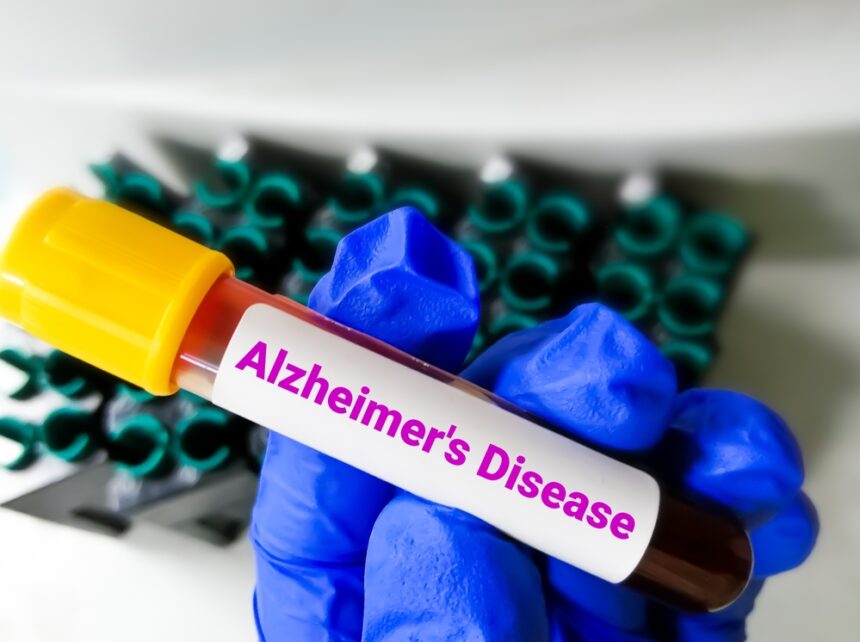
For the more than 55 million people worldwide living with dementia and the families alongside them, the disease announces itself through losses that accumulate quietly before becoming impossible to ignore. Familiar names slip away. Routine tasks grow unreachable. For decades, scientists examining the brains of Alzheimer’s patients have found the same hallmarks: sticky clusters of amyloid protein, tangled tau fibers and measurable shrinkage in brain tissue.
What those findings have never fully answered is the deeper question. What actually triggers the moment neurons begin to die? A new study out of Heidelberg University in Germany suggests that researchers may now have a compelling answer, and that the mechanism behind it could be disrupted.
The toxic pairing at the center of the discovery
The study, published in the journal Molecular Psychiatry, centers on two proteins that under normal conditions serve entirely separate and useful functions. The first is the NMDA receptor, one of the brain’s primary tools for enabling communication between neurons and a key player in learning and memory. The second is a protein called the TRPM4 ion channel. Individually, neither is a problem. Together, when they form a complex in locations where they do not typically interact, they trigger a chain of cellular events that ends in neuron death.
Researchers at Heidelberg University describe this pairing as a death complex. The higher the concentration of this complex in brain tissue, the more advanced the cognitive decline appears to be. In the brains of Alzheimer’s mice, levels of the complex rose consistently alongside the severity of the disease, a correlation that researchers found significant enough to pursue as a primary therapeutic target.
A compound that broke the complex apart
Identifying the problem was one step. Finding something capable of interrupting it was another. The research team used an experimental compound called FP802, designed to block the interface where the two proteins connect, preventing the death complex from forming in the first place.
The results in mice treated with FP802 were broad and striking. Memory decline was prevented across multiple cognitive assessments. The structural complexity of dendrites, the branching extensions through which neurons communicate, was preserved. Synapse loss was reduced. Damage to mitochondria, the energy-producing structures inside cells, was limited. And perhaps most unexpectedly, amyloid plaque formation was also reduced, suggesting that the death complex and amyloid buildup may reinforce each other, and that disrupting one can interrupt the other.
That last finding positions this research as meaningfully distinct from the approach taken by most existing and experimental Alzheimer’s treatments. The dominant strategy in the field has been to target amyloid plaques directly, either slowing their formation or helping the brain clear them away. The Heidelberg approach works differently. Rather than addressing the accumulation that follows, it targets the cellular mechanism that drives neuron death and appears to accelerate that accumulation in the first place.
A broader wave of discovery arriving at once
The Heidelberg findings arrive alongside several other significant Alzheimer’s developments from early 2026, each approaching the disease from a different angle.
Researchers at Stanford University recently identified a shared molecular pathway through which both amyloid and inflammation may signal neurons to eliminate their own synaptic connections, the contact points through which brain cells communicate. The implication is that Alzheimer’s may be co-opting the brain’s own maintenance processes and turning them destructive.
At the University of New Mexico, a separate team found that disabling a protein called OTULIN caused tau protein to disappear entirely from neurons while leaving brain cells intact and healthy. The protein is now being studied as a potential master regulator of inflammation and age-related neurodegeneration.
And at the Karolinska Institutet in Sweden, scientists identified two receptors involved in regulating the natural breakdown of amyloid, raising the possibility of future treatments delivered as a daily pill rather than an intravenous infusion, which could significantly expand patient access.
What the research cannot yet promise
Each of these findings, including the Heidelberg death complex discovery, has so far been demonstrated in animal models rather than humans. The path from promising mouse study to approved human treatment is long, involves multiple stages of safety and efficacy testing, and carries no guarantee of the same results translating across species.
The Heidelberg team is already working with a pharmaceutical partner to refine FP802 toward human trials, and that development work is underway. But researchers are careful to frame the current results as a meaningful step forward rather than an imminent solution.
What the convergence of these findings does suggest is a shift in how the field understands Alzheimer’s. The disease is no longer being approached primarily as an amyloid problem. It is increasingly understood as a condition with multiple interacting mechanisms, each of which represents a potential point of intervention. With more targets come more possibilities, and that is a meaningful change from where the field stood even a few years ago.
For the more than seven million Americans currently living with Alzheimer’s, and the nearly 13 million projected by 2050, the science arriving this spring offers something that has been in short supply for a long time: genuine reason for cautious optimism.