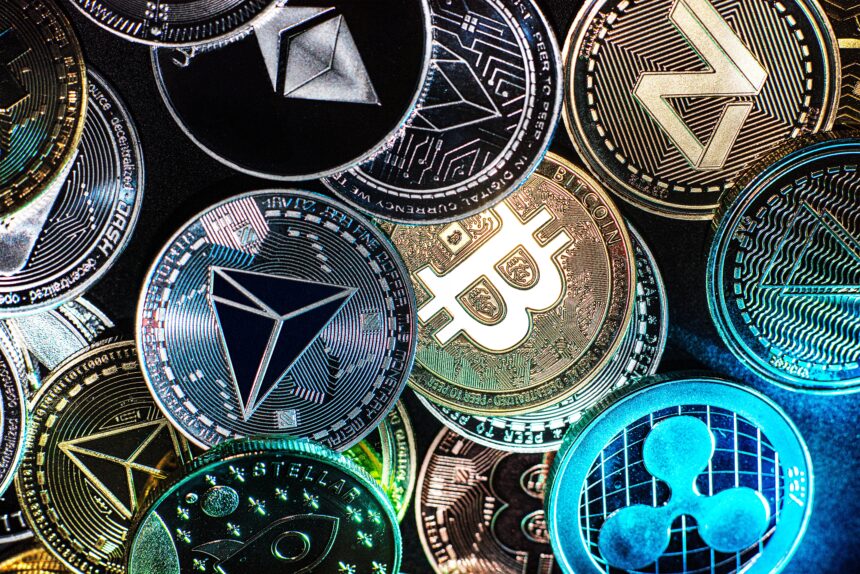
Bitcoin has been marketed for years on a compelling premise: a market that never closes, offering a real-time window into global risk sentiment that traditional exchanges simply cannot match. When news of United States strikes on Iran broke over the weekend, that premise faced one of its sharpest tests in recent memory. What followed was less a revelation than a round trip.
Bitcoin fell when the strikes were first reported, then traded erratically before climbing back above pre-attack levels by Monday. There was little durable evidence of either fear-driven selling or a coordinated flight to safety. For a market that often presents itself as an alternative to Wall Street, the response was quietly anticlimactic.
Why Bitcoin moved less than expected
Part of the explanation lies in where Bitcoin itself has been sitting. After falling roughly 50 percent from its peak, the token had settled into a narrowed trading range between roughly 60,000 and 70,000 dollars, with most of the excess leverage already forced out following a significant market breakdown in October. Retail participation has thinned and flows have weakened, leaving positioning light enough that fresh shocks produce less dramatic follow-through than they once did.
The original cryptocurrency gained as much as 6.7 percent to around 70,100 dollars on Monday after dropping to approximately 63,000 dollars over the weekend. The rebound tracked a broader stabilization in traditional markets, where stocks pared early losses as the dollar strengthened, gold climbed and oil surged.
The real signal came from somewhere else
The more telling read on market sentiment did not come from Bitcoin at all. It came from derivatives activity inside crypto-native platforms. On Hyperliquid and similar venues, perpetual futures contracts tied to oil, gold and silver moved sharply higher over the weekend, mirroring the rotation into traditional hedges that played out once global markets reopened. Energy contracts pushed higher. Precious metals drew fresh demand. The direction of those trades was not surprising, but their presence on crypto platforms was notable.
Trading volume for one silver-linked perpetual contract reached 28.28 billion dollars on Hyperliquid, according to available data. An oil-linked perpetual contract, introduced at the start of January, saw nearly 400 million dollars change hands in the weeks since its launch. Open interest in commodity-linked products has been rising steadily on these platforms, even if the absolute figures remain modest compared to traditional futures markets.
A shift in how crypto traders operate
In recent months, as gold and silver have rallied, a growing number of crypto-native traders have migrated toward commodity-linked contracts. Some are chasing momentum. Others are using these instruments to express broader macroeconomic views without stepping outside familiar crypto venues. The Iran episode accelerated that behavior, with open interest in futures tied to traditional assets reaching new highs over the weekend.
Not all of that activity represents careful macro positioning. A meaningful portion is speculative, driven by high-beta traders rotating into whatever is moving fastest. But even that shift reflects something real: crypto platforms are increasingly being used to trade not just tokens, but oil, metals and equity indexes. Bitcoin no longer monopolizes attention during moments of stress. It is one instrument inside a broader speculative toolkit, and not always the most active one.
What the Iran test actually revealed
The episode carries a harder message for a market long pitched as a genuine alternative to the traditional financial system. In periods of geopolitical stress, crypto’s clearest and most directional signals are increasingly coming from instruments directly tied to the assets and dynamics of conventional markets.
Adoption of commodity and equity-linked perpetuals has been accelerating, driven in part by crypto’s relative underperformance compared to equities and commodities since last year’s major liquidation event. The traders who once rotated through Bitcoin during global uncertainty are now spreading their bets more broadly, and the platforms enabling them are quietly becoming something closer to hybrid exchanges than pure crypto venues.