Seven billion dollars pledged for reconstruction, troops committed for a stabilization force — and serious questions raised about who was invited to the table
U.S. President Donald Trump convened the inaugural meeting of his Board of Peace on Thursday, bringing together international parties to address the ongoing war in Gaza. The gathering produced concrete financial and military commitments, but it also drew immediate criticism over the composition of its membership and the broader humanitarian situation on the ground.
Countries attending the meeting pledged a combined $7 billion toward Gaza’s reconstruction. Six nations also committed troops toward building an eventual 20,000-strong International Stabilisation Force, intended to support stability in the region as reconstruction efforts are planned.
Who was invited — and why it matters
The board’s membership has drawn significant scrutiny. Trump extended invitations to Israeli Prime Minister Benjamin Netanyahu and Russian President Vladimir Putin, both of whom are currently subject to arrest warrants issued by the International Criminal Court on allegations of war crimes. Neither leader has appeared before the court, and both deny the allegations against them.
Critics have argued that seating two ICC-wanted leaders at a peace-focused table undermines the board’s credibility and sends a complicated signal about international accountability. Supporters of the initiative have framed it as pragmatic diplomacy, arguing that any meaningful resolution to the conflict requires engagement with the parties directly involved regardless of legal proceedings elsewhere.
What is happening on the ground in Gaza
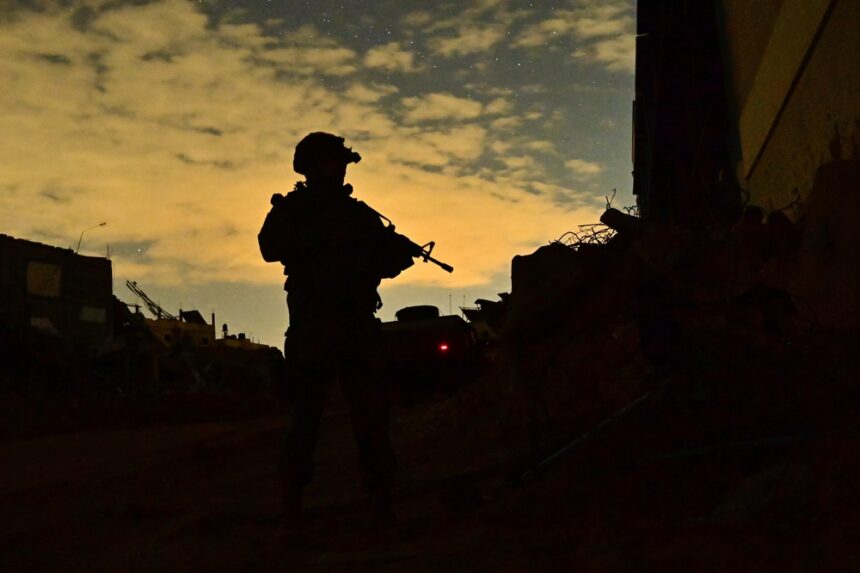
The Board of Peace meeting took place against a backdrop of continued violence. Israeli military operations have continued across Gaza, while Israeli forces and settlers have carried out additional raids and land seizures in the occupied West Bank.
A recent United Nations report raised concerns about ethnic cleansing in Gaza and the occupied West Bank, adding to an already significant body of international scrutiny over the conduct of the war. The report stops short of a formal legal determination but signals deepening concern among UN officials about conditions in both territories.
Since the war began in October 2023, at least 72,069 people have been killed in Gaza and 171,728 wounded, according to available figures. The conflict was triggered by the Oct. 7, 2023, attacks in Israel, in which an estimated 1,139 people were killed and approximately 250 taken captive.
What the stabilization force would look like
The six nations that pledged troops envision a force of up to 20,000 personnel to support stability in Gaza as reconstruction efforts advance. Specific details about the force’s mandate, command structure, rules of engagement and timeline for deployment have not yet been made public following Thursday’s meeting, leaving key operational questions unresolved for participating governments and observers.
The concept of an international stabilization presence in Gaza has been discussed across multiple diplomatic tracks in recent months, with significant disagreement among regional and international actors about who should lead it, under what authority it would operate and how it would interact with Israeli military operations that remain ongoing.
Where things stand
Thursday’s meeting marked a first formal step in Trump’s effort to shape the post-war reconstruction conversation, but the distance between pledges made in a boardroom and conditions on the ground in Gaza remains considerable. The $7 billion in reconstruction commitments, the troop pledges and the stabilization force concept all depend on a cessation of hostilities that has not yet materialized.
The UN concerns over ethnic cleansing, the ICC proceedings against two board members and the continued military operations in both Gaza and the West Bank mean that the diplomatic framework being built around the Board of Peace is being constructed while the situation it is meant to address continues to develop.