The MLBPA executive director resigned weeks before negotiations with owners turn genuinely ugly
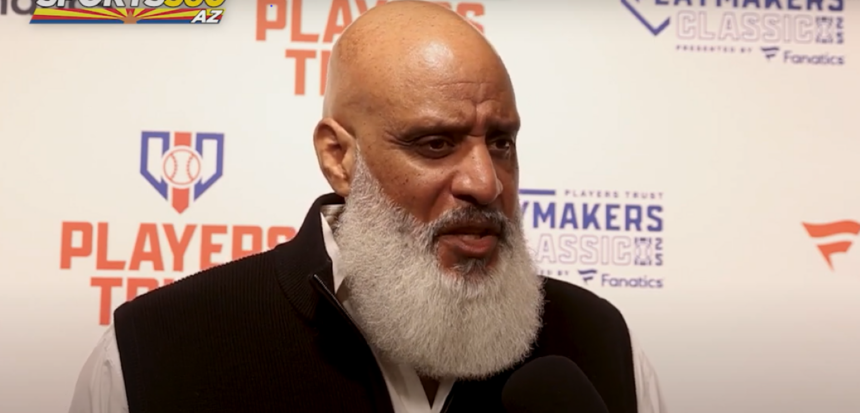
Tony Clark is stepping down as executive director of the Major League Baseball Players Association effective February 17, leaving the union without its leader heading into what could be one of the most contentious labor negotiations in decades. His departure couldn’t come at a worse moment. The current collective bargaining agreement expires December 1, and Commissioner Rob Manfred has already signaled that owners plan to use lockouts as leverage during negotiations. Clark’s resignation means the union will navigate this potential battlefield with a new commander.
Clark held the position since 2013, when he took over following the death of Michael Weiner. He became the first former player to serve as the union’s executive director, bringing firsthand credibility that resonated with players throughout his tenure. But after leading the union through two CBA cycles and a brutal 99-day lockout in 2021-22, Clark apparently decided the next fight wasn’t his to fight. His timing raises serious questions about what he knows about the upcoming negotiations.
The CBA clock is already ticking toward inevitable conflict
The current collective bargaining agreement between MLB and the players expires December 1, giving both sides less than ten months to reach a new deal. Commissioner Rob Manfred made clear at MLB’s owners meetings on February 12 that negotiations typically accelerate around Opening Day and signaled that a lockout is a tool owners intend to use to push talks forward. That’s not a subtle threat. That’s a promise.
The fundamental sticking point remains unchanged: MLB owners want a salary cap, and the union has treated that concept as a non-starter for decades. MLB remains the only major professional sports league in North America without one. That disagreement is the boulder that negotiations will crash against in December. Everything else is secondary positioning.
The union canceled Tuesday’s planned start of its annual spring training tour, with the first scheduled stop at Cleveland apparently scrapped without explanation. The cancellation added to the sense of disruption surrounding Clark’s final days and suggests internal chaos within the organization.
Clark steered the union through two brutal CBA cycles
Clark joined the MLBPA staff in 2010 and was elected executive director three years later. He oversaw two completed CBA negotiations, including the 2021-22 cycle that produced a devastating 99-day lockout. That lockout threatened to cancel games before the sides reached an agreement in early March 2022, preserving just enough time for a full 162-game schedule. The last time MLB lost regular-season games to a labor dispute was the 1994 strike, which wiped out the postseason and cancelled the World Series entirely.
The 2022 deal included a modest increase in the luxury tax threshold and created a pre-arbitration salary pool for high-performing young players. His lead negotiator, Bruce Meyer, was central to securing those gains. Meyer was later promoted to deputy executive director in summer 2022, establishing him as the likely successor to Clark.
Internal chaos may have forced Clark’s exit
Clark’s tenure wasn’t without friction. A faction within the union’s eight-player executive subcommittee moved in 2024 to remove Meyer as lead negotiator. The effort was led by lawyer Harry Marino, who had previously worked to bring minor league players into the union. Three players at the center of that effort—Jack Flaherty, Lucas Giolito and Ian Happ—were voted off the subcommittee in December 2024, suggesting the pro-Meyer faction won internal battles.
The resignation also comes while the MLBPA faces a federal investigation by the U.S. Attorney in Brooklyn into its role in OneTeam Partners, a licensing company co-owned with the NFL Players Association and other sports unions. New York Mets second baseman Marcus Semien, a subcommittee member, said Tuesday he believes the investigation is connected to Clark’s decision to step down. Whether that’s true remains unclear, but the timing raises legitimate questions about whether legal pressure influenced Clark’s exit.
The successor steps into a genuine war zone
Bruce Meyer is widely considered the most likely candidate to succeed Clark as executive director, though that outcome isn’t guaranteed. Semien said Tuesday he was uncertain whether Meyer would remain as the organization’s lead negotiator going forward. That uncertainty is genuinely problematic when negotiations begin in months.
Whoever takes over inherits the position at its most consequential moment in at least a generation. MLB hasn’t lost games to a labor stoppage in over thirty years, but both sides appear to be preparing for a fight that could change that. Clark’s departure suggests he doesn’t believe the next negotiation will be friendly.