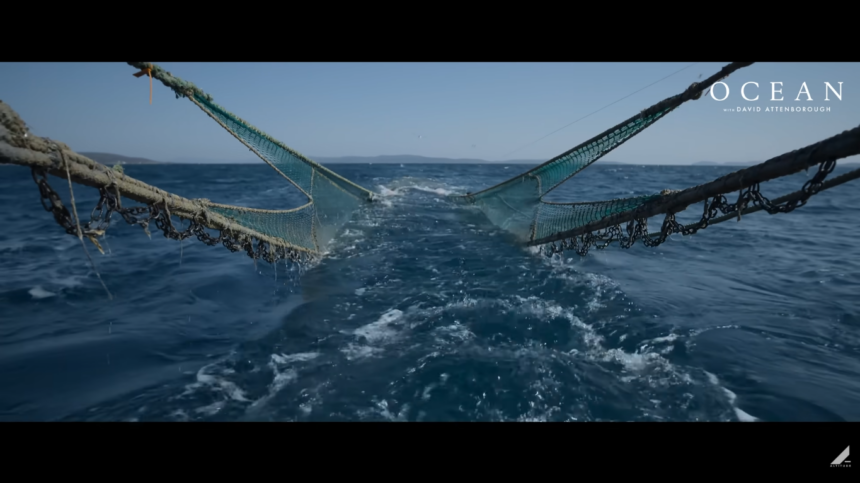
Fishing practice that captures 25% of world’s seafood hauls massive carbon load from ocean floor to atmosphere; study reveals blind spot in climate agreements and global warming calculations
A new study published in Frontiers in Marine Science reveals a massive blind spot in climate science: the ocean itself generates significant carbon emissions through a single fishing practice, and nobody’s been counting it. Bottom trawling the industrial fishing method where massive nets drag along the ocean floor to capture seafood releases approximately 408 million tons of carbon into the atmosphere annually. That staggering volume emerges not from burning fossil fuels or industrial pollution, but from the simple act of disturbing the seafloor. The discovery challenges decades of climate assumptions and exposes a critical oversight in how the world calculates and regulates atmospheric carbon pollution.
- Fishing practice that captures 25% of world’s seafood hauls massive carbon load from ocean floor to atmosphere; study reveals blind spot in climate agreements and global warming calculations
- The carbon release mechanism that shocked researchers
- Why this matters for global temperature and sea levels
- The regulatory challenge ahead
For generations, climate scientists focused exclusively on carbon entering the atmosphere from terrestrial sources power plants, vehicles, agriculture then potentially being absorbed by the ocean. The reverse process went unexamined: what happens when carbon already sequestered in ocean sediments gets churned up and released directly into the atmosphere? Bottom trawling answers that question in alarming fashion. By dragging massive nets across the seafloor, fishing vessels disturb millions of tons of sediment annually, mobilizing carbon that had been safely locked away below the surface. The practice supplies roughly 25% of the world’s wild-caught seafood, making it an industry-scale operation affecting global food systems and climate simultaneously.
The carbon release mechanism that shocked researchers
The mechanics are deceptively simple. Bottom trawling nets scrape the ocean floor, physically disrupting sediments where vast quantities of carbon have accumulated over centuries. This disturbance releases that carbon, which oxidizes and enters the atmosphere as carbon dioxide the same greenhouse gas driving climate change. A 2021 study published in Nature found that churning up seabeds produces more carbon than the global aviation industry generates annually. That comparison provides perspective: a single fishing practice equals the emissions from all planes worldwide. Yet the climate world treated ocean carbon as invisible, focusing regulatory attention exclusively on atmospheric and industrial sources.
The oversight isn’t accidental. Current climate agreements, including the Paris Climate Agreement, only count atmospheric emissions for regulatory purposes. Underwater carbon whether from trawling, natural sources, or other mechanisms doesn’t factor into international climate accounting. This regulatory blind spot means the fishing industry faces minimal pressure to address its carbon footprint, despite generating emissions comparable to entire industries that face strict regulations.
Why this matters for global temperature and sea levels
Carbon dioxide traps heat in the atmosphere, driving higher air temperatures and ocean temperatures. These temperature increases trigger cascading climate consequences: increased precipitation, rising sea levels, ocean acidification, and ecosystem disruption. The 408 million tons annual release from bottom trawling represents a massive contributor to these effects and it’s been essentially invisible in climate calculations. Scientists only recently recognized that carbon generation happens within the ocean itself, challenging the assumption that all atmospheric carbon comes from land-based sources.
The regulatory challenge ahead
Addressing bottom trawling’s climate impact presents significant challenges. The global seafood industry worth over $236 billion in 2023 employs millions and feeds billions of people. Implementing new regulations requires scientific consensus, economic feasibility, and political will a difficult combination when industries question the science itself. Researchers acknowledge that regulatory proposals will face skepticism from fishing interests questioning whether sufficient evidence justifies restrictions. The burden falls on scientists to quantify the carbon impacts precisely while accounting for all variables, a process that takes time and resources.
However, solutions exist. Scientists are working toward protecting 30% of the ocean by 2030 through sustainable fishing practices. Eating lower-impact seafood like sardines and anchovies reduces demand for trawled species. Vertical ocean farms minimize marine habitat disruption while enabling more research. Some innovative approaches, like one Italian fisherman’s underwater marble statue gardens that destroy trawling nets, demonstrate creative resistance to destructive practices. Individual actions voting for pro-climate candidates, supporting climate organizations through petitions and donations collectively influence policy direction and corporate behavior.
The bottom trawling discovery represents a critical moment: recognizing that carbon pollution doesn’t exclusively come from above-water sources but also from how humanity exploits ocean resources. Addressing it requires reckoning with a 25% global seafood supply problem while simultaneously protecting climate stability.