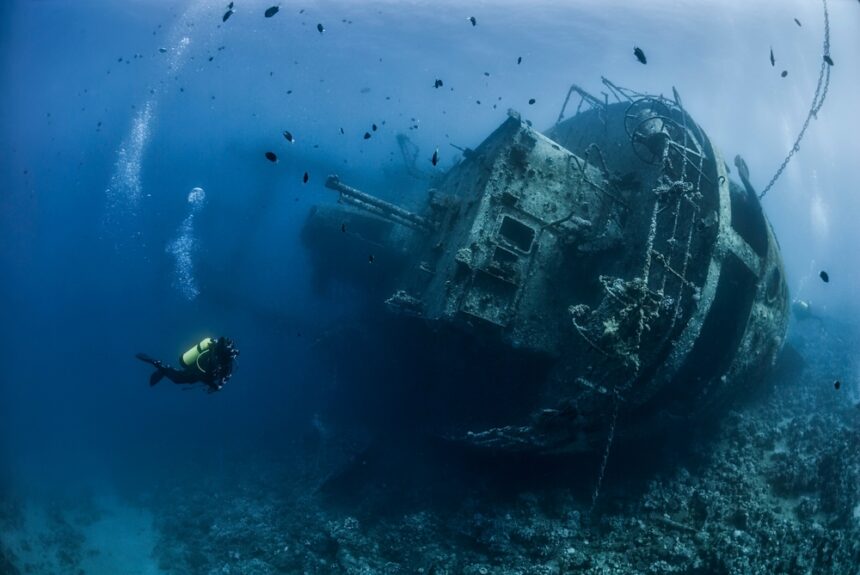
Three million shipwrecks worldwide transform into “living wrecks”—biological hotspots where diverse communities of creatures build new ecosystems on foreign structures
Shipwrecks carry romantic stories. Tales of the Titanic, Lusitania, and USS Monitor conjure images of human tragedy, unsolved mysteries, and sunken treasure. But beneath the historical narratives lies a completely different story one with no human characters. For the past 14 years, marine biologists have studied the hidden biology of shipwrecks, discovering that these underwater graveyards aren’t simply monuments to human loss. They’re thriving biological treasures that create entirely new habitats for diverse marine communities. Three million shipwrecks currently rest in the world’s oceans in shallow rivers and bays, coastal waters, and the deep ocean and collectively they’ve become what scientists call “living wrecks,” bustling underwater metropolises that reshape ocean ecosystems.
When a ship sinks, it adds something revolutionary to the seafloor: artificial structure where none existed before. The World War II tanker E.M. Clark, torpedoed by a German submarine in 1942, now looms over the North Carolina seafloor like an underwater skyscraper. That metal wreck transformed what was once a flat, sandy seabed into an island oasis a completely new habitat where marine life congregates and thrives. This transformation isn’t unique to one vessel. Across the world’s oceans, sunken ships create artificial structures that fundamentally alter the seafloor landscape, attracting communities of creatures ranging from microscopic organisms to some of the ocean’s largest predators.
The spontaneous ecosystem that emerges from wreckage
The colonization of a sunken ship reads like a biological fairy tale. It begins with a wrecking event the ship sinks and then life begins arriving almost immediately. Tiny microbes invisible to the human eye settle on the wreck’s surface first, forming a carpet of cells called a biofilm. This microscopic coating transforms the wreck structure into a suitable habitat for larval animals like sponges and corals to settle and grow. Within minutes of a ship sinking, larger animals begin appearing. Small fish hide in structural cracks and crevices. Sharks glide through the water around the wreck. Sea turtles and marine mammals like fur seals arrive and make the structure their home.
As time passes, the wreck becomes progressively more elaborate. Brilliantly colored corals and sponges blanket the wreck’s surfaces like living paint. Schools of silvery baitfish dart and shimmer around the structure, constantly chased by sleek, fast-moving predators. The transformation from inert metal or wood into a bustling community of life happens relatively quickly what was once a disaster becomes an oasis.
Underwater biodiversity hotspots emerge
Shipwrecks generate quantities and varieties of marine life so impressive that scientists colloquially refer to them as “living wrecks” biological hotspots where diversity concentrates at remarkable levels. Evidence from deep Gulf of Mexico wrecks reveals that microbial diversity radiates outward from the wreck in a distinctive halo pattern, extending anywhere from 650 to 1,000 feet from the structure. In the Atlantic Ocean, thousands of grouper a type of reef fish highly valued by commercial fishers congregate around and inside shipwrecks, suggesting these structures concentrate fish populations at exploitable levels.
But shipwrecks do more than simply attract dense concentrations of life. In regions with abundant shipwrecks, they function as stepping stones across the ocean floor. Off North Carolina, in an area popularly known as the “Graveyard of the Atlantic,” reef fish use shipwrecks as corridors when migrating north or south to find favorable water temperatures as climate change warms the oceans. Sand tiger sharks travel from one wreck to another, using the shipwrecks like rest stops during migration. The structures serve as essential waypoints in animal movement patterns.
The chemistry of life on wrecks
Perhaps most remarkably, life growing on shipwrecks in the deep sea can generate energy. Tube worms that colonize organic shipwreck materials such as paper, cotton, and wood host symbiotic bacteria that produce chemical energy. Colonies of these tube worms have been documented in the Gulf of Mexico on the steel luxury yacht Anona, proving that even the most unlikely vessels become sources of biological productivity.
Shipwrecks represent one of the ocean’s most unexpected gifts: man-made structures that became natural habitats, human tragedies that transformed into biological treasures. These “living wrecks” demonstrate how destruction can create opportunity, how sinking vessels can rise again as thriving ecosystems. Three million shipwrecks worldwide now serve as underwater cities metropolitan centers of marine life that reshape ocean landscapes and support biodiversity at scales that rival natural ecosystems.