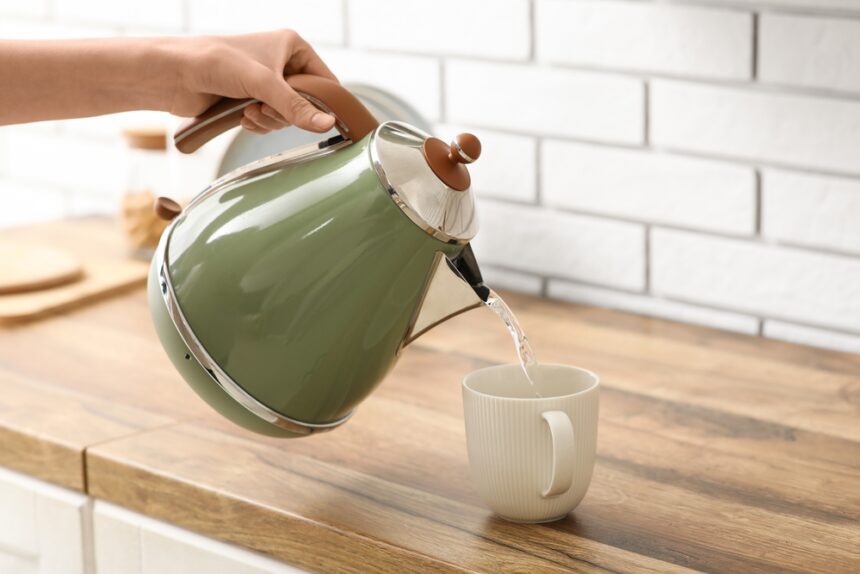
Science reveals kettles deliver superior temperature uniformity through convection heating; electric models offer speed and sustainability while stovetop versions remain kitchen classics
When it comes to heating water for tea, coffee, or hot beverages, most people assume any method works equally well. They’re wrong. The kettle isn’t just a kitchen decoration or nostalgic teatime accessory it’s genuinely the best way to heat water for drinking purposes, and the science proves it. While microwaves and traditional pots might seem convenient, they fail to deliver the evenly heated water that makes a proper cup of tea or coffee actually taste better. Kettles use a fundamentally different heating mechanism that produces superior results across every metric that matters: temperature uniformity, energy efficiency, and beverage quality.
- Science reveals kettles deliver superior temperature uniformity through convection heating; electric models offer speed and sustainability while stovetop versions remain kitchen classics
- The convection advantage kettles provide
- Kettles versus pots: efficiency meets practicality
- Electric kettles bring modern efficiency to the task
- Why this matters for your morning cup
Understanding why kettles outperform other methods requires examining the physics of how different heating techniques actually work. When you’re heating a large quantity of water for cooking purposes say, for pasta or vegetables your options remain limited to pots and pans. But for smaller quantities destined for drinking, kettles emerge as the clear winner precisely because they employ convection heating, a process that creates fundamentally different results than alternatives.
The convection advantage kettles provide
Convection heating works through a elegant circulation process. When a kettle sits on the stove, heating elements warm the water molecules at the bottom first. These heated molecules become less dense and naturally float upward to the top, simultaneously pushing cooler water molecules downward to the bottom where they heat and rise again. This continuous circulation ensures every water molecule receives consistent heat exposure, resulting in uniformly heated water throughout the entire beverage a critical advantage for extracting flavor from tea or achieving proper coffee extraction.
Compare this to microwave heating, which operates on an entirely opposite principle. Microwaves bombard water molecules with electromagnetic waves, causing them to vibrate rapidly and generate heat. While this changes the liquid’s temperature, it doesn’t circulate the water the way convection heating does. The result? Water molecules at the top of your mug become significantly hotter than those at the bottom a temperature gradient that compromises beverage quality and ruins the carefully calibrated extraction that proper tea and coffee require.
Kettles versus pots: efficiency meets practicality
Even traditional pots seemingly the obvious choice for heating water fall short of kettles. While you could technically heat water in a regular pot and pour it into your cup, kettles offer advantages that compounds quickly. The kettle’s enclosed design means no vapors escape during heating, eliminating wasted energy that occurs with open-top pots. That open top also means pots take considerably longer to bring water to a boil and become exceptionally difficult to pour from once the water reaches optimal temperature. The pouring hazard alone makes kettles the safer, more practical choice.
Technically, you could add a lid to a pot to improve efficiency, and stovetop type induction versus electric does affect boiling speed. But kettles consistently outperform these workarounds. The design was literally built for this single purpose: heating water efficiently and safely.
Electric kettles bring modern efficiency to the task
Traditional stovetop kettles remain classic for good reason, but modern electric kettles represent a genuine upgrade. Electric kettles use heating elements that convert electricity directly into heat, dramatically reducing the time required to boil water compared to stovetop versions. More importantly, electric kettles qualify as the more sustainable choice energy-wise they waste less power during the heating process.
The physics advantage persists with electric models too. Conduction and convection heating both occur within electric kettles, ensuring that uniform temperature uniformity throughout the water that makes superior beverages possible. Most electric kettles include internal thermostats that automatically shut off when water reaches the correct temperature, adding a safety feature that traditional stovetop kettles require user attention to match.
Why this matters for your morning cup
The difference between kettles and alternatives might seem trivial until you taste it. Proper water temperature uniformity extracts tea leaves or coffee grounds optimally, creating a beverage that actually tastes noticeably better than water heated by inferior methods. The kettle isn’t tradition for tradition’s sake it’s the scientifically superior choice that makes every cup worth savoring.