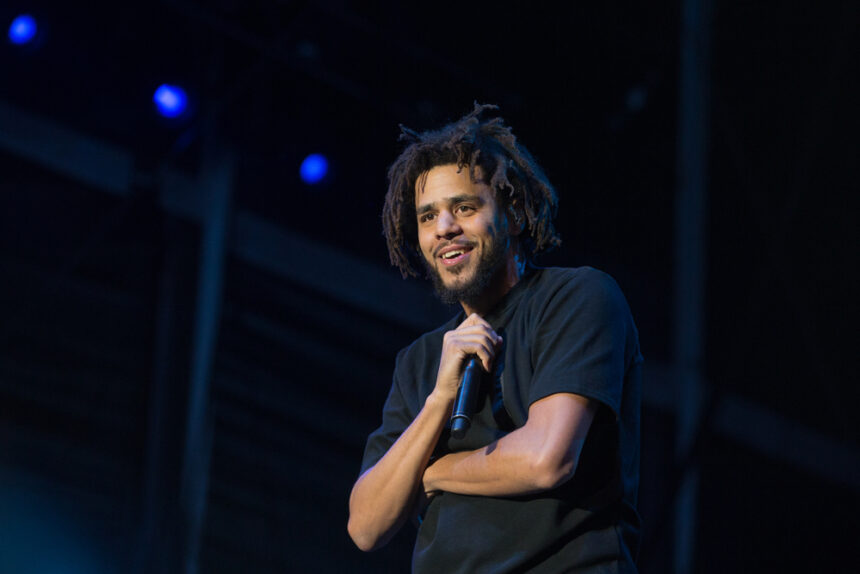
The music industry watches with bated breath as J. Cole prepares to release The Fall Off, an album that could either resurrect his standing among rap royalty or cement his fall from grace. His latest mixtape, Birthday Blizzard ’26, dropped as a bold declaration that he refuses to surrender his legacy without a fight.
Hip-Hop’s Brutal Reality Check
The rap game operates like a gladiatorial arena where only the strongest survive. Just as athletes at New Jersey’s Diamond Gym push themselves to physical extremes, rappers battle for cultural dominance with equal ferocity. The explosive feud between Kendrick Lamar and Drake has demonstrated how quickly competitive rivalry transforms into personal warfare, with both artists exchanging venomous disses that elevated the stakes beyond mere chart positions.
Cole finds himself navigating treacherous waters. While some supporters champion him as the most talented member of the Big Three—himself, Drake, and Kendrick—others dismiss him as a distant third. His recent output showcases artistic growth and adaptability, yet lingering doubts persist about his ability to compete at the highest level.
The Big Three Debate Intensifies
Over the past decade, Cole has cultivated a distinctive voice within hip-hop. Drake conquered commercial radio with infectious hits while Kendrick earned universal critical praise for his conceptual brilliance. Cole carved out middle ground, connecting with audiences through introspective storytelling and technical proficiency. Albums like K.O.D. and The Off-Season demonstrated his range and secured his relevance among contemporary greats.
Then came the misstep. His track 7 Minute Drill and subsequent public apology for engaging in the Kendrick dispute raised uncomfortable questions about his competitive fire. Many interpreted his retreat as weakness, suggesting he lacked the killer instinct required to stand toe-to-toe with his rivals. That moment of hesitation transformed perception, positioning him as someone who talks a big game but backs down when confrontation arrives.
The Apology That Cost Everything
Cole’s decision to apologize represented a career-defining crossroads. While prioritizing peace over conflict might seem mature, it deflated the momentum he had built toward The Fall Off. Critics like Akademiks emphasized that stepping away from battle cost Cole immeasurable credibility within a culture that values fearlessness above almost everything else.
Fat Joe publicly expressed disappointment in Cole’s withdrawal, arguing that embracing the challenge could have elevated his historical legacy. Instead, Cole now operates from a defensive position. His forthcoming album carries the weight of redemption, offering him a chance to silence doubters and rewrite the narrative through undeniable artistry.
Pressure Mounts for The Fall Off Release
Cole has framed The Fall Off as his most personal undertaking, suggesting it might be his final statement. That possibility amplifies the pressure exponentially. Fans oscillate between excitement and anxiety, wondering whether he can deliver a masterpiece worthy of his ambitions or if the album will expose his limitations.
During a recent conversation, Cole emphasized his commitment to creating something meaningful for himself and the culture. He recognizes the uphill battle ahead but seems determined to prove his doubters wrong. The album represents more than commercial success or critical acclaim—it symbolizes his chance to reclaim respect and affirm his place in hip-hop history.
Internal Competition Drives Cole’s Redemption
Throughout his career, Cole has positioned himself as someone competing against his own potential rather than external adversaries. His lyrics frequently explore personal struggles, growth, and self-awareness. This introspective approach distinguishes him from peers more focused on outward conquest and dominance.
The Fall Off embodies that philosophy. Rather than simply responding to critics or rivals, Cole treats the album as a test of his artistic capabilities. Success will be measured not just by sales figures or streaming numbers but by whether he creates work that resonates authentically with listeners and reflects genuine evolution.
If Birthday Blizzard ’26 provides any indication, Cole approaches The Fall Off with renewed purpose and confidence. The path to redemption never follows a straight line, but he seems committed to climbing back on his own terms rather than conforming to others’ expectations.
The journey ahead remains uncertain. Whether The Fall Off becomes his crowning achievement or another disappointment, it represents a pivotal moment. One certainty emerges from the chaos: J. Cole refuses to fade quietly into irrelevance. His story continues, and hip-hop watches closely to see how this chapter concludes.