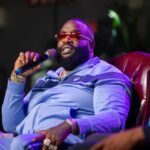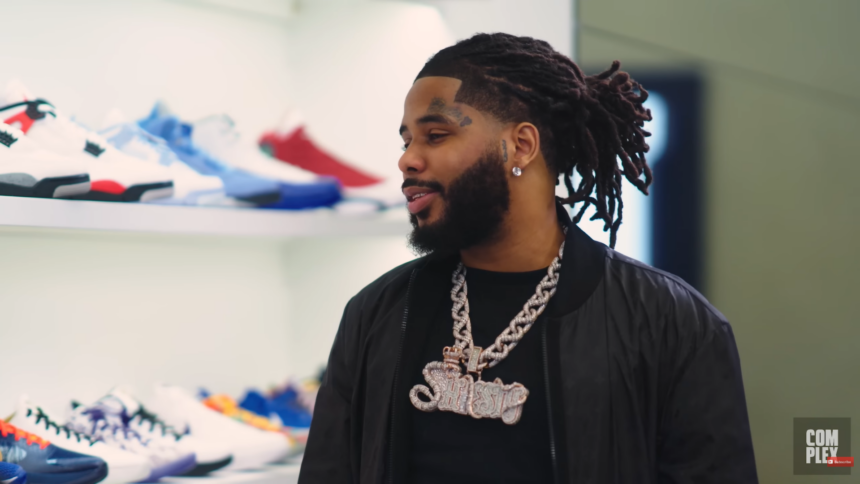
A federal judge in Texas denied bail to rapper Pooh Shiesty on Wednesday, ruling that he poses a flight risk and a potential danger to the community following his arrest on charges connected to an alleged armed kidnapping at a Dallas recording studio. The decision means Shiesty, whose legal name is Lontrell Williams Jr., will remain in custody as the case moves forward.
The judge’s ruling pointed to several aggravating factors. The charges involve the alleged use of a firearm and carry a potential sentence of life in prison. The court also found that Williams had been on home detention at the time of the alleged incident and had no authorized reason to be in Dallas. Those conditions made detention the only defensible outcome, the court concluded, finding no combination of release conditions sufficient to guarantee his appearance or the safety of others.
What prosecutors say happened
According to a federal criminal complaint, the alleged incident took place on January 10, 2026, when Williams traveled from Memphis to Dallas with eight others, including his father and fellow rapper Big30. Prosecutors allege the group arranged what appeared to be a business meeting with Gucci Mane, the head of 1017 Records, the label that had signed Williams in 2021.
Once inside the studio, prosecutors say the situation turned violent. Williams allegedly retrieved an AK-style pistol and used it to force Gucci Mane to verbally state that he was releasing Williams from his recording contract. The confrontation was allegedly filmed on a phone. Prosecutors also allege that Williams took jewelry and cash from Gucci Mane directly, while other members of the group robbed additional people inside the studio of watches, jewelry, a designer bag and cash. One person inside the studio was choked to the point of nearly losing consciousness, according to the complaint.
Investigators said they were later led to some of the allegedly stolen items through social media posts in which co-defendants were seen wearing jewelry identified as belonging to the victims. An Apple AirTag attached to a stolen wallet was traced to a parking lot near an apartment associated with Williams’s father.
The evidence against him
Prosecutors described a significant body of physical and digital evidence tying Williams and his co-defendants to the alleged crime. Data from his ankle monitor, which he was required to wear as a condition of his early prison release, reportedly places him at the studio on the night in question. License plate reader records show several defendants traveling together from Memphis to Dallas. Rental car records link a vehicle used by the group to his father. Surveillance footage from the studio and surrounding locations, along with fingerprints recovered at the scene, further supported the charges, according to authorities.
Williams had been released early from federal prison in October after serving three years of a five-year sentence for a firearms conviction out of Miami. At the time of the alleged January incident, he was barred from possessing any firearm as a condition of his supervised release.
All nine defendants named in the complaint face conspiracy to commit kidnapping charges, each carrying a potential life sentence.
The defense pushes back
Williams’s attorney raised pointed questions about the prosecution’s timeline, arguing that the three-month gap between the alleged incident and the unsealing of charges reflected uncertainty on the part of investigators rather than confidence. The defense noted the absence of a physical contract, no video of any signing and no recovered weapons or jewelry among the evidence disclosed so far, describing the early witness accounts as unreliable.
Whether those arguments gain traction in court remains to be seen. For now, Williams is in a Texas jail, facing charges serious enough that even a seasoned defense attorney’s skepticism did little to move the judge.