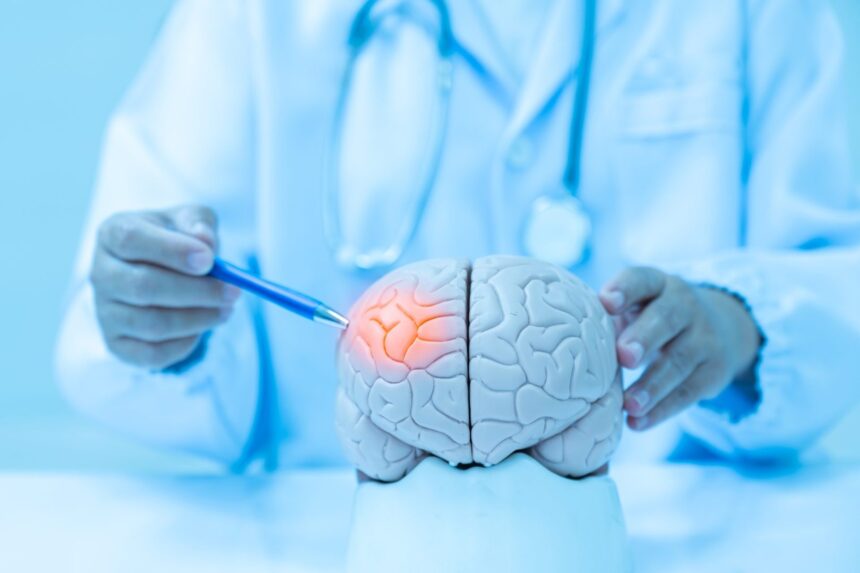
A concussion is a brain injury that occurs when the neurons, the cells responsible for sending signals throughout the brain, are stretched or damaged by impact. Rather than communicating in their normally regulated way, those cells begin firing erratically, consuming far more energy than the brain can supply. That energy imbalance is what triggers the wide range of symptoms associated with a concussion.
Because the brain governs everything from balance and vision to memory, mood and pain processing, the symptoms that result can be remarkably varied. What makes diagnosis particularly challenging is that these changes are microscopic and typically invisible on standard imaging like CT or MRI scans. Those scans are useful for identifying serious structural problems like bleeding, swelling or fracture, but they cannot detect the cellular disruption that defines most concussions. Recognizing symptoms is therefore the most important diagnostic tool available.
The delayed symptom window most people do not know about
Many people assume that if they feel relatively fine after hitting their head, they are in the clear. That assumption can be dangerous. Symptoms frequently do not appear until hours after an injury, and they can intensify or shift significantly over the following days. The criteria used to diagnose a concussion now include symptoms that emerge within a 72-hour window, a recognition of how commonly the condition presents on a delay.
In the first 24 hours, physical symptoms tend to dominate. Dizziness, headaches, nausea and sensitivity to light and sound are among the most common early signs. In the days that follow, a second wave of symptoms often surfaces, bringing cognitive and emotional changes including anxiety, irritability, trouble concentrating, memory difficulties and brain fog. This second phase regularly catches people off guard precisely because they believed they were improving.
Symptoms can also evolve in character over time. A headache that initially feels like intense pressure across the entire head may shift to a more intermittent, one-sided pain days later. Sleep disruptions might begin as an unusual need for more rest and gradually transition into difficulty sleeping at all. Vision issues can progress from blurring to problems tracking objects or maintaining focus.
Why the brain delays its distress signal
The delay in symptom onset has a physiological explanation. In the immediate aftermath of an injury, the brain releases adrenaline and burns through its energy reserves rapidly. That surge can temporarily mask symptoms, making a person feel more functional than they are. It is only once that energy is depleted, often hours or days later, that the full picture becomes apparent.
Inflammation also plays a role. Damage from the initial impact can trigger an inflammatory response in the brain that does not peak until three to seven days after the injury. This is what tends to drive the second wave of cognitive symptoms. Additionally, returning to work, school or other mentally demanding activities after a period of rest can reveal symptoms that were not previously apparent simply because the brain had not yet been challenged in those ways.
What to do and when to get help
Delayed symptoms are not automatically a sign of catastrophic injury, but they do warrant attention, particularly when they are worsening rather than improving. Emergency care is necessary if a headache becomes progressively worse, confusion increases, vomiting repeats, consciousness is lost for more than 30 seconds, blood or fluid appears from the ears or nose, vision changes, a seizure occurs or speech becomes difficult.
For delayed symptoms that do not require emergency attention, contacting a primary care physician is the appropriate first step. They can assess whether referral to a neurologist or imaging is needed. Rest is important in the early days, but current guidance cautions against extended isolation in a dark room. Research now shows that strict rest beyond 48 hours can actually prolong recovery rather than support it.
For symptoms that persist beyond two weeks, active treatments are available and effective. Vestibular rehabilitation addresses dizziness and balance issues, while cognitive therapy provides strategies for managing brain fog. Concussion centers, which bring together neurologists, physical therapists and specialized eye care providers, offer the most comprehensive path to recovery. Most people recover fully within one to two weeks, and even those with longer-lasting symptoms have strong options for treatment and a meaningful path forward.