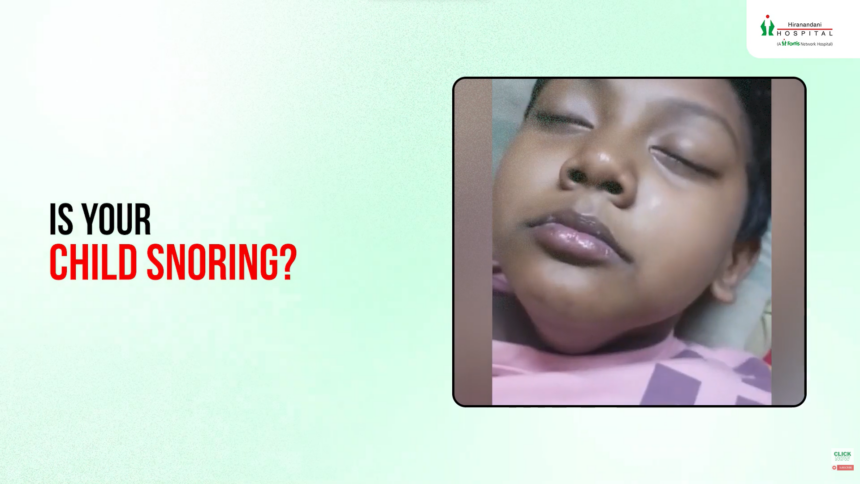
Walking past a sleeping child and hearing a soft snore might seem endearing, even amusing. But what sounds innocent can sometimes be a signal worth paying attention to. Research from the Sleep Foundation estimates that up to 27% of children snore occasionally, and between 1 and 5% have obstructive sleep apnea, a condition that disrupts breathing during sleep and can affect development, behavior and learning over time.
When parents notice regular snoring, the instinct is usually to bring it up with a pediatrician. That conversation is worthwhile, but experts in pediatric airway health suggest that a dentist, specifically one trained in airway function, may actually be the more effective first call.
Why children are snoring more than ever
The reasons behind childhood snoring are more varied and more structural than most parents expect. One increasingly recognized factor is the way modern diets are shaping jaw development. Children today consume far more soft, processed food than previous generations, and that shift has consequences for facial bone growth. Proper jaw and palate development depends in part on the mechanical work of chewing tougher textures. Without that stimulation, jaws can grow narrower and airways more constricted, making comfortable nasal breathing harder, especially during sleep.
Enlarged tonsils and adenoids are another common contributor. When those tissues grow large enough, they physically reduce airway space and push children toward mouth breathing. Chronic nasal congestion and allergies can create the same pattern, and habitual mouth breathing, once established, tends to reinforce itself over time. Each of these factors compounds the others, creating conditions where snoring becomes a predictable outcome rather than a random quirk.
The window for effective intervention
Pediatric airway specialists consistently point to early childhood, roughly between ages three and eight, as a critical window for addressing these issues. During this period, the jaw, face and airway are still highly responsive to guidance. Interventions applied during these years tend to be less invasive and more effective than approaches used later.
The goal of early intervention is not simply to stop the snoring but to identify and address the root causes. That might involve restoring nasal breathing patterns, retraining oral and facial muscles through a therapy known as myofunctional therapy, evaluating the tonsils and adenoids, and in some cases supporting jaw development with specialized appliances. The approach is individualized rather than one-size-fits-all, and it aims to support healthy development rather than just treat a symptom.
An unexpected connection to picky eating
One finding that tends to surprise parents is the relationship between airway development and picky eating. A condition called tongue tie, in which movement of the tongue is restricted, can interfere with a child’s ability to manage food comfortably. A high or vaulted palate creates similar difficulty, limiting where the tongue can rest and how effectively it moves during eating.
There is also a nerve component. When the tongue rests too low in the mouth, a particular nerve that helps regulate swallowing and sensation can become overactive, heightening the gag reflex and making certain textures feel intolerable. Children who consistently avoid specific food types may be responding to this discomfort instinctively rather than being simply fussy. Palate expansion and muscle retraining have shown promise in addressing these responses and broadening food tolerance over time.
Why dentists are uniquely positioned to help
Pediatric dentists typically see children at least twice a year, often more consistently than any other healthcare provider during the early years. That frequency gives them a distinct advantage when it comes to monitoring jaw development, palate shape, oral muscle function and breathing patterns as a child grows. They are also equipped with tools to actively support that development in ways that go beyond observation.
That said, if a child ever appears to stop breathing during sleep or shows signs of significant respiratory distress, that requires immediate medical attention. Airway-focused dental care and emergency medicine are not interchangeable, and knowing when to escalate is just as important as knowing who to call first.