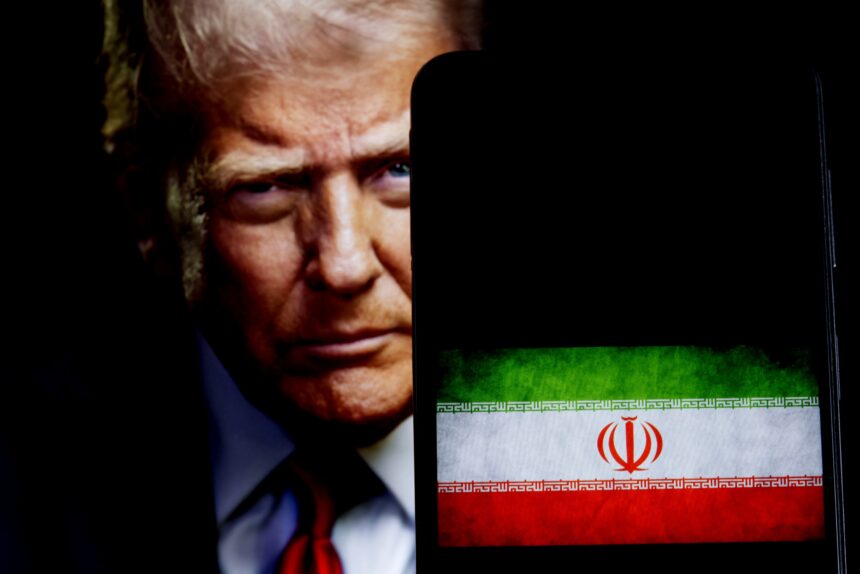
The assumption behind any major U.S. military campaign is that allied infrastructure will be available. Bases, airspace, runways, logistics. The expectation is that NATO partners, when called upon, will at minimum stay out of the way. That assumption is now being tested in real time, and two of the alliance’s members have already answered with a firm refusal.
Spain moved first. The government in Madrid did not simply express reservations. It blocked American use of jointly operated military bases for operations connected to the conflict with Iran and then went further, closing its airspace to U.S. warplanes involved in the strikes. Spain’s defense minister made the position explicit: neither bases nor airspace would be authorized for actions related to the current conflict. The government has framed the war as unilateral and outside the bounds of international law, and it has not softened that characterization.
Italy’s refusal landed differently and carries more diplomatic weight. Spain’s opposition fits the political positioning of its current government. Italy’s does not. Prime Minister Giorgia Meloni has cultivated a close relationship with Washington and has generally avoided public breaks with the Trump administration. Yet Rome denied permission for U.S. military aircraft to land at Sigonella in Sicily, citing a failure to follow treaty protocols requiring prior authorization. Italian officials described the situation as procedural rather than political, and insisted there were no underlying frictions.
The distinction may be true in tone. It does not change the practical outcome. Italy said no.
Iran noticed and responded in a way that should concern Washington more than any tweet
The more revealing development came from Tehran. Following Spain’s refusal, Iran’s embassy in Madrid indicated it would be receptive to any requests from Spain related to transit through the Strait of Hormuz, describing Spain as a country that respects international law.
That statement was not diplomatic noise. It was a deliberate signal that Tehran is now drawing distinctions between NATO members it views as adversaries and those it believes can still be engaged. Spain’s refusal to participate in U.S. military operations did not just keep the country out of the conflict. It opened a lane. Iran is not offering Spain an alliance. It is offering Spain a category, and the existence of that category inside the Western alliance is a structural problem that no amount of rhetorical toughness can resolve.
Trump’s response revealed the gap between posture and coalition reality
President Trump responded to the alliance friction by posting on Truth Social, urging countries affected by the Strait of Hormuz shutdown to purchase American fuel or take matters into their own hands. He called out the United Kingdom and France by name for declining to assist. He declared that the hard part of the operation was finished. He suggested that American support for allies going forward was not guaranteed.
The post was framed as strength. It read, to much of the international audience, as evidence that the coalition had not held the way the administration expected. Leaders who are confident their alliances are intact do not publicly tell partners they are on their own. The language reflected a president who went looking for compliance and encountered procedure, hesitation and outright refusal instead.
The alliance is sorting itself and the sorting is happening in public
Wars test alliances by forcing choices. The question is whether those choices are made quietly, through back channels and private negotiations, or openly in ways that establish visible divisions. This conflict is doing the latter. Spain’s airspace closure is public. Italy’s denial is on the record. Iran’s statement to Madrid is published. Trump’s post is on social media. The sorting of NATO into countries that complied, countries that hedged and countries that refused is no longer a matter of diplomatic inference. It is documented.
The Strait of Hormuz remains closed. The coalition is fragmenting. And the countries being asked to bear the cost of a war they did not authorize are making calculations that do not automatically favor Washington.