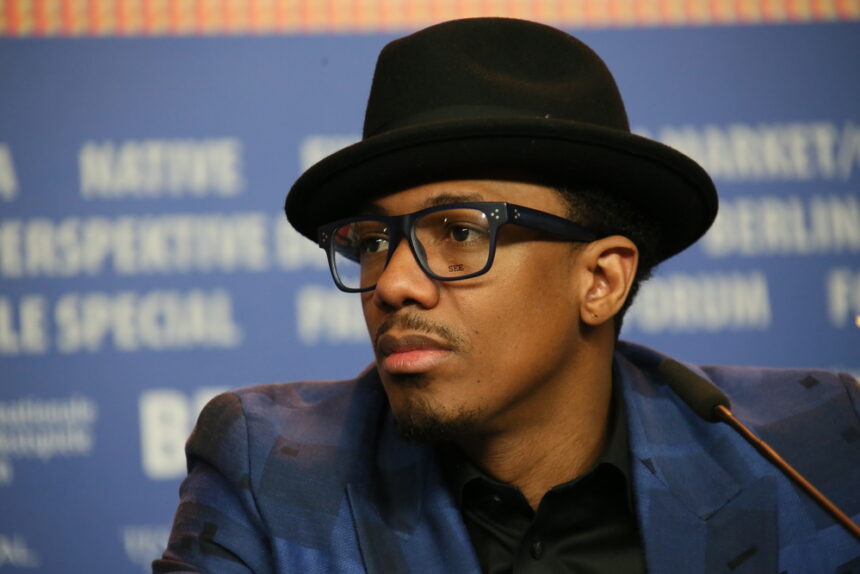
It started with a conversation that quickly became a controversy. During a recent appearance alongside conservative influencer Amber Rose, Nick Cannon made a series of politically charged comments that sent shockwaves through social media and reignited a long-simmering debate about Black celebrity support for President Donald Trump.
Cannon argued that many Americans are unaware of the Democratic Party’s historical ties to the Ku Klux Klan, a claim that is technically rooted in history. The Civil Rights Act of 1866 and the period of Reconstruction that followed the Civil War did see Republican leadership advocate for the rights of Black Americans. What his argument left out, however, was the ideological transformation both parties underwent in the decades that followed, particularly after Franklin D. Roosevelt’s New Deal and the seismic realignment triggered by the Civil Rights Act of 1964 and the Voting Rights Act of 1965.
Cannon also invoked the political philosophy of W.E.B. Du Bois, citing an essay the scholar wrote in 1956 about the limits of the two-party system, before making his own position unmistakably clear. He praised Trump enthusiastically, referencing the renaming of the Gulf of Mexico and the administration’s aggressive stance on immigration as evidence that the president was delivering on his promises.
A pattern that predates this moment
What makes this week’s headlines significant is not that a Black celebrity expressed support for Trump. It is that the list of those doing so, quietly or loudly, keeps growing. For nearly a decade, a scattered but consistent group of Black public figures including retired athletes, musicians and cultural personalities has publicly aligned with Trump or his closest allies, often at considerable social cost.
Nicki Minaj doubles down
Nicki Minaj’s shift toward Trump and the broader MAGA movement had been building for years, but last November she made it official, declaring herself his most devoted supporter and vowing to push back against what she described as coordinated attacks on his character. She appeared at a Trump-affiliated summit in Washington earlier this year, delivering remarks that framed the president as a figure protected by divine forces. Trump later acknowledged her support during a Black History Month event at the White House in February.
Amber Rose completes her transformation
Few transformations in this space have been as dramatic as Amber Rose’s. Once a fierce critic of Trump, she became one of his more visible Black female supporters during the 2024 presidential election, earning a speaking slot at the Republican National Convention in July of that year. She used the platform to argue that Trump’s coalition is one of inclusion, and during her recent conversation with Cannon she doubled down, claiming the Democratic Party has consistently failed Black Americans and people of color while Republicans have not.
Chilli’s donations and a complicated apology
The week’s most nuanced story belonged to Rozonda Thomas, better known as Chilli of TLC. Federal Election Commission records revealed she had donated to several Trump-aligned political action committees during the 2024 election cycle. She also came under fire for resharing a social media post promoting a debunked conspiracy theory about former first lady Michelle Obama.
Thomas quickly addressed both issues publicly, insisting she is not aligned with MAGA and attributing the donations to not reading the fine print. She asked her 1.4 million Instagram followers for grace. However, observers noted she continued following several prominent conservative figures even after her apology, though she did unfollow one Republican congressman in the days that followed.
Waka Flocka stays the course
Atlanta rapper Waka Flocka Flame, who has long positioned himself as politically independent, reaffirmed his support for Trump in a series of posts last week. He acknowledged that the president’s methods could feel severe but framed the administration’s overall approach as ultimately purposeful, adding that his loyalty to Trump remained firm.
The week’s events collectively underscore something that has been true for years but rarely gets examined with full seriousness. Black celebrity support for Trump is not a fringe phenomenon. It is a pattern, and it is one that continues to prompt urgent questions about influence, accountability and what it means to have a platform.