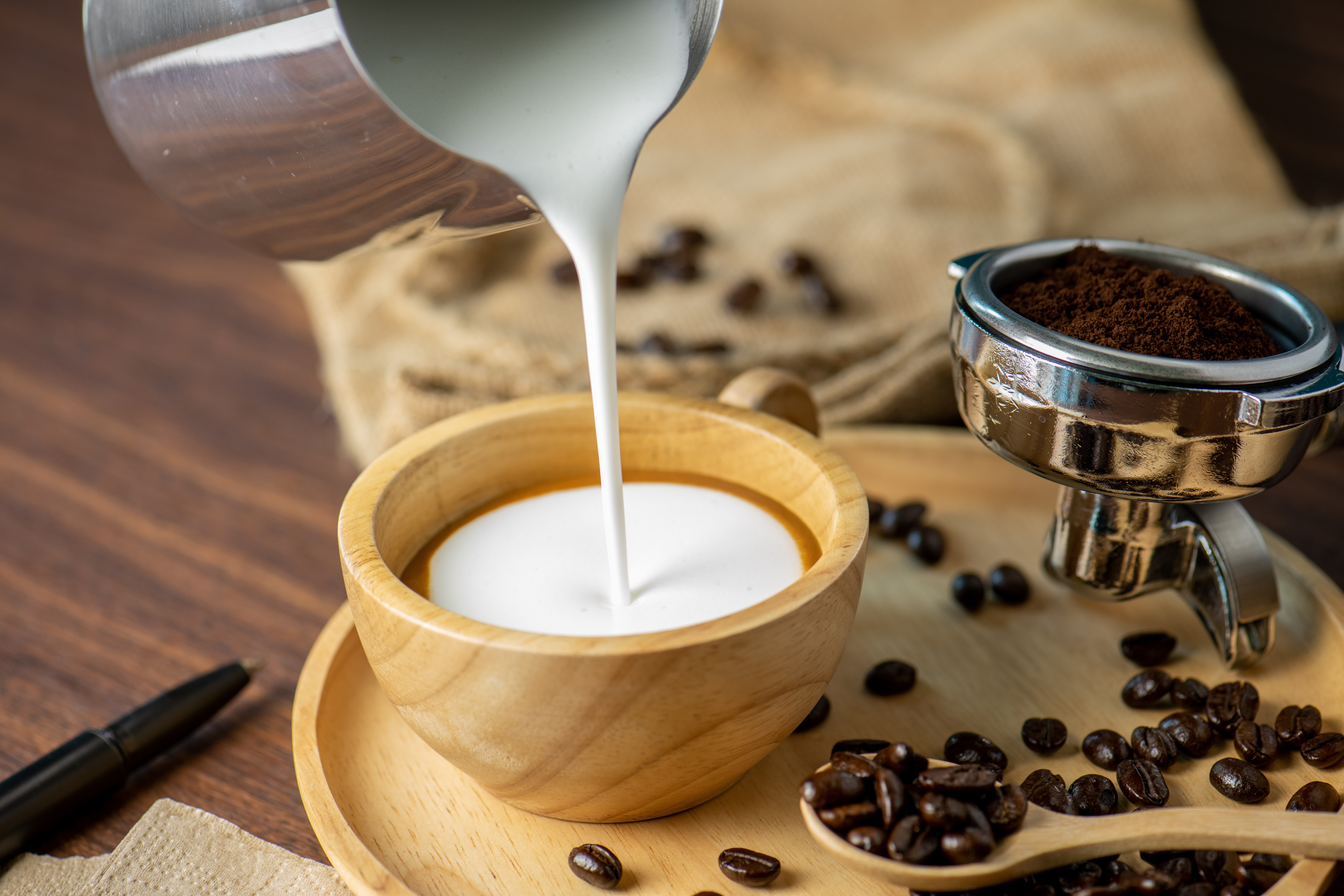
For something added in such small amounts, coffee creamer carries a surprising nutritional footprint. The creamer aisle at most grocery stores is filled with products loaded with added sugars, saturated fats, artificial flavorings, preservatives and long lists of stabilizers and thickening agents. Most people reach for whatever tastes good without giving the label a second look. Nutritionists say that habit is worth reconsidering.
The good news is that identifying a better option does not require a nutrition degree. Registered dietitians point to a handful of simple criteria that can quickly separate quality products from the rest, and when three nutrition professionals were asked independently to name their top pick, they all arrived at the same answer.
What to look for on the label
The most reliable starting point when evaluating any coffee creamer is the ingredient list. A short list with recognizable components signals a less processed product. Real dairy or a straightforward plant-based base like almond milk, oat milk or coconut milk is a solid foundation. The longer the list of gums, emulsifiers and stabilizers, the more the product has been engineered rather than simply made.
Added sugar is the next thing worth examining closely. Many creamers contain significantly more sugar per serving than most people expect, and because coffee drinkers often use creamer multiple times a day, that sugar adds up fast. Nutrition professionals generally recommend looking for options with no more than two grams of added sugar per tablespoon. It is also worth noting that products labeled zero sugar are not automatically better choices. Some of them rely on artificial sweeteners or sugar alcohols that may not support long-term gut or metabolic health.
For dairy-based creamers, some level of saturated fat is natural and not cause for alarm in moderate use. In plant-based varieties, higher saturated fat often comes from added oils rather than the base ingredient itself, which is something to be aware of if you are using multiple servings daily.
Finally, for those who factor environmental impact and sourcing into their purchasing decisions, organic and sustainably produced options offer additional reasons to feel good about what ends up in your cup.
The one coffee creamer nutritionists keep recommending
When asked to name their top pick in the category, three registered dietitians landed on the same product without coordination: Organic Valley Grassmilk Half and Half. The reason is straightforward. It contains exactly two ingredients, organic milk and organic cream, and nothing else. No added sugars, no gums, no flavorings and no preservatives.
What further distinguishes it is the sourcing. The product is made from 100 percent grass-fed cow’s milk, which naturally contains higher concentrations of conjugated linoleic acid and omega-3 fatty acids than conventional dairy. Both compounds are associated with anti-inflammatory benefits, making this not just a cleaner option but a nutritionally meaningful one.
For those who prefer a flavored creamer, the same brand offers a French vanilla lactose-free variety that contains significantly less sugar than leading competitors and uses no artificial sweeteners. It also works well for people with lactose sensitivity.
The bottom line
There is no single definition of a healthy coffee creamer because individual dietary needs and preferences vary widely. But the underlying framework that nutrition professionals recommend is consistent: keep the ingredient list short, watch the added sugar, avoid unnecessary additives and choose real food over engineered substitutes when possible.
If you prefer to skip the label-reading altogether, the product three dietitians independently agreed on happens to make that decision very simple.