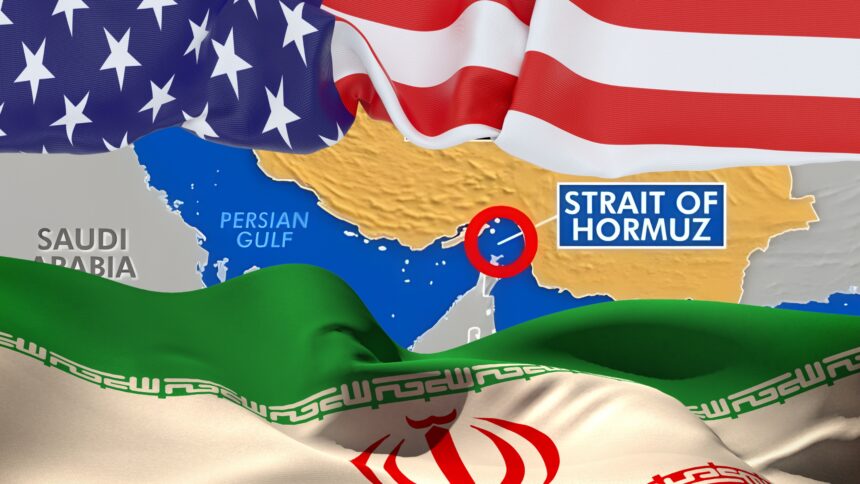
Iran’s parliament is working on legislation that would impose formal fees on vessels seeking safe passage through the Strait of Hormuz, the narrow but enormously consequential waterway connecting the Persian Gulf to the wider global economy. The draft bill is expected to be finalized in the coming days and would legally codify Tehran’s claim to oversight of one of the most strategically important shipping lanes on earth.
The legislation would give official legal standing to an arrangement that has already been playing out informally for weeks. Reports from within the shipping industry have described vessels being asked to provide crew details, cargo information and voyage itineraries through intermediaries, with payments of up to $2 million being requested in exchange for guarantees of safe transit. Those efforts have been inconsistent and unsystematic, but the new bill would change that, transforming what has so far been an informal shakedown into something resembling official policy.
Iran tightens control as the waterway goes quiet
The Strait of Hormuz has been largely inactive since U.S. and Israeli military strikes on Iran began roughly a month ago. In the weeks since, only a small number of vessels have successfully navigated the passage, the majority of them carrying Iranian or Chinese connections, with a handful of others reportedly having secured clearance directly from the Islamic Revolutionary Guard Corps.
The near-closure of the strait has had immediate and measurable consequences for global energy markets. Persian Gulf oil producers have been forced to cut output as the disruption takes hold, and several refineries in the region have sustained damage during the ongoing conflict. Global oil prices have surged in response, with the Brent benchmark surpassing $114 a barrel earlier this week.
A complicated question for the shipping industry
The prospect of a formal toll system is putting the shipping industry in an extraordinarily difficult position. Operators with crews and cargo stranded in the Persian Gulf are under pressure to find a way through, but paying Iran for passage carries significant risks. Doing so could expose companies to sanctions, raise security concerns and set a precedent that fundamentally challenges the principle of freedom of navigation, a cornerstone of international maritime law that has underpinned global trade for over a century.
Industry voices have described the situation as one of trust as much as legality. Even if a toll is paid and safe passage is promised, there is no reliable mechanism for holding Iran accountable if something goes wrong. The informal system that preceded the proposed legislation did little to inspire confidence, and the formalization of it does not automatically change that calculus.
What it means for global trade
The broader implications of Iran’s move extend well beyond the ships currently stuck in the Gulf. The Strait of Hormuz is one of the most critical chokepoints in the global energy supply chain, with a significant share of the world’s oil and liquefied natural gas flowing through it on any given day. A prolonged disruption, let alone a legally enforced toll regime, would reshape shipping routes, inflate energy costs and ripple through economies far removed from the conflict itself.
Whether the legislation moves forward as planned and how the international community responds to it could determine how the situation at Hormuz evolves in the weeks ahead. For now, the strait remains one of the most closely watched stretches of water in the world, and Tehran appears intent on making that attention work in its favor.