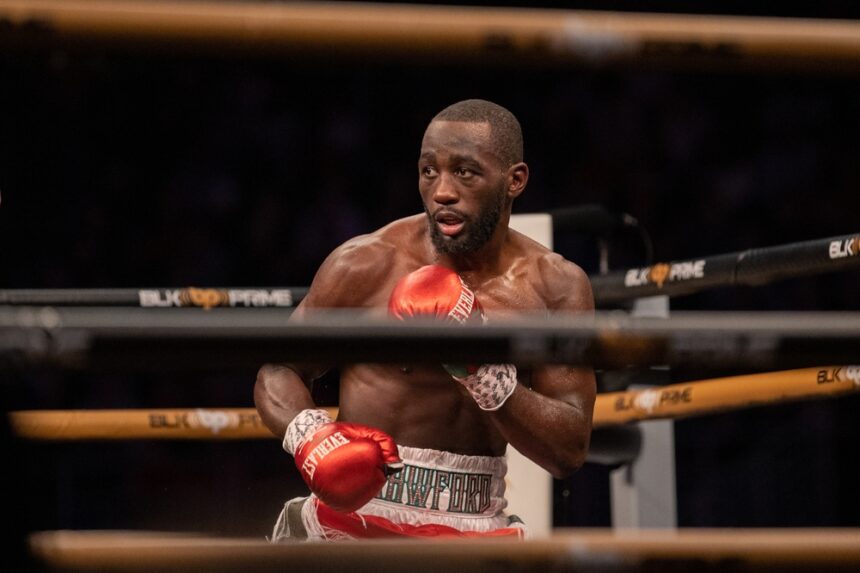
When Terence Crawford posted a five-minute video to his YouTube channel in December 2025, the boxing world collectively held its breath. The message was clear, deliberate, and final — he was done. At 38 years old, he stepped away from the sport with an unblemished 42-0 record, 31 knockouts, and a legacy that few fighters in any era can match.
The retirement did not come wrapped in a farewell tour or a last-money fight. It came the way he did most things — quietly, on his own terms, and with something to prove already proven.
A Crawford Legacy Built Fight by Fight
Crawford’s path to greatness was never handed to him. He turned professional in 2008 after narrowly missing the U.S. Olympic team and spent years earning respect in relative obscurity. What made him different was not just his skill inside the ring — it was the relentless pursuit of the biggest challenges available to him.
His championship resume spans five weight classes and 18 major world titles
- Lightweight — WBO, The Ring
- Light Welterweight — WBA, WBC, IBF, WBO, The Ring
- Welterweight — WBA, WBC, IBF, WBO, The Ring
- Light Middleweight — WBA
- Super Middleweight — WBA, WBC, IBF, WBO, The Ring
He became the only boxer in the four-belt era to hold undisputed championships in three separate weight classes — a distinction no other fighter has matched.
The Crawford-Canelo Fight That Cemented Everything
The defining moment of Crawford’s career arrived on September 13, 2025, at Allegiant Stadium in Las Vegas. Facing Canelo Alvarez — one of the most celebrated fighters of the modern era — he entered as a challenger moving up three full weight divisions. He left as the undisputed super middleweight champion of the world.
The unanimous decision victory was not just a win. It was a statement. He outworked, outpaced, and outclassed an opponent that most believed held every physical advantage. The performance left the boxing world stunned and finally, unambiguously, placed Crawford at the summit of the sport’s pound-for-pound rankings.
ESPN named him the No. 1 fighter on its Top 100 list for 2025. Ring Magazine honored him as Fighter of the Year. The flowers, long overdue, finally arrived.
Why He Chose to Retire at the Top
In the weeks and months that followed, speculation about Crawford’s next move ran wild. A rematch with Canelo seemed logical. A move to middleweight to chase a fourth undisputed title at 160 pounds — potentially against the winner of the Janibek Alimkhanuly and Erislandy Lara bout — was floated as another possibility. Crossover events were discussed. None of it materialized.
Crawford had a different plan. He retired because he wanted to, not because the sport forced him out. His reasoning was straightforward
- He had been competing since age seven — over 30 years of putting his body through the demands of elite-level boxing
- He did not want to become one of the fighters who stayed too long and could no longer enjoy life outside the ring
- He wanted to redirect his energy toward his family and life beyond the sport
- He had accomplished everything he set out to do as a child — and more
When asked directly whether $100 million could bring him back, Crawford’s response was immediate. He called it selling his soul. The money was never the point.
Crawford’s Place Among the All-Time Greats
The retirement debate that followed centered less on whether Crawford made the right call and more on where he now ranks in the sport’s history. The comparisons to Floyd Mayweather — another unbeaten champion who left on his own terms — were immediate and widespread.
What separates Crawford in the conversation is the quality of opposition he faced and the weight class range he conquered. He did not just accumulate titles. He pursued the hardest available fights, often against bigger, more physically imposing opponents, and won on merit every single time.
His exit leaves boxing without its pound-for-pound king at a time when the sport had only just started giving him the recognition he deserved. That is the paradox of Crawford’s career — he was always ahead of the audience trying to appreciate him.
What Comes Next for Crawford
As of early 2026, he has made clear that rest and family are the priority. He has mentioned traveling and spending time away from the demands of elite competition. Whether a return is ever possible remains an open question — boxing retirements have a long history of reversals — but he has been unusually firm in his conviction.
The WBO has already moved to fill the vacant super middleweight title he relinquished. The division, and the sport, will adjust. But replacing what Crawford brought to boxing — that combination of technical mastery, competitive drive, and refusal to take the easy path — will take considerably longer.
He walked away unbeaten. He walked away on his terms. And in a sport that rarely affords its champions either luxury, that alone makes the Crawford story worth remembering.