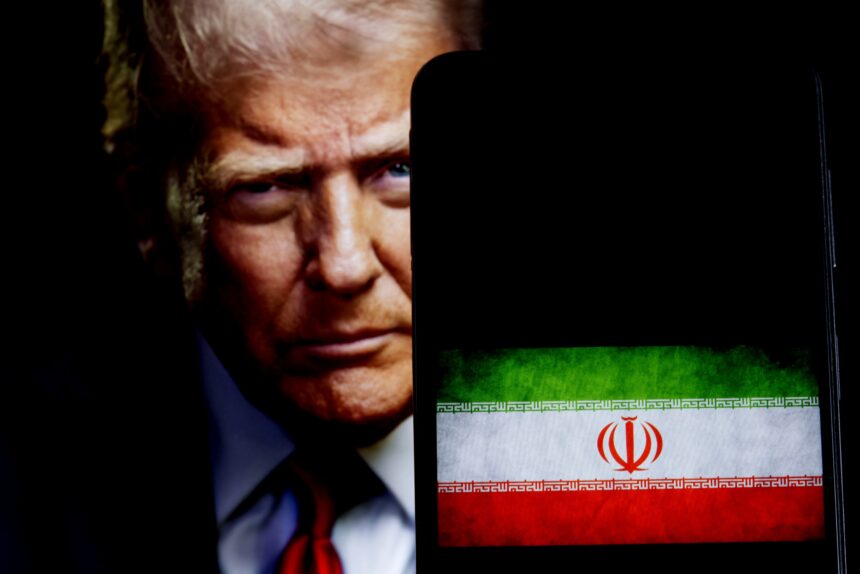
President Donald Trump pulled back from threatened strikes on Iranian energy infrastructure on Monday, a move that sent oil prices sharply lower and briefly lifted markets. But the relief came with significant caveats, and for the international shipping industry that has been effectively frozen out of the Strait of Hormuz for nearly three weeks, the path forward remained anything but clear.
Speaking with reporters, Trump indicated that the waterway would reopen, but only if ongoing peace negotiations produced results. The talks, which the president described as productive, are expected to continue throughout the week. His comments stopped well short of a timeline and introduced a new and striking idea, that the strait could ultimately end up under joint control shared between the United States and whatever government emerges in Iran following the conflict.
That prospect added a layer of complexity to an already uncertain situation and offered little immediate comfort to shippers who have been unable to operate in the region since military operations began on Feb. 28.
Iran pushes back as uncertainty deepens
The ambiguity on the American side was compounded by conflicting signals from Tehran. Iranian state media on Monday continued to warn that the waterway could be shut down entirely if the country’s power plants came under attack, and officials flatly denied that any direct or indirect negotiations with the United States were taking place. The gap between what Washington was describing and what Tehran was acknowledging left the situation in an uncomfortable state of suspension.
When pressed by reporters about whether American Marines were being deployed to the region to help manage traffic through the strait, Trump declined to offer any details, citing strategic confidentiality.
Oil prices fall but the bigger picture holds
The announcement of talks did produce a notable reaction in energy markets. West Texas Intermediate crude futures fell roughly 8 percent on the news, dropping below $90 a barrel. Global benchmark Brent crude pulled back to around $103 after having climbed above $113 earlier in the day. The numbers reflect how sensitive oil markets have become to even the suggestion of a diplomatic off-ramp, but analysts cautioned against reading too much into a single session of price movement.
The broader disruption to global energy supply remains substantial. Before the conflict began, the Strait of Hormuz carried roughly 20 percent of the world’s oil along with a significant share of other critical commodities. That flow has nearly stopped entirely since the fighting started, and there is no clear mechanism in place to restore it quickly even if a ceasefire were reached today.
A pattern of strong words and unresolved outcomes
Monday’s shift toward diplomacy followed a pattern that has defined Trump’s approach to the conflict. The president issued an ultimatum over the weekend demanding that Iran make the waterway fully open within 48 hours or face strikes on its power plants. That deadline passed without either the threatened action or the demanded result, and by Monday the tone had softened considerably.
Earlier in the month, Trump had posted that any Iranian interference with the flow of oil would trigger an escalation in attacks. The weeks that followed saw the strait remain effectively closed without any escalation materializing. The gap between the president’s stated positions and the conditions on the ground has become a recurring feature of the conflict’s public narrative.
What analysts are watching
Political and economic analysts monitoring the situation were cautious about drawing optimistic conclusions from Monday’s developments. The move toward talks was seen as a potential step toward ending the war, but the energy disruption was viewed as a separate and more stubborn problem. Even a successful diplomatic resolution would not immediately restore the flow of ships through the waterway. A backlog of tankers has built up, infrastructure in the region may need assessment, and rebuilding confidence among shippers takes time.
The prevailing view among those watching closely is that the Strait of Hormuz is likely to remain disrupted for the foreseeable future regardless of how the political conversations unfold this week. Talks are a beginning. They are not yet a solution.