Nearly six decades into one of the most decorated careers in American entertainment, Melba Moore is not slowing down. At 80, the singer and actress is releasing a memoir, booking live performances, and perhaps most remarkably still holding the same 36 second note that earned her a Guinness World Record back in 1982.
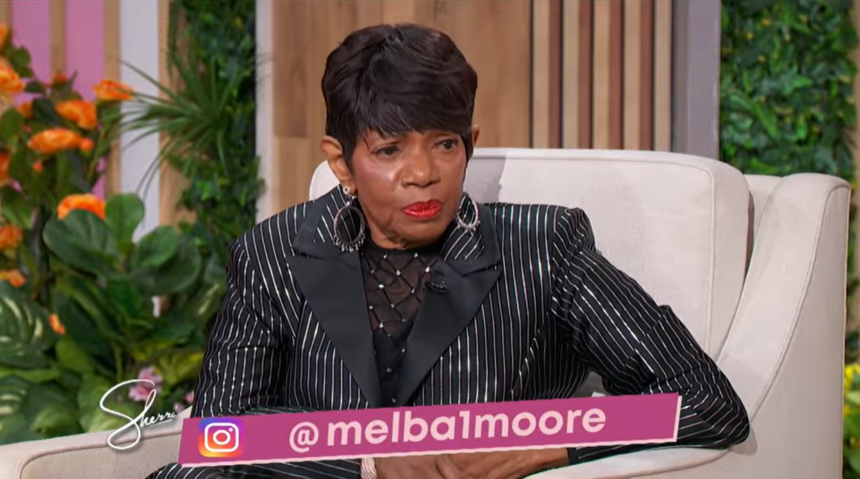
For anyone who caught her 2024 appearance on Sherri Shepherd’s talk show Sherri, none of this came as a surprise. Moore stepped on that stage and demonstrated, without hesitation, that her vocal range remains as formidable as ever. The high notes are still there. The breath control is still there. And the woman behind them is very much still here.
A career built on milestone after milestone
Born Beatrice Melba Smith in New York City, Moore adopted her stage name from her middle name and the surname of her stepfather, professional jazz musician Clement Moorman. From the very beginning, her career moved at a pace that left little room for doubt about where she was headed.
In 1968, she was part of the original cast of the landmark Broadway musical Hair. Just two years later, she took home the Tony Award for best featured actress in a musical for her performance in Purlie a win that cemented her place among the theater world’s elite. She then launched her own primetime variety television series on CBS, with hit records, film roles, and a steady stream of stage appearances following in the years after.
Then came 1982. On the title track of her 12th studio album, The Other Side of the Rainbow, Moore held a single note for 36 seconds, a feat that earned her official recognition in the Guinness World Records under the category of longest recorded note in music. It remains one of the most striking physical achievements in the history of popular music.
Now, with her memoir This Is It Marvelous & Getting Better freshly released, and live performances of Melba Moore: From Broadway, With Love scheduled for June 24 and 25 at 54 Below in New York City, Moore is giving her audience an intimate look at what has kept her going.
The fitness philosophy behind the voice
In an exclusive excerpt from her memoir, Moore pulls back the curtain on something that many people outside the performing world rarely consider that great singing is not simply a matter of vocal cords. It is a full-body athletic endeavor, and she trains accordingly.
Moore’s gym routine, which she has named her Push Back regimen, is built on a straightforward philosophy: life and age will push you, and the job is to push back. She approaches the gym not as a general wellness exercise but as specific preparation for the physical demands of performance the kind that requires standing flat-footed and belting notes into a microphone for an hour or more without losing power or breath.
Her sessions focus heavily on core strength, leg work, and lower back conditioning. She does leg curls, leg lifts, lunges, and leg presses exercises she says directly support her posture, her hip stability, and, crucially, the open passageway that allows notes to travel from deep in her core all the way through to the microphone. The stronger the core, she explains, the longer and cleaner the notes.
She is also quick to point out that this kind of physical conditioning is not exclusive to performers. Cashiers, professors, sales clerks, and anyone who spends long hours on their feet is drawing on the same muscle groups most people simply do not make the connection between core strength and the everyday demands of standing and moving through the world with ease.
Movement is the non negotiable
Beyond the gym, Moore champions something far simpler as one of her most important habits: walking. A good walk on a mild, sunny day with water in hand and a breeze at her back is something she treats not as optional but as essential. Movement, in whatever form it takes on a given day, is the thread that runs through everything.
Even on the quieter days, she holds herself to the standard of simply getting up and getting active. The walk from the bedroom to the kitchen counts. The point, she says, is the act of rising and moving because inertia, not age, is the real trap.
Still performing, still writing, still pushing
What makes Moore’s story so compelling is not just the Guinness record or the Tony or the decades of hit records it is the consistency of her commitment to her craft at an age when most people have long since stepped away. She describes performing as bearing it all and giving everything, whether the setting is a Broadway stage, an intimate club, or a one-woman show. That standard has not changed.
With her memoir now in readers hands and her June performances at 54 Below on the horizon, Moore is doing what she has always done showing up fully, on her own terms, and reminding anyone paying attention that longevity in this business is not luck. It is work, it is intention, and it is the stubborn refusal to let anything age included push you off the stage.