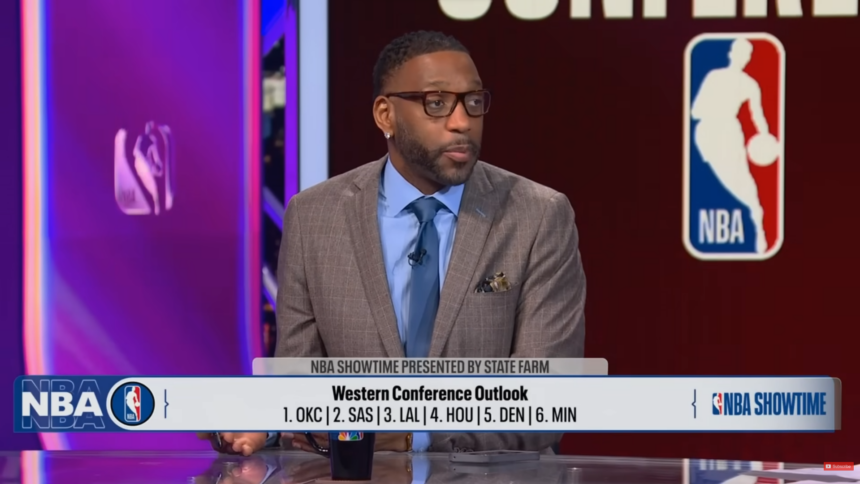
Not every path to greatness runs through a college campus, and few people embody that truth quite like Tracy McGrady. The Hall of Fame guard and forward bypassed higher education entirely after finishing at Mount Zion Christian Academy, entering the 1997 NBA Draft and landing with the Toronto Raptors as the ninth overall pick. He was 18 years old, impossibly talented, and about to find out just how fast life could move.
His draft class was stacked. Tim Duncan and Chauncey Billups were among the names called that night, and McGrady fit right into that conversation as one of the most electric young prospects in the country. The Florida native arrived with long limbs, a silky jumper, and a motor that hinted at something special, even if the full picture had not yet come into focus.
Tracy McGrady and the classroom that could not compete
Before the money came rolling in, McGrady had quietly held onto a goal that meant something to his mother, Roberta. She wanted him to pursue a college education, and in his first year in the league, he actually tried. He enrolled in a leadership course and gave it a genuine shot, lasting about two months before reality made the decision for him.
The papers. Specifically, the 10-page papers.
With a 12 million dollar Adidas endorsement deal and a 9 million dollar rookie contract already signed, the math simply did not add up in the classroom’s favor. McGrady shared the story on a podcast he hosts alongside fellow NBA veteran Vince Carter, describing the moment he realized that academia and his new life were not going to coexist. It was not laziness. It was clarity.
The money was not the only thing pulling him away. The game itself had become his education. Every practice, every late-night session, every moment spent studying opponents and sharpening his instincts was its own kind of curriculum, one that no university syllabus could replicate.
Finding footing in the early years
The transition from high school to the pros is never seamless, and McGrady’s first two seasons reflected that reality. He was raw, adjusting to the speed and physicality of a league full of grown men who had been playing at the highest level for years. Doubt crept in during those quiet moments, the kind that come when a young player wonders whether the hype around them is really deserved.
What helped pull him through was an unlikely mentor. Kobe Bryant, already one of the most driven players in the game, became a touchstone for McGrady during that formative stretch. The two shared a bond forged in similar circumstances, both having skipped college and entered the league young, though their backgrounds differed significantly. Bryant’s upbringing was structured and stable in ways McGrady’s had not been, and that contrast made their conversations all the more valuable. McGrady leaned on that relationship heavily, drawing on Bryant’s discipline and self-awareness to navigate a world he was still figuring out in real time.
When T-Mac took over
Once the adjustment period passed and McGrady locked in fully, the results were undeniable. He became one of the most feared scorers the game had ever seen, a player capable of erupting for historic performances on any given night. He earned seven All-Star selections and claimed back-to-back scoring titles, cementing his place among the elite.
The NBA championship eluded him throughout his career, a footnote that his critics have never quite let go of. But championships are not the only measure of a career, and McGrady’s legacy is built on something harder to quantify, the kind of brilliance that made arenas hold their breath.
He never did finish that college course. But on the court, Tracy McGrady wrote quite the story.