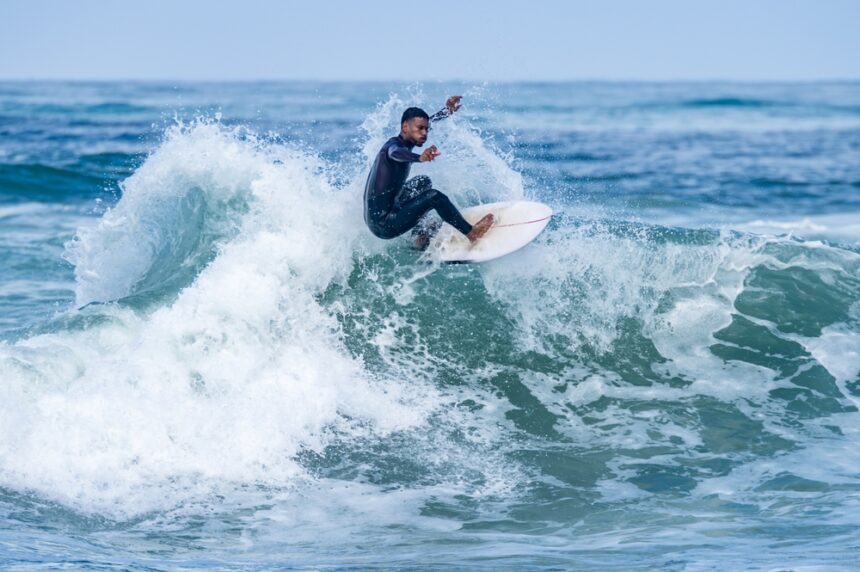
There is a reason people stop and stare when a surfer drops into a massive wave. It is not just the spectacle — it is the impossibility of it. The image of a human being, standing on a board, riding a wall of water that could swallow a building whole, is one of the most jaw-dropping sights in all of sports. Big wave surfing is not just an extreme sport. It is a calling. And the people who answer it are a rare, fearless breed.
The sport has roots that run deeper than most realize — and its evolution from ancient Hawaiian tradition to global extreme sport is one of the greatest stories in athletic history.
Surfing Was Born in the Pacific
The earliest written record of Hawaiian surfing, known locally as hee nalu, dates back to 1779, when Lieutenant James King observed islanders riding wooden boards on the waves at Kealakekua Bay. What began as a cultural tradition eventually grew into something far more intense.
Most scholars agree that big wave surfing as a discipline took shape around the mid-20th century, when surfers began pushing beyond the familiar western shores of the Hawaiian islands and into more dangerous territory. In 1957, Greg Noll paddled out at Waimea Bay on Oahu’s north shore — a spot previously steeped in taboo — and famously rode a massive 25-footer, cracking open the floodgates of big wave surfing for good.
From that point forward, the sport only grew wilder.
What Makes a Wave Big Enough
Big wave surfing is a discipline in which surfers paddle into — or are towed into — waves that are at least 20 feet high, using specialized boards known as guns or towboards. The size of the board matters enormously. A larger, longer board lets the rider paddle fast enough to catch the wave and offers more stability, but it limits maneuverability and overall speed.
The waves themselves are no joke either. These giants move at roughly 50 miles per hour, and from the shore, a surfer riding one looks like a tiny dot leaving a thin trail of foam behind. Wipeouts at that speed are not just painful — they can be fatal.
Here is what big wave surfers deal with on every single ride
- Waves moving at 50+ miles per hour
- Coral reef formations just below the surface
- The risk of being held underwater through multiple wave sets
- Severe disorientation from the force of impact
- Potential two-wave hold-downs that can last over 30 seconds
The Deadliest Spots on Earth
Since the mid-2000s, the Portuguese fishing village of Nazaré has drawn the world’s best big wave surfers, becoming the scene of a string of world records alongside long-established heavy hitters like Jaws in Maui and Mavericks in California.
It was a small group of surfers from Maui — including Laird Hamilton — who first began chasing the giant peaks of Pe’ahi, an open ocean wave they nicknamed Jaws, after the era’s most famous movie about a man-eating predator. The problem was that Jaws moved so fast it was nearly impossible to catch on paddle power alone, which eventually gave rise to tow-in surfing — being pulled into a wave by jet ski.
The world’s most iconic big wave destinations include
- Nazaré, Portugal — home to the current world record wave
- Jaws (Pe’ahi), Maui — the wave that redefined what was possible
- Mavericks, California — cold, brutal, and merciless
- Waimea Bay, Hawaii — where modern big wave surfing began
- Cortes Bank, California — a submerged island reef in the open ocean
Surfing Legends Who Pushed the Limits
German surfer Sebastian Steudtner rode a nearly 94-foot wave at Nazaré in February 2024, breaking his own world record in the process — aided by cutting-edge surfboard technology developed in collaboration with Porsche.
But the history of big wave surfing is not only written in records. Malik Joyeux, Sion Milosky, Moto Watanabe, Mark Foo, and Donnie Solomon are among those who lost their lives to extreme surfing conditions — claimed by wipeouts, coral reef injuries, and drowning. Their names serve as a permanent reminder that the ocean does not negotiate.
Why Surfers Still Chase the Wave
Logic says stay on shore. But big wave surfing has never been about logic. Experiencing the raw destructive power of nature that closely, surviving near-impossible conditions, and returning to shore — either victorious or simply intact — puts everything in a different perspective.
The sport has also evolved dramatically in terms of safety. Jet skis, once used to tow surfers into waves, are now primarily deployed as safety tools — zipping into dangerous inside sections to quickly pull a wiped-out surfer from the water before the next wave arrives.
Big wave surfing is terrifying. It is also, by almost every measure, the most electrifying sport on the planet. For the surfers who chase 80-foot walls of water in the middle of the Atlantic — it is simply where they belong.