In 1982, Nike released a shoe that was never meant to become a legend. The Air Force 1 was designed as a performance basketball sneaker — functional, durable, and built for the hardwood. Nobody predicted that four decades later, it would still be one of the best-selling sneakers on the planet. Yet here we are in 2026, and the Air Force 1 remains as relevant as ever, a testament to a design so clean and so right that time has never managed to make it feel old.
The Shoe That Changed Everything
The Air Force 1 made history before it even hit store shelves. Designed by Bruce Kilgore and released in 1982, it became the first basketball shoe to feature Nike Air cushioning technology — a pressurized air unit embedded in the sole that delivered impact protection in a way the industry had never seen before. It was a technological leap that changed how athletic footwear was engineered, and it put Nike at the forefront of a revolution.
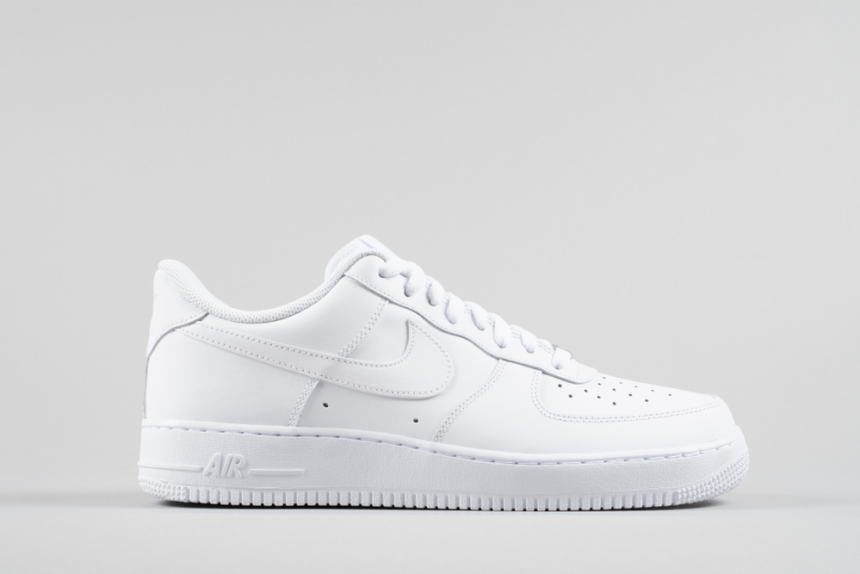
The original colorway was simple — white on white — and that simplicity turned out to be its greatest strength. The shoe was clean, versatile, and built to last. It performed on the court and looked just as good off it.
Key milestones from its early years include:
- First Nike sneaker to feature Air sole cushioning technology
- Designed by Bruce Kilgore and launched in 1982
- Originally worn by NBA players including Moses Malone
- Briefly discontinued in 1984 before fan demand brought it back in 1986
- One of the first basketball shoes to successfully cross over into lifestyle and streetwear
From the Courts to the Streets
The Air Force 1’s transition from basketball shoe to street staple is one of the most organic stories in sneaker history. It was not engineered by a marketing team — it was driven by the people who wore it. In the mid-1980s, Baltimore became ground zero for AF1 culture. Local sneakerheads and hip-hop communities adopted the shoe as their own, customizing colorways and treating pairs as collector’s items long before sneaker culture was a mainstream concept.
Hip-hop embraced the Air Force 1 fully through the 1990s and early 2000s. Nelly’s 2002 tribute track Air Force Ones — recorded with the St. Lunatics — cemented the shoe’s place in music history and introduced it to an entirely new generation of fans. The song was not just a celebration of a sneaker. It was a cultural moment that validated what sneaker communities had known for years.
A Design That Never Needed to Change
What makes the Air Force 1‘s longevity so remarkable is how little the core design has changed since 1982. The silhouette remains largely intact — the same low-profile shape, the same distinctive perforated toe box, the same bold Swoosh on the side panel. Nike has released countless colorways, collaborations, and limited editions over the decades, but the foundation has always stayed the same.
That consistency is a statement in itself. In an industry obsessed with the next big thing, the Air Force 1 has thrived by being exactly what it has always been:
- A silhouette that works with virtually any outfit or style
- A canvas that artists, designers, and collaborators can reimagine endlessly
- A symbol of authenticity deeply rooted in hip-hop and street culture
- A shoe that bridges generations without ever feeling dated
- A product that sells millions of pairs annually without heavy reinvention
Still Standing in 2026
The Air Force 1 has outlasted trends, competitors, and entire sneaker eras. It has been worn by presidents and rappers, athletes and artists, kids who grew up in the 1980s and teenagers who discovered it last year. That kind of universal appeal does not happen by accident — it is the result of a design that got it right the first time and a cultural adoption that gave it a life far beyond anything Nike originally imagined.
More than 40 years after Bruce Kilgore sketched the first version of the shoe, the Air Force 1 is still moving units, still inspiring collaborations, and still showing up on feet everywhere from New York City sidewalks to fashion week runways. The sneaker world has changed dramatically since 1982. The Air Force 1 has not had to.