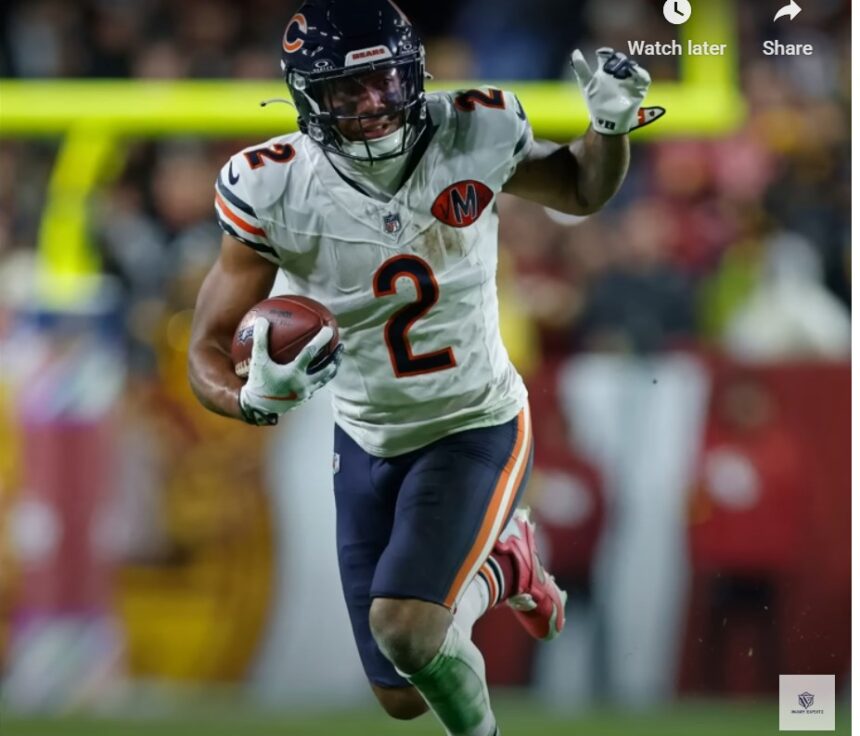
The Buffalo Bills have agreed to acquire wide receiver D.J. Moore from the Chicago Bears in exchange for mid-round draft compensation, according to Sports Illustrated’s Albert Breer. The deal, announced Thursday ahead of the NFL’s new league year, immediately addresses one of the more pressing questions surrounding Buffalo’s offense and hands quarterback Josh Allen one of the more physically gifted receivers available on the trade market.
Moore, 28, has spent several seasons establishing himself as one of the more dynamic pass catchers in the league since being selected in the 2018 NFL Draft. Last season represented a down year by his standards he finished with 50 receptions for 682 yards and six touchdowns, the lowest reception and yardage totals of his career but his underlying traits as a route runner with genuine speed have not diminished. A change of scenery, paired with one of the league’s most talented quarterbacks, could be exactly the reset his career needs.
What Moore brings to Josh Allen and the Bills offense
In Buffalo, Moore steps into a role that carries immediate significance. With the Bills receiver depth requiring reinforcement, he projects as the de facto No. 1 pass catcher in the offense, a position that takes on added weight given Allen’s ability to make plays at every level of the field. Moore’s quickness out of breaks and comfort working against press coverage fit the kind of receiver Allen has consistently made productive throughout his career.
The fit extends beyond individual skill. Moore’s experience navigating defenses as a primary target gives the Bills’ passing game a credible focal point, and his presence on the field creates space for other weapons in the offense to operate with fewer defensive resources committed to them. For a Bills team that has consistently been one possession away from deeper playoff runs, adding a proven receiver to Allen’s supporting cast is a move with legitimate postseason implications.
Chicago absorbs the loss and looks ahead
For the Bears, parting with Moore is a calculated decision rather than a reactive one. Chicago enters a rebuilding phase with an eye toward assembling a roster that reflects its long-term direction, and converting Moore’s remaining value into mid-round draft capital fits that framework. Those picks, while not premium selections, provide the Bears with additional opportunities to add young talent through the draft and continue shaping the roster around their own developmental timeline.
Losing a receiver of Moore’s experience is not a trivial matter, but the Bears
Pert

The expert z
offseason calculus appears to prioritize flexibility and future assets over retaining a veteran whose best statistical seasons did not fully materialize in Chicago.
A trade that shifts the NFL’s offensive landscape
The Moore deal is consistent with a broader pattern across the league, where teams with established quarterback play are aggressively seeking to upgrade the pass-catching corps around them. The Bills, with Allen under center, represent exactly the kind of situation where a talented receiver can rediscover his ceiling. Whether Moore recaptures the form that made him one of the more coveted receivers in the league earlier in his career will be one of the more compelling individual storylines to follow heading into the new season.
For now,Buffalo Bills has made a clear statement about its offensive ambitions, and the AFC just got a little more complicated for anyone tasked with slowing down Josh Allen.