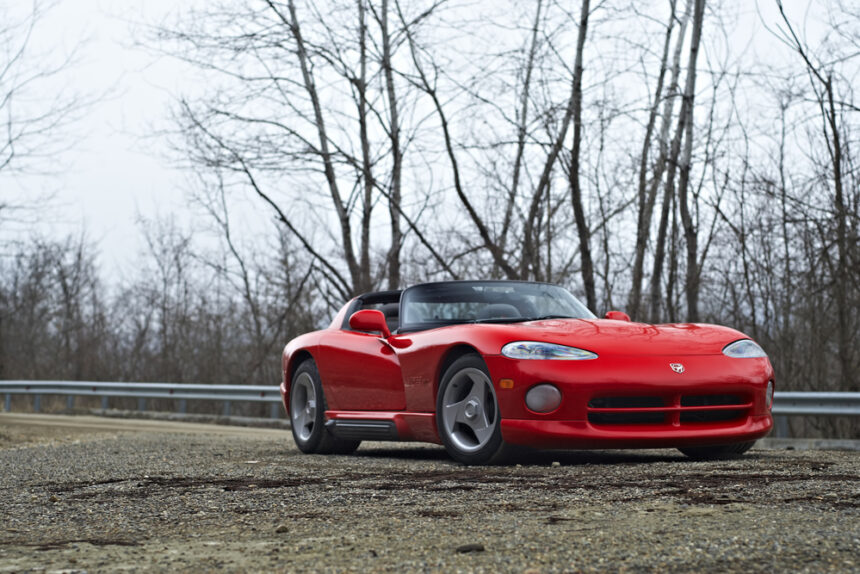
Some cars are built to be driven. The Dodge Viper was built to be felt — deep in your chest, at the base of your spine, somewhere between exhilaration and pure fear. No traction control. No hand-holding. Just raw, unapologetic power that demands respect every single time you turn the key.
Decades after it first hit the streets, the Viper remains the gold standard of American muscle. Not the safest. Not the most refined. The most real.
Born From a Vision Nobody Could Ignore
The Viper did not happen by accident. It was the product of bold thinking from bold people — designers and executives who refused to play it safe when playing it safe was the easier path.
Ralph Gilles, the trailblazing Head of Design at Chrysler — now Stellantis — was central to shaping the identity of vehicles like the Viper and the Chrysler 300. As one of the most influential Black executives in automotive history, Gilles brought a vision to the table that went beyond engineering specs. He understood that a great car has to hit different emotionally. It has to mean something. The Viper, under that philosophy, became more than a performance machine — it became a statement that echoed across generations of car lovers, collectors, and dreamers who refused to settle for ordinary.
The Numbers That Still Turn Heads
Let the specs do the talking:
- 8.4-liter V10 engine
- 645 horsepower in its final generation
- 0 to 60 mph in under 3.5 seconds
- Top speed of 206 mph
- No stability control on early models — pure driver, pure machine
That last point is what separates the Viper from everything else. Most modern supercars wrap you in layers of electronic safety nets. The Viper looked at that idea and walked away. It trusted the driver. It demanded the driver trust it back. That kind of relationship between man and machine is rare — and it is exactly what made the Viper a legend in every garage, every race track, and every music video it ever appeared in. There is no shortcut to that kind of respect. You either earn it or you do not.
The Viper and the Culture
The Black community has always had a deep connection with power cars, and the Viper earned its place in that conversation early. It showed up in music, in film, and on the streets of every major American city as a symbol of ambition and arrival. When you pulled up in a Viper, the message was clear — you did not settle, and you did not slow down.
That cultural resonance is not separate from its design legacy. It is a direct result of it. When designers like Gilles helped shape these vehicles, they brought a cultural fluency that made the cars speak to a wider, deeper audience. The Viper was not just a machine built in a factory — it was a feeling built by people who understood what power meant beyond horsepower numbers and quarter-mile times.
Built Different, By Design
What made the Viper truly special was its refusal to compromise. Every generation of the car pushed harder, looked meaner, and performed better — yet it never lost that original spirit of danger and freedom. The long hood, the wide haunches, the side exhaust pipes that spit heat inches from your leg — every detail was intentional. Every curve was a flex. This was a car designed to intimidate before it even moved.
Drivers who have owned a Viper will tell you the same thing — nothing prepares you for it. The first time you press that throttle and feel the V10 respond, something changes in you. It is not just driving. It is a full-body experience that stays with you long after you park it.
Why the Viper Still Matters
Dodge officially ended Viper production, but the car refuses to die quietly. Collectors chase it. Enthusiasts restore it. A new generation discovers it online and immediately understands why it matters. There is talk of a revival — and if it happens, the world will be ready.
The Viper was never for everyone. It was for the ones who wanted more — more power, more risk, more life. That energy does not expire. It does not fade with time or trend cycles. It just waits, engine idling, for the right moment to come roaring back onto the streets where it belongs.